Aug 1, 2023

Best Premiere Viewings of July 2023

1. Anmonaito no sasayaki wo kiita / I’ve Heard the Ammonite Murmur (Isao Yamada, 1992)


“The angle of the amethyst crystal lattice has some peculiar characteristics, doesn’t it? Dreams melt away in such circumstances.”

Inspired by the relationship between novelist and poet Kenji Miyazawa (1896-1933) and his younger sister, Toshi, ‘I’ve Heard the Ammonite Murmur’ is an enchanting mood piece / experimental drama unfolding almost dialogue-free in a surreal interzone between memories and dreams where the past, the present and the future co-exist and overlap. Its sublimely lyrical (non)narrative is anchored in stunningly composed imagery which effortlessly evokes the spirit of Shūji Terayama (1935-1983) with whom the author collaborated as a member of the artistic crew in both theatre and cinema. Reaching all the way to the viewer’s subconscious or rather unconscious self, Yamada’s feature debut opens a doorway towards a universe of quietude that welcomes you with the gentlest of embraces, and suspends you in time, with each precious moment spent there bearing a quintessence of eternity...

2. Utopia (Sohrab Shahid Saless, 1983)


Penned with a strong anti-capitalist sentiment, directed with a clockwork precision, and photographed with a rigorous sense of mise en scène that evokes Fassbinder, ‘Utopia’ is nothing short of a devastating, highly distressing masterpiece further elevated by admirable central performances from Imke Barnstedt, Gundula Petrovska, Gabriele Fischer, Johanna Sophia and Birgit Anders who portray prostitutes working under a fascist, misogynistic pimp, Heinz (Manfred Zapatka, absolutely terrifying in his role). The oppressiveness of the film’s atmosphere – as tangibly nightmarish as it gets – is emphasized by the elegant, yet claustrophobic setting that is an apartment adapted into an exclusive brothel, a prison of tortured souls...

3. Khane-ye doust kodjast? / Where Is the Friend's House? (Abbas Kiarostami, 1987)


Directing a simple, yet meaningful and deeply humane coming-of-age odyssey with an admirable ease, in a rural setting that couldn't be more authentic, Kiarostami captures one of the purest performances by a child actor whose facial expression feels like a reflection of innocence, kindness, confusion, dilemmas and wide-eyed curiosity contained within the boy's universe...


Not a single word is spoken in Samuel Tressler’s bold, dazzlingly beautiful feature debut which transmutes the Leda myth into an ethereally uncanny nightmare, part surrealistic period piece and part highly poeticized gothic psychodrama. Decidedly elliptical in its storytelling or rather ‘storyshowing’, this superb indie flick comes across as a cryptic, sensorial mood piece delicately touching upon a childhood trauma, rape, madness, loneliness and pregnancy. Densely atmospheric, in equal measures ominous and soothing, it unfolds in a deliberate pace towards a subtly visceral epilogue that further amplifies the all-pervasive ambiguity. Tressler and his co-writer Wesley Pastorfield keep pulling the rug from under the viewer’s feet, and each time they do so, you find yourself falling deeper into the rabbit hole of Leda’s dreams, memories and hallucinations. All the while, cinematographer Nick Midwig lulls you into a dreamlike state with eloquent B&W imagery immersed in a hauntingly minimalist score by Andre Barros and Björn Magnusson.

Highly recommended for the fans of ‘Meshes of the Afternoon’ (1943), ‘Angel’s Egg’ (1985), ‘Under the Skin’ (2013) and ‘November’ (2017).

5. Erosu purasu gyakusatsu / Eros + Massacre (Yoshishige Yoshida, 1969)


In real life, no human has escaped death; in cinema, no character has been liberated from the frame. Yoshida emphasizes these inevitabilities, particularly the latter, by imprisoning his protagonists within windows and doors, trapping them inside mirrors, and hiding them behind sliding panels, shooting them through branches, and drowning them in bright light or in the void of darkness, always looking for a new, usually twisted angle. Frequently, he obstructs their bodies and/or subjects them to negative spaces, as if mocking their attempts to attain freedom, paradoxically lending them eternity by virtue of geometrically rigorous compositions. His formal radicalism and the story – a poeticized biography of Japanese anarchist Ōsugi Sakae (1885-1923) paralleled by the (superficial?) modern-day examination of his theories – seem to co-exist in a dysfunctional marriage, and yet they feel like a perfect match. The audience is left to their own devices in figuring out the way through Yoshida’s labyrinth where every word should be taken with a pinch of salt, and every image could be accepted as sublime...

6. Siembra (Ángela Maria Osorio Rojas & Santiago Lozano Álvarez, 2015)


A fiction debut for documentarians Ángela Maria Osorio Rojas & Santiago Lozano Álvarez, ‘Siembra’ is a powerful social drama set in Afro-Colombian community, and dealing with forced migration, loss and grief. Beautifully shot in silvery black and white which emphasizes the all-pervading sense of nostalgia, the film marries the veracity of grim realism (not unlike that of the Yugoslav Black Wave) to pure, heart-wrenching poetry (influenced by Pedro Costa?), as it chronicles the sorrowful story of an aged farmer, Turco. Expelled from his land at Pacific coast into a life of poverty in the city of Cali, and losing his hotheaded, street-dancer son, Yosner, to a bullet, this wretched soul (portrayed with stoic poignancy by folk musician Diego Balanta) wanders the limbo of despair in search for the last glimmer of hope. Dignified in his mourning, Turco sheds no tears until the cathartic conclusion – one of many highly expressive close-ups – that sees him singing a moving elegy for Yosner. Speaking of songs, music plays an important role for people of ‘Siembra’, both in their festivities and final farewells, elevating the conspicuous humane aspect of the directorial duo’s taut screenplay. Rojas & Álvarez make the most of the economic 80-minute running time to plunge us into the bleak world of their protagonists (largely played by non-professionals), convey the mood and emotions by virtue of visuals rather than dialogue, and utilize some genre-bending and smooth tonal shifts to great effect. 

7. Saules aveugles, femme endormie / Blind Willow, Sleeping Woman (Pierre Földes, 2022)


I am not familiar with Haruki Murakami’s short stories the film is based upon (I’ve only read ‘Dance Dance Dance’ several years ago), but I will surely be keeping my eye on composer turned filmmaker Pierre Földes. Addressing the stresses of everyday life and attempts of ordinary people to find its meaning (if any), ‘Blind Willow, Sleeping Woman’ is a finely nuanced amalgam of light philosophical musings and quirky flights of fancy. Magic realist at its core, it introduces an anthropomorphic, Nietzsche-and-Hemingway-quoting frog as one of the guides in interconnected existential crises of three people stuck in their dead-end job, marriage or solitude. At once detached and compassionate, this fantasy-drama flows like a slightly disorienting dream in which almost each encounter gives off a Schrodinger’s cat vibe, and the cat has both the first and last name – Noboru Watanabe. The employed technique of animation similar to rotoscoping goes well with the liminal realities of the narrative, with Földes’s piano-heavy score conveying the brooding, yet comforting feeling of chronic melancholy.

8. The Naked Kiss (Samuel Fuller, 1964)


The slick performance from Constance Towers, beautiful cinematography by Stanley Cortez (Night of the Hunter), and Samuel Fuller’s no-nonsense direction pose as driving forces of what is arguably one of the most slyly feminist 60’s B-movies with a sharp auteur edge. It is almost everything that you expect from a film which opens with a bald prostitute beating her pimp with a handbag, only to unveil all of the provincial hypocrisies later on...

9. Легенда о ледяном сердце (Эльдар Шенгелая & Алексей Сахаров, 1958) /
The Legend of the Icy Heart (Eldar Shengelaia & Aleksey Sakharov, 1958)


A feature debut for both Shengelaia and Sakharov, ‘The Legend of the Icy Heart’ is inspired by a Kirghiz folk tale and Wilhelm Hauff’s 1827 fairy tale ‘Das kalte Herz’. Set in what was the present back then, it tells a love story of a beautiful opera singer, Aynakan, and a young shovel operator, Meerkan, kept apart by an evil theatre director, Kambar, and guided by an ashik narrator whose character introduces the elements of metacinema. Quite impressive in terms of production design, art direction, cinematography and music, this charming modern fantasy brings to mind Powell and Pressburger’s works from the late 40’s, with some of the lighting schemes anticipating the 60’s Bava. The directorial duo elicit superb performances from the cast, helming with lighthearted touch and awaking the inner child in this viewer who understands but a few words of Russian, yet needs no subtitles to enjoy the beauty at display. 

10. Thérèse Desqueyroux (Georges Franju, 1962)


Unfolding at a leisurely pace which underlines its bleakness, ‘Thérèse Desqueyroux’ is a brooding character study of a despairing woman portrayed with a remarkable subtlety, mystery and sympathy by Emmanuelle Riva. The magnetic central performance is beautifully matched by Franju’s tactful, disciplined direction, and the expressive B&W cinematography (Raymond Heil & Christian Matras) that is particularly befitting of the depressing second act. A haunting psychological drama with a feminist edge.

11. Obaltan / Aimless Bullet (Yu Hyun-mok, 1961)


A cinematic equivalent of desperation, ‘Aimless Bullet’ is an unsparing portrayal of grim reality in post-war South Korea. Taking cues from neorealism and film noir, its author makes sure the viewer deeply feels the oppressiveness of pitch-black shadows, and the coldness of walls in existential prison, impossible to escape from. Extremely powerful, and not recommended for people suffering depression and anxiety.

“Inside the unknown, you’re alive, really alive. It’s the most beautiful place to be.”

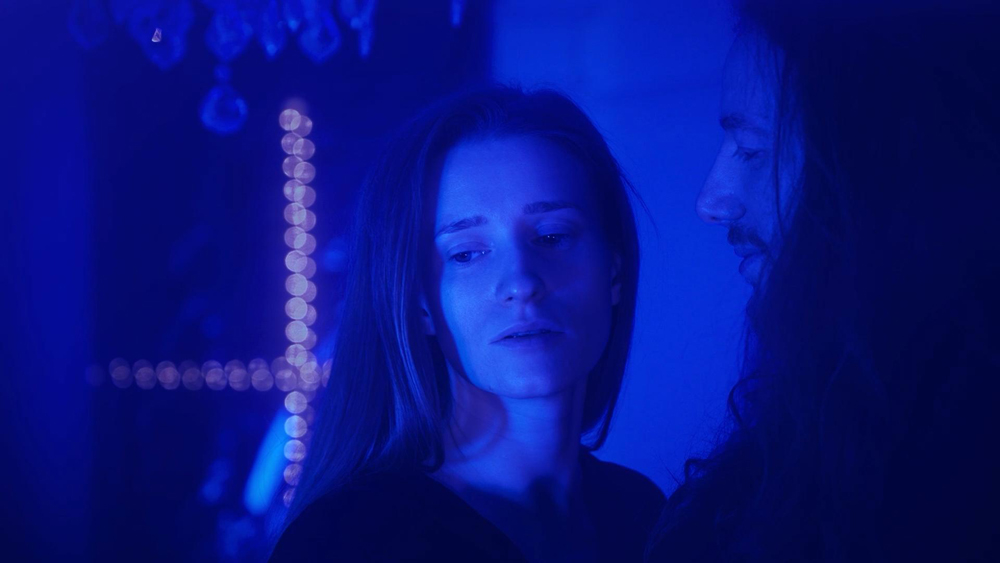
Soft shades of Pygmalion and Orpheus myths permeate a largely non-verbal story of a grieving artist, Oliver Black (Xander Berkely of ‘Candyman’ fame), whose gradually liquefying reality is gorgeously captured in dreamy, illuminated cinematography (Hanuman Brown-Eagle) of hyper-saturated colors, and misty, ethereal score (Heather Schmidt) of whispery piano, sobbing strings and euphonious chants. Treated with gentleness and poise, the themes of loss and the healing power of art make way for a tone poem-like reflection on both life and the great beyond, challenging our perception of the physical universe, and inviting us to peak into a subliminal dimension. At times, Balderson (Firecracker, 2005) teases the possibility of metaphysical horror, and provides some goosebump-inducing moments, yet his film remains within the constraints of a chamber psychological drama subtly seasoned with humor – the courtesy of John Waters’s regular Mink Stole in the supporting role of an art dealer, Alex. ‘Alchemy of the Spirit’ does stumble here and there, but its honest heart and transcendental qualities far outweigh its flaws.


If you’re looking for a decidedly incoherent film that feels like a possessed fever-dream sequence drenched in colorful neon-lights all the way to its very cores, both demonic and angelic one, then you will have a trippy field day with Arcane and Erskine’s feature debut. Employing hyper-stylized visuals (think N.W. Refn by way of Cattet and Forzani’s fetishism), and haunting soundscapes of heavy breathing, whispery voices, echoing screams, darkly ethereal tunes and foreboding drones, ‘Crucify’ locks you deep inside a subconscious mind of a haunted house and throws the key out of the window... 

(Short) honorable mention: 

A perfect appetizer for the likes of Shin’ya Tsukamoto’s ‘Tetsuo: The Iron Man’ (1989) and Shozin Fukui’s ‘Rubber’s Lover’ (1996), this 14-minute short looks, feels and unfolds like a surrealistic nightmare in which body horror applies not only to human flesh, but to inorganic matter as well. Created in what appears to be stop-motion technique, with each (originally, live-action) frame rendered in gritty, photocopy-like B&W, ‘Haruko’s Adventure’ is decidedly weird, wondrously unnerving and at times wryly humorous in its raw poeticism and absurdist ambiguity.

Jul 1, 2023

Best Premiere Viewings of June 2023

1. New Religion (Keishi Kondo, 2022)


Utterly hypnotizing in its portrayal of grieving process and its transformative potentials, Keishi Kondo’s crowdfunded feature debut comes across as an impressive calling card not only for its author, but also for a bunch of newcomers in his team, from the entire cast to cinematographer Sho Mishina. (According to IMDb, only colorist Dmitry Kuznetsov and co-editor Aleksandar Milenković have several short films under their belts.) Right from the experimental prologue soaked in deep reds (later turned into a leitmotif) and brooding drones (that dominate the haunting score), ‘New Religion’ pulls the viewer into its disjointed reality – one akin to a dream in which a dreamer is dreamed... perhaps by a moth.

Kondo could be quoting a couple of lines from Cronenberg’s defining body horror ‘The Fly’, yet his keen sensibility is much closer to that of Kiyoshi Kurosawa’s brand of ‘slow terror’, as well as to David Lynch’s penchant for the unknowable, cryptic symbolism and bizarre characters... such as a presumably non-human photographer who speaks through an electrolarynx. Both his direction and editing are assured and precise, as he employs meticulously composed imagery, and uncannily immersive sound design to create a dense and heavy atmosphere of bleak melancholy, understated eeriness and deliberate disorientation. Lingering below the ostensibly desensitized surface of his puzzling psychological drama is a creeping sense of madness and dread in the face of a child loss, with the elliptical story unfolding from the unreliable perspective of a heroine, Miyabi (Kaho Seto, admirable at micro-acting). The horror underpinnings may prove too subtle for the hardcore genre aficionados, and the ever-present irrationality will significantly limit the audience, but if you’re looking for something refreshingly off-the-wall, just let ‘New Religion’ convert you... 

2. Kerr (Tayfun Pirselimoglu, 2021)


The echoes of COVID-19 isolation hang on decrepit walls of a small, purgatorial town in Pirselimoglu’s absurdist dramedy that sees its clueless, hapless hero (superbly cast Erdem Şenocak) lost in a Kafkaesque nightmare – as metaphysically inescapable as it gets. Injected with measured doses of wry, deadpan humor, ‘Kerr’ gives no answers to a lot of its questions, putting the viewer in the protagonist’s shoes that go with a dark coat of bewilderment. On the other hand, the embodiment of mystery wears a yellow coat surrounded by a ‘double agent’ aura, and even though her screen time is limited, she heads a weird bunch that wouldn’t be out of place in a David Lynch’s psychological thriller. The same could also be said for a jazzy theme that pays a loving homage to the genius of Angelo Badalamenti, as well as for a dimly lit nightclub, its backstage hidden behind a red curtain. Ever-growing despair is emphasized by the wintry weather, as the loudspeaker announcements warn of rabid dogs prowling the streets, and seemingly bottomless holes appear all around, out of nowhere, sucking in most of the possible meanings. There’s also a murderer on the loose, yet neither the police, nor the people seem to give a damn, their provincial mentality paralyzing Şenocak’s unnamed character. Deliberate pacing intensifies the cold, thick atmosphere of detachment, and the quiet denouement comes across as another ellipsis in this beautifully framed mindfuck of a film.

3. Toldi – A Mozifilm / Toldi – Movie (Marcell Jankovics & Lajos Csákovics, 2022)


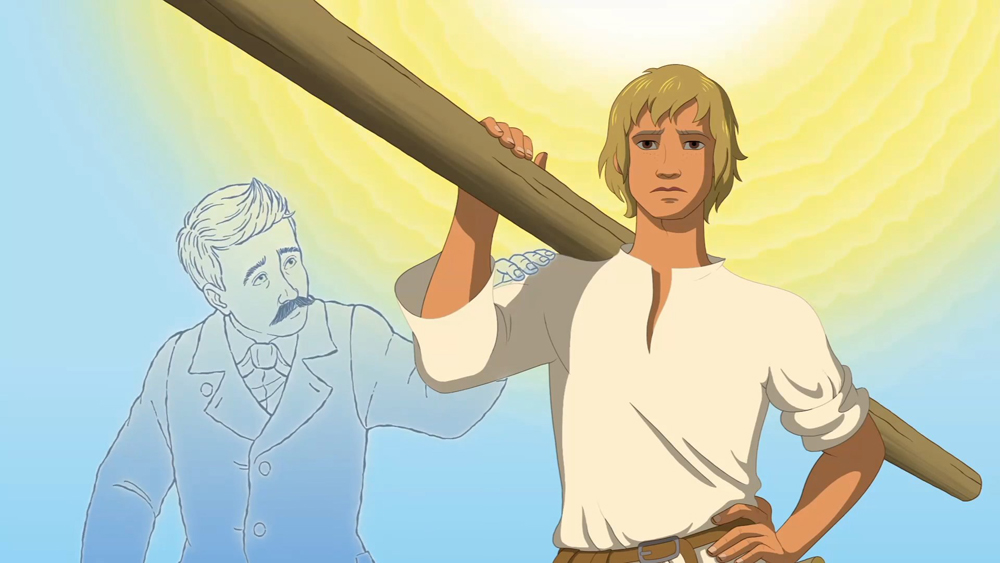
Marcel Jankovics (1941-2021) didn’t live to see the feature film version of his 2021 TV series ‘Toldi’, but Lajos Csákovics did a fine job in channeling the visionary brilliance of the late fellow animator. Based on the first part of the epic poem trilogy by Hungarian literate János Arany (1817-1882), and narrated by the ghost of the poet himself (as seen in the sketch portrait by his friend Sándor Petőfi), the film chronicles early exploits of legendary medieval hero Miklós Toldi (cca 1320-1390). He is depicted as a strapping, impulsive young lad whose blonde hair lights up every time strong emotions overwhelm him, turning him into a ‘Son of the White Mare’ look-alike, though a comparison with a super-powered anime character wouldn’t be out of place either. However, the animation style is closer to Dreamworks classics, with certain parts, such as flashbacks, created in the vein of the Codex Manesse illustrations, at once conveying the period setting and adding an extra oomph to already stunning, highly expressive visuals. Beautifully complemented by György Selmeczi’s energizing score, as well as by superb, versatile voice-over from Tamás Széles only, the imagery of Jankovics’ swan song stimulates one’s imagination and awakens the inner child, no matter how heavily it sleeps.

4. Gohiki no shinshi / Cash Calls Hell (Hideo Gosha, 1966)


My first encounter with the work of Hideo Gosha – a noir-anomaly in the chanbara-dominated phase of his career – leaves a strong impression, primarily thanks to the artful framing by cinematographer Tadashi Sakai, and highly memorable set pieces that make great use of locations, from back alleys to industrial sites such as a water purification station. Equally engaging is Masaru Satō’s groovy ‘crime jazz’ score that impregnates drama with a sense of melancholy, and emphasizes both the secrecy and smuttiness of the night when the action usually kicks off. On top of that, Tatsuya Nakadai brings charm and finesse to the role of an antihero, Oida, seeking absolution, and transforming into a savior throughout a story of karmic justice. 

5. Under the Skin (Carine Adler, 1997)


Not to be confused with Glazer’s acclaimed, 16 years younger sci-fi horror of the same name, Adler’s first and unfortunately only feature is a harrowing character study with an outstanding central performance from Samantha Morton. Portraying an extremely vulnerable if not utterly sympathetic young woman, Iris Kelly, who processes her grief through sexual escapades, Ms. Morton is a force of nature! At once raw, subtle and uninhibited in the soul-tearing role, she finds an anchor in Claire Rushbrook’s gentler, complementing take on Iris’s ostensibly balanced sister Rose. Her heroine’s dirty, bumpy fall down the rabbit hole of sanity has a ‘detached poetry’ vibe about it, emphasized through both the hectic movements of Barry Ackroyd’s camera, and Ewa J. Lind’s ‘jumpy’ editing. The film’s soothing resolution comes across as a welcome relief, mental and emotional alike, baring Adler’s empathy for Iris, even at the cost of thwarting her indomitable spirit...

6. Sambizanga (Sarah Maldoror, 1972)


Pervaded by a strong anti-colonialist sentiment, and set at the dawn of the Angolan War for Independence, ‘Sambizanga’ is the pioneering feature produced by a Lusophone African country. Its female perspective provides insight into behind-the-scenes of the struggle, highlighting the solidarity between women, as well as the boldness and practicality of their actions. Unaware of her husband’s involvement with the revolution, the wife of a political prisoner comes face-to-face with the government officials or rather, the Kafkaesque bureaucracy, all the while male dissidents operate in secrecy, gathering info to find out who of their brethren has been arrested. Non-professionals – many of whom were members of the resistance movements – lend a documentary-like authenticity to the proceedings, with bright-red blood effects not unlike that of the giallo cinema reminding us that we’re watching a piece of fiction. Maldoror demonstrates keen understanding of the rise against oppression, and directs her social(ist) drama from the standpoint of a righteous poet, using local flavors of the music, and palpable textures of 16mm cinematography to set the atmosphere of freedom at hand, and portray the emotional landscape of a country and its people.

7. Sebastiane (Derek Jarman & Paul Humfress, 1976)


One of the boldest and most provocative feature debuts, ‘Sebastiane’ revels in amping up homoeroticism that is obvious in most, if not all of classic art representations of St. Sebastian’s martyrdom; its soul residing within the ecstatic, liberating act of subversion. Opening with an extravagant scene of orgiastic celebration comparable to the likes of Bene, Russell and Fellini in its lurid, anachronistic stylization, the film takes an ascetic, naturalistic turn after creating a (glory) hole in the fourth wall, and comes across as a Pasolini’s wet dream. Imbued with deep devotion, this Latin-spoken apotheosis of male body and gay desire blurs the line between spirituality and soft-core pornography, emerging more consecrated than the great majority of cine-hagiographies.

8. Kärlek 65 / Love 65 (Bo Widerberg, 1965)

Godard meets Antonioni in a reserved drama that refuses to be Bergmanesque, giving off slight ‘8 ½’ vibes, and anticipating New Hollywood naturalism at certain points in the story of a film director suffering creative block and facing a marriage crisis. Most of the characters are named after the (superb!) cast, with a few kite-lifting scenes channeling their desire to break away from the hold of cinema, or is it reality they’re all trying to escape? 

Thematizing love, lies and lust for life, Widerberg goes as far as to involve his own daughter Nina – one of the sweetest child actors ever captured on the big screen – to conjure up the mystery of his personal inner workings, and edits it into a fragmented self-portrait with proto-remodernist details. It may appear cold, but it is visually entrancing, with three cinematographers operating as one, and framing the (broken) state of things in starkly beautiful B&W.

9. Akame shijuya taki shinju misui / Akame 48 Waterfalls (Genjiro Arato, 2003)


Consistent in its hermeticism and almost otherworldly in its eccentricity, ‘Akame 48 Waterfalls’ felt like an arduous journey through a cinematic limbo towards a goal (enlightenment?) that can’t be put into words. It may be the cultural and spiritual differences, but this arthouse drama – the second of three features helmed by the producer of Seijun Suzuki’s ‘Taishō Trilogy’ – left me completely defenseless and mystified, stuck in a cognitive or rather, soul-searching haze...

10. Les félins / Joy House (René Clément, 1964)


Alain Delon, Lola Albright and Jane Fonda star in a pulpy thriller set in French riviera, with an old mansion built in Neo-Gothic style treated as a hub of fishy goings on, as well as a character in its own right. A petty gigolo on the run, a bereaved widow and her flirty young cousin get entangled in a love triangle without any actual love involved, each one of them driven by their own agendas. Not to be taken seriously, ‘Joy House’ is one of those tongue-in-cheek flicks that effortlessly bridge the gap between art and entertainment, and turn out to be a perfect viewing choice for a hot summer evening, seducing you with the great synergy of its attractive cast, groovy jazz score and slick B&W visuals. 

11. Et Dieu… créa la femme / ... And God Created Woman (Roger Vadim, 1956)


Sexual revolution starts a decade earlier in Roger Vadim’s radiant directorial debut – a breezy pre-New Wave drama – that makes it easy to imagine Brigitte Bardot as Liberty in some erotic, pop-art-esque re-imagination of Delacroix’s famous painting. She is the embodiment of seductiveness in the role of a free-spirited hussy, Juliete, with three Romeos played by Jean-Louis Trintignant, Christian Marquand and Curd Jürgens (all of them superb, yet under the influence of Ms. Bardot’s magnetism) vying for her affection. In a way, the film anticipates the camp glory of ‘Barbarella’, finding perfect matches for its star’s sex appeal in St. Tropez summer setting – a fascinating character in its own right, as well as in Paul Misraki’s energizing score, and bold colors of Armand Thirard’s handsome cinematography. 

12. Golgo 13 (Jun’ya Satō, 1973)


Ken Takakura epitomizes sheer coolness as a mysterious and reticent assassin Golgo 13 in the eponymous 1973 Iranian-Japanese co-production that makes brilliant use of locations, from Tehran of the time to ancient ruins of Isfahan, suffering slight pacing issues...

Jun 9, 2023

A Selection of Recent Artworks (XVI)

 Some recent pieces of the extensive Bianco/Nero series...


La Viscosità dello Spazio / Вискозност простора / The Viscosity of Space


Adattamento della Disperazione / Адаптација очаја / Adaptation of Despair


Una Chiamata dall'Altra Parte / Позив са друге стране / A Call from the Other Side


Davanti al Meraviglioso Cuore del Nulla / Пред чудесним срцем Ништавила / Before the Wondrous Heart of Nothingness


Alla Ricerca dell'Antidoto / У потрази за противотровом / In Search of the Antidote


La Trasformazione Chiave / Кључни преображај / The Key Transformation


La Protesta / Протест / The Protest


Estate Sbagliata / Погрешно лето / Wrong Summer


Ostacoli / Препреке / Obstacles


Come un Sorriso / Као осмех / Like a Smile


La Libertà 3.2 / Слобода 3.2 / Liberty 3.2


Estrema Vulnerabilità / Екстремна рањивост / Extreme Vulnerability


Paralleli / Паралеле / Parallels

Jun 1, 2023

Best Premiere Viewings of May 2023

1. La Notte / The Night (Michelangelo Antonioni, 1961)


Unlike a writer protagonist of ‘The Night’, I still have both inspiration and memories (or at least, I think that I do), and yet, I could relate to his (fleeting? somnambulist?) state of mind, as well as to despair felt by his wife. In fact, I found myself being one with the film and the dense aura of melancholy that permeates it, as if having both lucid and elusive dream in which everything appears more palpable and labyrinthine than reality. It’s quite a challenge to find the right words to describe the experience of watching it, but I will give it a try by saying that I was aware of the spirit of cinema’s presence in the room, holding me in its firm embrace... Or maybe that was ‘only’ the grand, dignified, overwhelming beauty of blocking, lighting, framing and jazz vibes in perfect sync with my inner workings? 

2. Suzume no Tojimari / Suzume (Makoto Shinkai, 2022)


Growing along with its young heroine, the latest offering from Makoto Shinkai – a household name in the world of japanimation – portrays grieving process and nostalgia for the faithful departed in an equally poignant and clever fashion, with a quirky sense of humor keeping sentimentality at bay. Oh, and the animation is positively dazzling!

3. Moment to Moment (Mervyn LeRoy, 1966)


The uplifting spirit of the French Riviera in the 60’s couldn’t be more inviting in Mervin LeRoy’s final film – a stark blend of heightened romantic melodrama and somewhat farcical Hitchcockian thriller – that sees Jean Seberg and Sean Garrison as an adulterous wife, Kay, and young navy officer, Mark, falling for each other while touring around Nice. Yes, it is all but a cinematic illusion, as glaringly obvious rear projections often remind us, but what an utterly magical illusion it is! Brimming with earthy, at times bright colors, tactile textures and even immersive scents carried on the soft wings of Henry Mancini’s suave, tender score, it makes you wish it were possible to travel back to the period and attempt to re-create those very same moments. Not even the gusts of mistral can spoil the mood! Seberg is nothing short of radiant in her take on desirous Kay, with elegant YSL’s costumes accentuating her natural magnetism, and Garrison’s distinctive baritone adds volumes to his charm, whether he’s speaking smoothly or bursting with a hurt lover’s pride. Stealing a few scenes in supporting roles are Honor Blackman as Kay’s hedonist neighbor, Daphne, and Grégoire Aslan as a sarcastic inspector, DeFargo. LeRoy’s strong sense of artifice is beautifully matched to Harry Stradling’s taut framing.

4. A zsarnok szíve, avagy Boccaccio Magyarországon /
The Tyrant’s Heart, or Boccaccio in Hungary (Miklós Jancsó, 1981)


The most stagey (and in a way, claustrophobic) of Jancsó’s productions, ‘The Tyrant’s Heart’ channels the spirit of Pasolini through Ninetto Davoli’s presence (and naked extras), as well as of Shakespeare, by way of a Hamlet-esque story that sees a young prince involved in the games of power struggle, in 1400’s Hungary. Of course, both the camera and actors’ movements are smoothly and symbiotically choreographed, while being captured in mesmerizing long takes of predominantly earthy colors, with splashes of red in costume design as ‘treachery markers’. Virtually no one is to be trusted, especially when the back-stabbing reaches surreal heights, and the fourth wall gets rammed through, emphasizing the metafilmic nature of the whole proceedings.

5. We Can’t Go Home Again (Nicholas Ray, 1973)


Nicholas Ray and his students form some sort of a filmmaking commune that anticipates the collaborative dynamics of Experimental Film Society, with their combined efforts operating as a spiritual predecessor to Rouzbeh Rashidi’s ‘Luminous Void: Docudrama’, and certain installments of his ‘Homo Sapiens Project’. Way ahead of its time, ‘We Can’t Go Home Again’ is simultaneously a film and its very absence, emerging from nothingness of chaotic reality and dissipating into the intrinsic (non or omni?) verity of moving images through the anti-illusory confirmation of illusion. As baffling as it sounds, this boldly non-conformist piece of experimental cinema is rebellious with a good cause, resisting continuity as much as the boundaries of the frame, while reframing the personal into the political and vice-versa. Inspired in its anarchism or rather, trip-inducing non-sequiturs that make brilliant use of various shooting formats and a video synthesizer, it tends to put the viewer’s patience to the test, but in return, it provides you with a poignant sense of liberation.

6. The Last Picture Show (Peter Bogdanovich, 1971)


There are films that feel like emotional rollercoasters, and then, there are films that come across as cinematic equivalents of long, pensive walks during a gray, lonely autumnal day, with the simplest of sights suddenly revealing its otherwise unnoticeable beauty. ‘The Last Picture Show’ is one of the latter kind – synonymous with bittersweetness that accompanies the coming of age; often melancholic or plain sorrowful without ever turning pathetic. And it’s absolutely captivating to look at, whether its black and white pictures move to the vinyl sounds, or grab your attention in complete silence, all the while setting the atmosphere of seemingly endless longing, as well as capturing the ‘charms’ of a small town in 50’s Texas...

7. AmnesiA (Martin Koolhoven, 2001)


Fedja van Huêt (whose 20-year older version you probably didn’t forget, if you watched last year’s chiller Speak No Evil) assuredly takes on a dual role of twin brothers Alex and Aram in an idiosyncratic, slow-burning psychological drama that often betrays the influence of David Lynch at his most humorously absurd. Imbued with mystery presumably embodied by Carice van Houten (utterly magnetic as a sad-faced, out-of-nowhere girlfriend, Sandra), and giving off distorted neo-noir vibes, ‘AmnesiA’ goes from slightly off-the-wall to super-weird in its reflection on sibling rivalry, and inability to cope with a shared childhood trauma. Farcically surreal and syntactically twisted, the film is partly anchored in a bold color-and-texture palette of Floris Vos’s remarkable production design beautifully captured by Menno Westendorp’s camera, and turned into protagonists’ bewildering mindscape through the brooding drones of Fons Merkies. The immersively uncanny mood is anticipated by the very first shot – an imposing darkroom close-up of Alex, with a barely audible humming intensifying fiery reds.

8. Looking for Langston (Isaac Julien, 1989)


Oppression
by Langston Hughes

Now dreams
Are not available
To the dreamers,
Nor songs
To the singers.

In some lands
Dark night
And cold steel
Prevail
But the dream
Will come back,
And the song
Break
Its jail.

Neither a documentary, nor a biopic, ‘Looking for Langston’ is a ‘meditation on Langston Hughes (1902-1967) and the Harlem Rennaisance’, as clearly noted in one of the opening title-cards. Set to the verses from poems of Langston’s contemporaries Bruce Nugent (1906-1987) and James Baldwin (1924-1987), as well as of gay activist Essex Hemphill (1957-1995), this medium-length film amalgamates (to great effect!) archive footage, Robert Mapplethorpe’s photographs and dreamlike vignettes that pull focus on the poet’s closeted homosexuality. Smoky B&W visuals gently draped in soulful jazz notes with an anachronistic ‘house twist’ in the epilogue, beautifully capture the elegance of a posh nightclub, the subtle eroticism of bedroom scenes, and the mysterious allure of the night. Like the most skillful of sculptors, director/writer Isaac Julien and cinematographer Nina Kellgren seek for the hidden (lyrical?) qualities of the male faces and bodies, finding their truth in 16mm grain and expressive lighting. 

9. Flic Story (Jacques Deray, 1975)


There’s a cool sense of effortlessness pervading the entirety of Jacques Deray’s cop vs. gangster flick, from Delon and Trintignant’s tone-perfect performances to Théobald Meurisse’s austerely stylized production design that revives the post-WWII period in all the shades of autumnal gloom. Based on a real-life case as chronicled in the autobiography of police detective Roger Borniche, ‘Flic Story’ elevates the simplicity of its neo-noir-ish narrative by virtue of combined technical prowess and aesthetic elegance.

10. Hanka (Slavko Vorkapić, 1955)


Vera Gregović is absolutely ravishing in the titular role of the final offering from Slavko Vorkapić who’s widely recognized for ‘The Furies’ intro of 1934 flick ‘Crime Without Passion’. Imbuing her character with keen fervor of a non-professional, she portrays a proud, desirable young woman in a tragic story of love, hate and revenge among the Romani people in Bosnia under Austro-Hungarian rule. Based on true events chronicled by writer Isak Samokovlija, ‘Hanka’ often comes across as a cinematic equivalent of ‘sevdalinka’ that bridges the gap between the authentic local flavors and classic Hollywood-esque glamour, with superb Jovan Milićević (as a charcoal maker, Sejdo) standing for an archetypal macho (anti)hero, and Mira Stupica stealing a few scenes as a femme fatale, Ajkuna. The film’s undeniable charm owes a lot to handsome B&W cinematography by Milenko Stojanović (who debuted on the cult fantasy ‘The Magic Sword’ from 1950), as well as to unobtrusively melodramatic score by Ilija Marinković.

11. Dungeons & Dragons: Honor Among Thieves (John Francis Daley & Jonathan Goldstein, 2023)


(read my short review HERE)

12. Kenpei to yūrei / Ghost in the Regiment (Nobuo Nakagawa, 1958)


Guilty conscience of the main antagonist, Lieutenant Namishima (portrayed with a serpentine malignity by Shigeru Amachi), manifests itself through some disturbing visions, though labeling the film as horror seems a bit far-fetched to me. A better way to categorize it would be a blend of psychological drama and spy-noir set during the WWII, and subtly imbued with the elements of the aforementioned genre. A stark examination of human evil, ‘Ghost in the Regiment’ anticipates Nakagawa’s 1960 cult classic ‘Jigoku’ (Sinners of Hell), and finds its anchor in Tadashi Nishimoto’s highly expressive cinematography, illustrating the brilliant use of lighting/shadows and diverse camera angles.

13. Goto, l'île d'amour / Goto, the Island of Love (Walerian Borowczyk, 1969)


On Goto, everyone’s name starts with ‘G’, only the history of the island itself is taught in schools, and even the pettiest of crimes are punishable by death. But, there’s a catch – the convicts engage in public duels the winners of which are pardoned by the queen. One such lucky bastard is a cunning simpleton thief, Grozo, who falls for the despotic ruler’s beautiful wife, and decides to rise up the ranks by the dirtiest of means, in order to eventually conquer her. (Something like this is actually possible, and often encouraged in a certain Banana Republic.) His story – one of politico-allegorical qualities, and peppered with absurd ideas along the lines of Jarry’s ‘Ubu Roi’ and Kafka – is easy, yet unpleasant to follow, with steely grays of meticulously framed visuals emphasizing the desperation that keeps the reactionary society of Goto in shackles. There’s no escape which the queen Glossia – in an adulterous love affair with lieutenant and riding instructor Gono – will learn the hardest of ways, and the sense of perennial imprisonment is conveyed through the set designs depicting the advanced state of decrepitude. Borowczyk’s past in the world of animation is reflected in many scenes arranged as two-dimensional drawings, with actors moving almost like cut-outs, thus enhancing the surreal artifice of this bizarre, idiosyncratic feature debut.

14. É Noite na América / It Is Night in America (Ana Vaz, 2022)


I’ve never labeled any film as depressingly soothing, but there’s a first time for everything, as the saying goes. And Ana Vaz’s inconspicuous feature debut feels that way. A peculiar mélange of slow-burning tone poem and eco-documentary that favors animal over human perspective, ‘It Is Night in America’ captures the muffled cry of nature on expired 16mm dipped in brooding drones, ominous groans and elegiac brass arrangements. As the camera lingers over beasts on the verge of extinction, it is impossible to remain indifferent to the sadness reflected in their eyes, with an ever-expanding metropolis dissolving hope by means of its cold lights. There’s an ominous, almost pre-apocalyptic vibe to the whole proceedings that turns the viewing experience discomforting, a welcome relief arriving in the ethereal waterfall epilogue that evokes the opening of Scott Barley’s highly acclaimed mood piece ‘Sleep Has Her House’.

15. Renfield (Chris MacKay, 2023)


A strong contender for the pulpiest (and funniest) film of the year, ‘Renfield’ sees co-writers of ‘Invincible’ animated series deconstructing the Dracula myth from his familiar’s perspective, and filtered through the superhero prism, all the while mocking at the new age psychotherapy. Their comedic timing is on point, and MacKay’s direction is briskly paced, supported by a dazzlingly colorful production design that underscores the cartoonishness of splatter violence. (I could swear someone from the team is a huge Mortal Kombat fan.) There’s a sparkling chemistry between the whole cast, particularly when it comes to the powerhouse leading duo of Nic(h)olases and seriously awkward Awkwafina, with Cage chewing or rather, sucking just enough of the scenery without choking on a caricature. Enhancing the film’s gonzo vibes are some weird picks for the soundtrack, as well as a loving homage paid to classic Dracula flicks.