Aug 26, 2022

A Selection of Recent Artworks (XV)

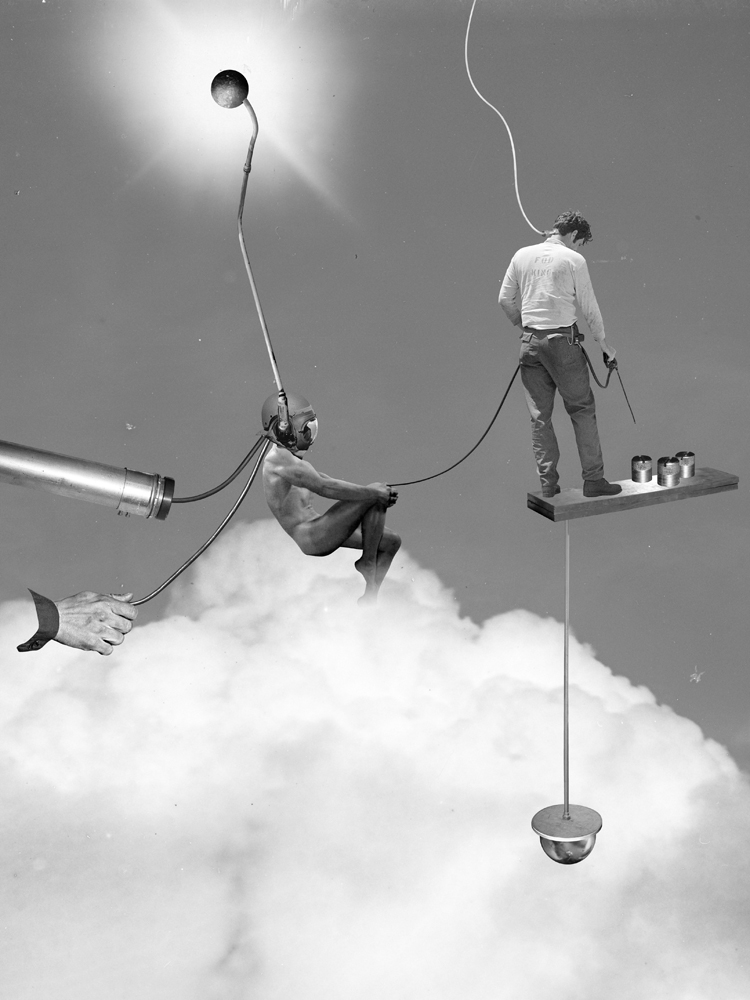
It's been a while since I posted on the blog, so here are the latest 13 pieces of my voluminous, recently revived Bianco/Nero series of digital collages which blend various influences, ranging from mythology to Brutalism to cyberpunk, into a whole new, mysterious universe of electric dreams and alchemical visions.

Il Triangolo Divino / Божански троугао / The Divine Triangle

Voci Morte / Мртви гласови / Dead Voices

Ritorno all'Innocenza / Повратак невиности / Return to Innocence

Bellezza e Malinconia / Лепота и меланхолија / Beauty and Melancholy

Il Gabinetto di un Alchimista / Кабинет једног алхемичара / The Cabinet of an Alchemist

La Nostra Casa nel Mezzo del Sogno / Наша кућа усред Сна / Our House in the Middle of the Dream


L'Arte dell'Osservazione / Уметност посматрања / The Art of Observation


L'Estrazione dell'Essenza / Екстракција суштине / The Extraction of Essence


Fragilità / Крхкост / Fragility


La Protettrice / Заштитница / The Protectress


Apri il Tuo Ombrello / Отвори свој кишобран / Open Your Umbrella


Il Libro dei Simboli / Књига симбола / The Book of Symbols

La Vita di un'Immagine / Живот једне слике / The Life of an Image

Jul 31, 2022

Best Premiere Viewings of July 2K22

1. Neptune Frost (Anisia Uzeyman & Saul Williams, 2021)


Cinema is not dead – it is alive and rejuvenated in the first collaborative effort of Anisia Uzeyman and Saul Williams. A strong contender for the coolest film of the year, Neptune Frost is a strong, marvelous piece of Afrofuturism, bold in its anti-establishment attitude, thematic richness and heightened lyricism. Anchored in creative visuals bursting with colors, and quirky, oft-cryptic dialogue that hacks your subconsciousness, this off-kilter sci-fi musical possesses the qualities of a shamanistic ritual and appears as if it belongs to another dimension, partly due to the electrifying fusion of ethereal trip-hop and rebellious tribal music. Its narrative – about the union between escaped coltan miners and techno-spiritual resistance movement – flows like a glitchy dream which strives to invoke primordial African spirit.

2. The Timekeepers of Eternity (Aristotelis Maragkos, 2021)


An experimental re-imagination (and significant condensation!) of 1995 TV mini-series The Langoliers, The Timekeepers of Eternity utilizes laborious collage / stop-motion animation of previously scanned and printed frames to mesmerizing effect. This ‘found footage’ technique – also wonderfully exemplified by artist Anna Malina – does wonders in deepening the mystery and increasing tension by way of meta-trickery, simultaneously reflecting the antagonist Mr Toomey’s (memorable Bronson Pinchot) obsession with paper strips, and his mental breakdown that becomes central to the plot. As the imagery quivers and wrinkles, and gets perforated to reveal hidden layers in a tactile B&W reality, Pinchot’s terrific scenery-chewing or rather, scenery-tearing superbly complements the film’s materiality. Another advantage of this recontextualization – more imaginative than the original work – is the replacement of awfully outdated CGI creatures with retro, yet timeless practical effects which emphasize the power of something as simple as paper.

3. Nippon no akuryo / Evil Spirits of Japan (Kazuo Kuroki, 1970)


A simple, yet heavily fragmented or rather, obscured story of switched identities sees strangely charismatic Kei Satō dandily smirking in a dual role of yakuza and detective, as Kazuo Kuroki employs virtually every trick from the film grammar book, delivering a visually stimulating and formally playful piece of New Wave cinema. Interspersed by the 4th-wall-breaking, at times politically charged musical interludes performed by singer-songwriter Nobuyasu Okabayashi, Evil Spirits of Japan provides a somewhat subversive blend of crime drama and pinku eiga, defying description and amplifying your taste for filmic weirdness.

4. Serpentário / Serpentarius (Carlos Conceição, 2019)


Preceded by a series of provocative (queer) shorts, such as Carne (The Flesh, 2010), Boa Noite Cinderela (Goodnight, Cinderella, 2014) and Coelho Mau (Bad Bunny, 2017), Serpentarius comes across as an (attractive) anomaly in the director’s career. A meditative autobiographical essay that crosses the genre-boundaries with great ease, Carlos Conceição’s feature-length debut introduces the viewer to some stunning locations of Angola and Namibia, turning them into the (imposing) characters in their own right. A simple story of a young man searching for the ghost of his mother (and a parrot she left behind for him) in Africa becomes a post-apocalyptic tone poem, in equal measures mesmerizing and deeply melancholic. Guiding us through desolate landscapes – reminders of nature’s beauty and cruelty, as well as through the protagonist’s mind are poetic voice-over musings on the wide variety of topics including colonialism, human condition, the prospects of future, and reconciliation with death. Accompanied by eclectic score which fuses everything from tribal drums to psychedelic electronica to solemn classical tunes to ambient noises (or rather silences), the softly spoken words bring forth a radiant aural cocoon in which the breathtaking (and predominantly analog?) images are gently layered.

5. Cynga (Leszek Wosiewicz, 1991)


Caught on the Polish-Ukranian border and suspected of espionage by NKVD, a young Varsovian, Andrzej (the bold, magnificent debut for Tomasz Lysiak) ends up in a Siberian camp where he spends most of the war as an inmate of a makeshift psychiatric hospital. In a dense, claustrophobic, inescapable atmosphere of totalitarian violence, both mental and physical, his descent into madness and slow journey back to sanity are starkly depicted as a grotesque, yet deeply immersive nightmare pierced by black humor and ‘alleviated’ by sparse moments of oneiric beauty one of which is a loving homage to the levitating scene from Tarkovsky’s Mirror. Assisting Leszek Wosiewicz in bringing the adapted screenplay to (disturbing, yet fascinating) life are Krzysztof Ptak’s attention-grabbing cinematography, and Henryk Kuźniak’s whimsically melancholic score, as well as sequences composed of archival footage.

You can watch the film (with English subtitles) HERE.

6. Licem u lice / Face to Face (Branko Bauer, 1963)


Some animals have always been more equal than others, but there was a time when hard-working critters could raise their voices together against a high-handed beast, with the prospects of optimism guiding them on the way. Branko Bauer’s political drama points at many irregularities of self-governing socialism, caused by both human weaknesses and disparity between the theory and practice, all the while being grounded in extraordinary performances and nuanced characterization of the construction company employees stuck at a seemingly endless council meeting. Cinematographer Branko Blažina makes the most out of a very limited setting, imbuing the proceedings with noirish vibes intensified by internal monologues and Branimir Sakač’s unobtrusive score. Often compared to Sidney Lumet’s 12 Angry Men, Face to Face is an intriguing predecessor to the Yugoslav Black Wave.

7. Le roi danse / The King Is Dancing (Gérard Corbiau, 2000)


An (in)toxic(ating) ‘historical fairy tale’ which focuses on Louis XIV’s art patronage, The King Is Dancing boasts decadently beautiful set & costume designs, outstanding performances, zestful score and excellent cinematography which shines brightest in the symmetrically composed shots of dancing and theater scenes. Emphasizing the baroque extravagance of the period, it places the (haughty) aristocracy somewhere between admiration and condemnation, impressively peacocking with its memorably lavish style.

8. Flux Gourmet (Peter Strickland, 2022)


Directing as if high on a hybrid concentrate of Eurotrash, Giallo and Greek Weird Wave, Peter Strickland delivers a wry, deliberately silly dark/deadpan comedy grounded in superb performances from an entire cast – led by the director’s muse Fatma Mohamed – portraying highly eccentric, skillfully caricatured characters. Told from the perspective of a funny, slightly incompetent little man suffering gastrointestinal issues, this self-ironic and self-referential satire of performance art laces fart jokes with subtlety and dresses scatological provocation with smooth style. Entirely set in a villa posing as a place of residence for a three-member band of ‘sonic caterers’, Flux Gourmet takes the most of the setting limitations and provides some memorable imagery, particularly during the dreamily erotic ‘audience tribute’ sequences, accompanied by some strong aural stimuli marked by the author’s sound fetishism.

9. Bubble (Tetsurō Araki, 2022)


Mind-blowing, gravity-defying parkour action meets a bold re-imagination of The Little Mermaid in a post-apocalyptic fantasy which boasts jaw-droppingly beautiful animation, as it fizzes with youthful energy and poppy tunes. Although its story and characters rarely burst the generic bubble, so to say, there’s a warm emotional core to be found underneath the glossy, brightly colored surface, and it is embodied in the quirky, non-human, yet most humane heroine, Uta (literally, Song).

10. Do widzenia, do jutra... / Good Bye, Till Tomorrow (Janusz Morgenstern, 1960)


Janusz Morgenstern’s debut is a lovely, New Wave-ish, if a a bit cliché story of fleeting love wonderfully shot in stark B&W and elevated by cool jazz score, some delightful Gdańsk locations and a protagonist’s experimental theater background. Leads Teresa Tuszynska (absolutely magnetic!) and Zbigniew Cybulski (of Ashes and Diamonds fame) have sweet chemistry, so the whimsical romance between their characters sparkles like stars in the sultry summer night. A faintly dreamy quality of the film can be attributed to the unreliable narrator.

You can watch the film (with English subtitles) HERE.

11. Bunker palace hôtel (Enki Bilal, 1989)


Starring red-and-short-haired Carole Bouquet of That Obscure Object of Desire fame, and recently deceased Jean-Louis Trintignant (completely bald, playing mysterious and ominous Mr. Holm), Enki Bilal’s directorial debut eschews both story and characterization in favor of dense atmosphere, hyper-stylized visuals and sheer quirkiness that involves an imaginary language. Filmed in Belgrade, it features a bunch of then Yugoslavian actors, from Mira Furlan to Dragomir Felba, in supporting roles of big shots hiding from acid rain and a burgeoning revolution, in the titular Bunker Palace Hotel. This place – appearing as a microcosm of a country that would soon fall apart – is serviced by malfunctioning androids allowing some slight comic relief in a bleak dystopian setting clearly inspired by imposing Brutalist aesthetics of the socialist era. And the minimized action or rather stasis that outlines the spy thriller-like proceedings creates ever-increasing tension eventually manifesting in a physical space, through the crumbling walls, and black liquid flowing out of the faucets. The accelerated decay of the underground edifice also reflects the mental and emotional states of the (unsympathetic) group trapped in their own creation. 

12. Beyond Skyline (Liam O’Donnell, 2017)


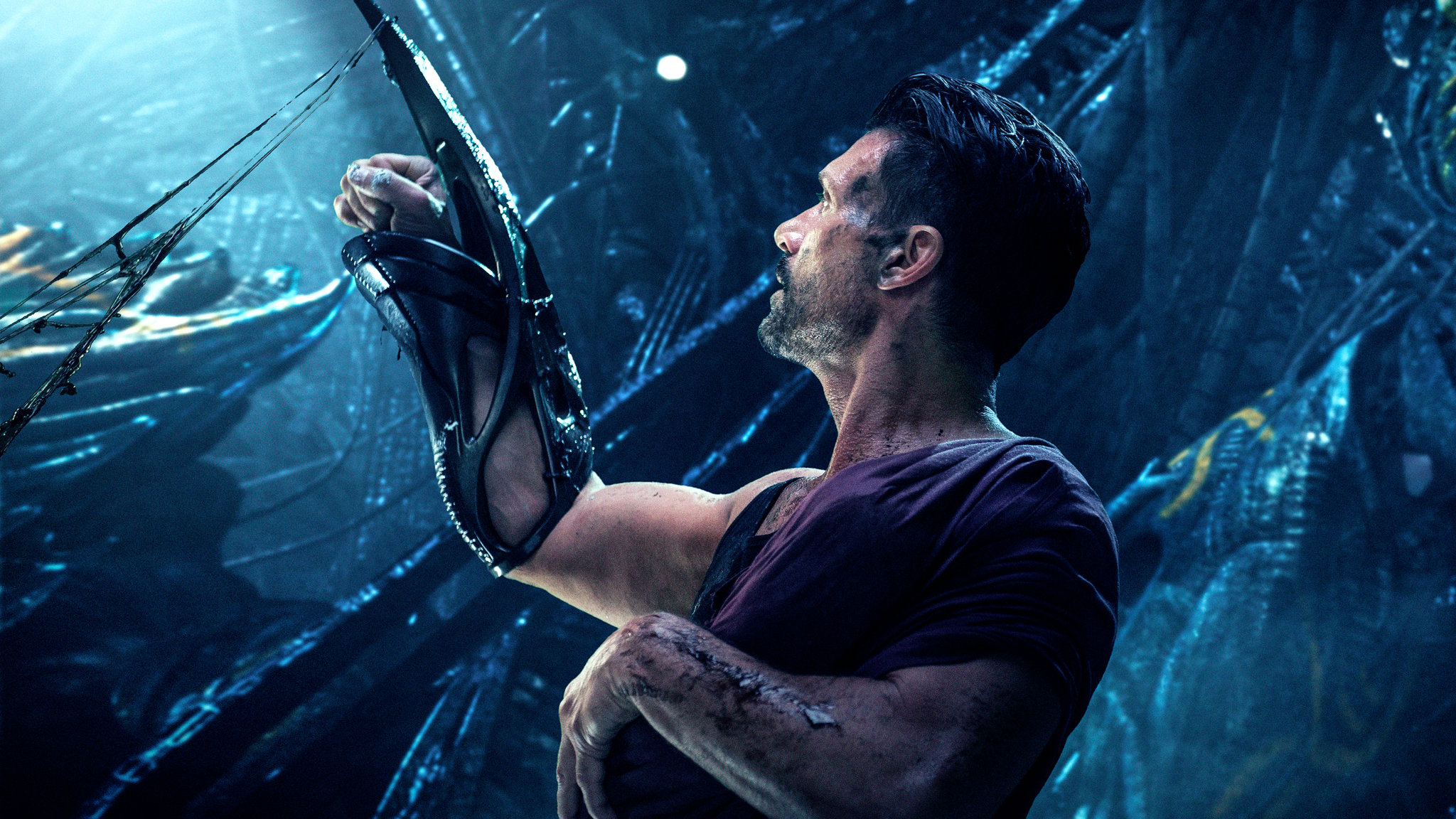
A surprisingly good direct sequel to rather clunky Skyline (2010), Beyond Skyline is a solid, B-movie genre-mashup that borrows elements from various flicks – Cloverfield, War of the Worlds, Children of Men, Independence Day, Predator, Alien and even Matrix – and successfully blends them into a fun and exciting little romp that features everything from brain-ripping to martial arts action during which one can only admire the speed at which Iko Uwais (of The Raid fame) delivers punches to crooked-legged invaders from space. Another reason for the film’s superiority over its predecessor is a more involving cast of characters led by a cool and charismatic, if archetypal hero, Mark, portrayed by Frank Grillo, as well as a welcome change of scenery from Los Angeles to Indonesia by virtue of ‘alien airlines’ – an impressively designed spaceship where gray matter is cropped and fast-growing, partly alien babies are born. Yes, there’s a lot of CGI involved, just like in many summer blockbusters, but it is almost as eye-pleasing as those jungles surrounding gorgeous Prambanan Temple in Yogyakarta, so the audience can easily surrender to their suspension of disbelief, and if needed, give it a little boost.

13. Awans / Promotion (Janusz Zaorski, 1975)


Tradition and superstition clash with modernization and academicism in an anti-capitalist satire directed with verve and good sense of humor targeted at both the reactionary forces and the prophets of progress. Zaorski elicits great performances from his cast and creates some authentic characters whom the non-Slav viewers may find quite exotic. A lighthearted, yet intriguing film.

You can watch the film (with English subtitles) HERE.

Jul 18, 2022

Straight 8 Films

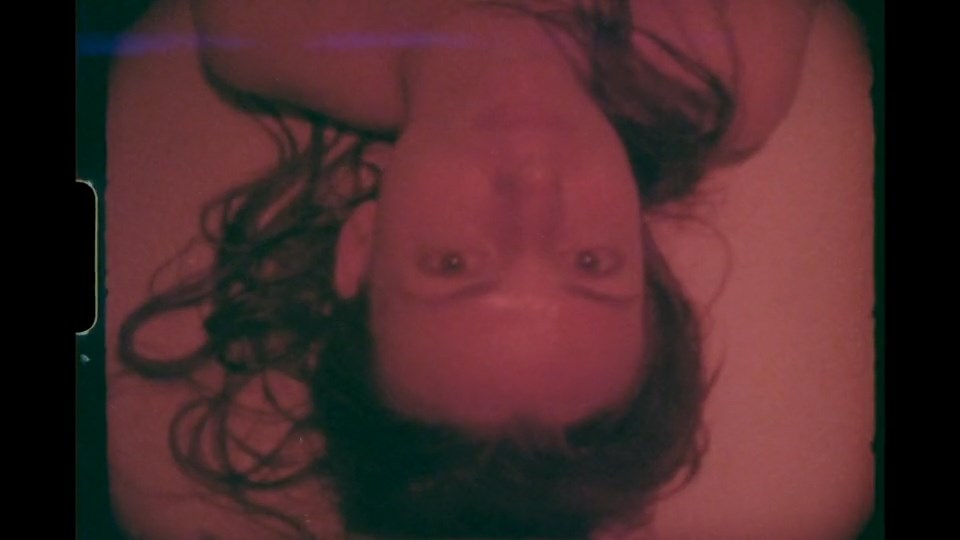
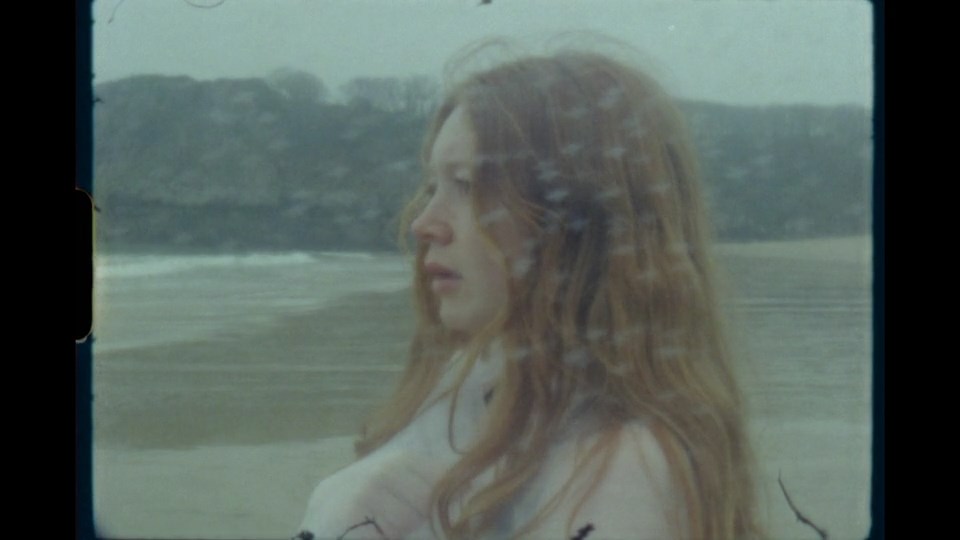
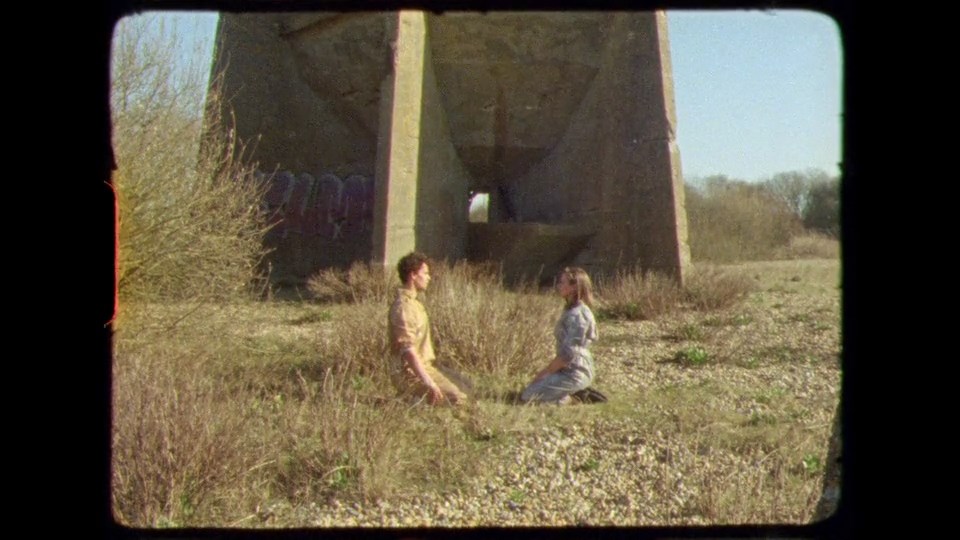
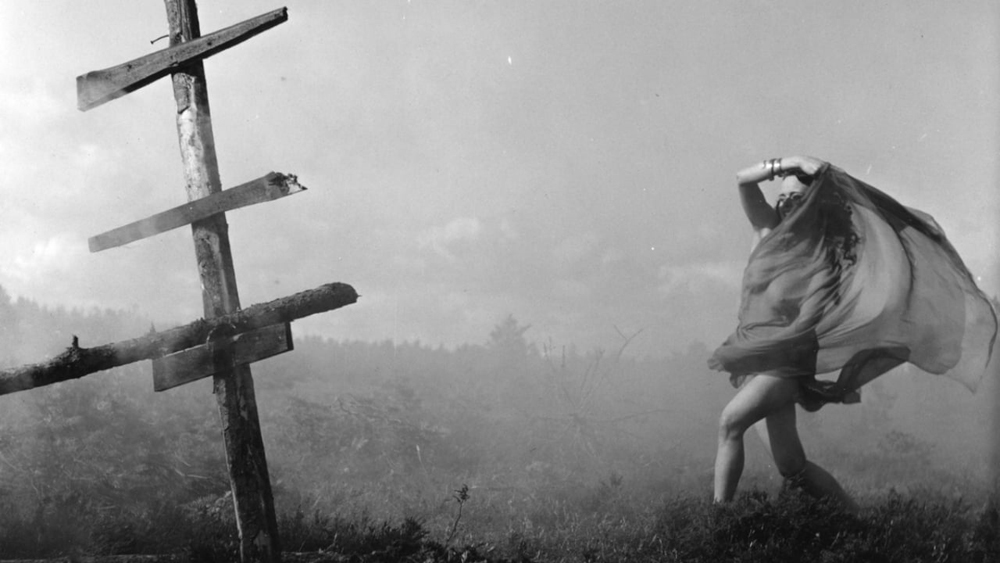
What happens when you’re a cinephile / analog film festival curator, and you come across a Vimeo channel hosting in-camera-edited shorts shot on a single Super 8 cartridge? Well, you end up watching 30 3-minute films, and admiring the diversity and the power of DIY creativity at display. Often evoking the spirit of the past, available on the Straight 8 menu are absurd comedies, stop-motion animations, introspective, diary-like tone poems, queer and ecologically conscious fantasies, parodies of Street Fighter and video nasty trailers, a witchy homage to silent cinema, an alien-in-human-body’s meditation on the rigidity of human architecture, and even a sort of a mockumentary about one girl’s correspondence with Vincent Gallo. Hereafter, you’ll find the stills from 13 of my favorites produced between 2007 and 2022, and accompanied by video links (just click on the titles). Enjoy!

I will also take the opportunity to invite celluloid-lovin' filmmakers to submit their latest creations to the 4th edition of Kinoskop - international festival of analog experimental cinema. 

The Surrealist Brothel (Julia Jason, 2007)

Rouge Amour (Kezia Barnett, 2011)

Biskremosis (Marc Holtbecker, Robert Neumann, Annette Schneider, Caro Stoeckermann & Andre Wlodrski, 2012)

Who Lives There at Night (Drum, 2016)

Into the Mist (Benjamin Scrimgeour and Orban Wallace, 2017)

No One Cries Forever (Iconoclast, 2017)

Touch (Poppy Baines, 2017)


Hyper Galaxy Starship Team (The Pool Collective, 2018)

Satan’s Bite (Dean Puckett, 2018)

Coral (Blur & 24/7, 2020)

Face Me (Yolafilmo, 2020)

Ag:Au (Alex Cantouris, 2021)

Inside (Alex Shipman & Joseph Herridge Nowell, 2021)

Jun 30, 2022

Best Premiere Viewings of June 2K22

FEATURES + MEDIUM-LENGTH FILMS

1. Double Indemnity (Billy Wilder, 1944)


Snappy dialogue, brisk pacing, taut direction, beautiful cinematography, but above all, utterly magnetic Barbara Stanwyck as one of the most fatal dames of classic noir, and – more than 50 years later – a ‘role model’ for Patricia Arquette’s character of Renee / Alice in David Lynch’s neo-noir Lost Highway.

2. El Escapulario / The Scapular (Servando González, 1968)


A mighty fine piece of zealous Mexican Gothic, The Scapular is one of those films which tend to snatch your attention from the very prologue. The preparation for an execution by a firing squad is captured in a manner that makes the inevitability of death palpable as much as the presence of something inexplicable. After a perfectly timed cut that prolongs the tension by shining a ray of hope upon the convict, the viewer is taken into the night of a small town, and put into the shoes of an unknown man (or entity?) ‘embodied’ by the very eyes of the camera that guides a young priest into the house of a dying woman. Her moribund story revolves around the titular object – believed to bring luck to its owner – and is told in flashbacks reminiscent of a subtly dark folk tale / local legend, revealing the circumstances which led to the aforementioned capital punishment. What follows is a timeless forbidden romance seasoned with some spine-tingling supernatural elements whose irrational powers come into full force during the twist ending.

Paired with Servando González’s directorial versatility that sees him crossing the genre boundaries with great ease, and seamlessly blending various influences, from (presumably) classic Hollywood to European arthouse to Japanese horror, the inspired lensing by Gabriel Figueroa turns even the most mundane portions of the narrative into micro-spectacles, with virtually every pan, zoom and canted angle impregnated with meaning. Also praiseworthy is the superb editing by Fernando Martínez allowing the action to flow smoothly and – by the standards of cinematic illusion – naturally. 

3. Zabitá neděle / Squandered Sunday (Drahomíra Vihanová, 1969)


“Silence! Forget everything you see and hear.”

Created under the regime which didn’t allow artists to think, let alone philosophy on the absurdity of life, Drahomíra Vihanová’s extraordinary feature debut was confiscated by despotic authorities, with the author herself banned from filmmaking until 1977, when she made the first out of several documentary shorts, only to return to fiction in 1994. Revolving around an apathetic army officer, Arnošt (Ivan Palúch, brilliant!), who can neither mend nor end things that bother him, Squandered Sunday balances on a tightrope between the protagonist’s realities and illusions / suicidal thoughts and drunken escapades, his twisted perspective reflected in both the heavily fragmented narrative and bold formal experimentation. From the very first scene set at the funeral of Arnošt’s mother (death portends death), it is absolutely clear that Vihanová knows the rules of the game very well, which allows her to break them in the most creative ways, pulling the viewer ever deeper into a feverish, delightfully irrational (meta)cinematic universe that evokes the likes of Godard, Chytilová and Jakubisko. Her apolitical stance is what makes the film so politically defiant, and the liberty she takes in the oft-freewheeling portraiture of metaphysical meaninglessness intensifies the confrontation. An absolute must-see for the Czech New Wave aficionados!

4. Götter der Pest / Gods of the Plague (Reiner Werner Fassbinder, 1970)

The (w)holy cinematic trinity of Fassbinder’s mesmerizing, formally seductive neo-noir, and its antithesis:

- A Godardian antihero, Fritz (stoic performance from Harry Baer), posing as an apathetic, almost desensitized embodiment of disenchanted youth, as well as of the artist’s anti-conformism. His slaps (in the dinner scene with Margarethe von Trotta and Günther Kaufmann) hurt more than bullets. / Hanna Schygulla’s very presence which brightens up the screen even when her character Johanna is struck by melancholy. Despite her deeply flawed nature, there is something saintly about her...
- Dietrich Lohmann’s rigorous, hauntingly beautiful framing, emphasizing Fritz’s nihilistic unconcern, and the society’s cold  indifference. / Upbeat soundtrack, at once complementary and opposed to the deliberate dreariness of the atmosphere. Maybe childlike innocence hasn’t died yet?
- The welcome sparseness of dialogue, allowing the viewer to feel the heavy impact of virtually every image. / The placement and movement of actors within mise-en-scène, louder than words.

5. The Element of Crime (Lars von Trier, 1984)

Kim: “Why do you keep torturing yourself?”
Fisher: “I have to. I believe in joy!”

In June, I was reading Stig Björkman’s Trier on von Trier, realizing it’s about time I checked out Lars von Trier’s early works. And what a killer feature debut The Element of Crime is! A hellish noir nightmare that proudly wears Tarkovsky influences on its long-take sleeves, and portends the immensely heavy atmosphere of Lopushansky’s Dead Man’s Letters (1986), it plunges you into its post-apocalyptic-like setting, hypnotizing you with the overwhelmingly grimy imagery soaked in the most dismal of yellows, oranges, reds and browns, as well as with the melancholy-induced sound design, particularly the cast’s voices that give off some strong ASMR vibes. It is a film which lays bare its author’s fetishistic relation to cinema and art in general, from the elaborate lighting and peculiar camera angles to literary quotes and the omnipresence of water, and as such, it makes you feel the cold, feverish sweat of its inherent mystery.

6. I Wonder If Daylights Were White Nights or Something Childish But Very Natural (Sibi Sekar, 2022)


(read my short review HERE)

7. Stella Polaris (Knut Erik Jensen, 1993)


During the film’s brilliant opening scene in which the unnamed heroine wanders the streets lined by mostly dilapidated and abandoned buildings, there is something coldly Żuławski-esque enveloping the gloominess at display. Then comes the awakening, and the gray nightmare turns into a memory-laced reverie set in the northmost part of Norway – the woman’s birthplace somewhere in Finnmark where the author also comes from. Her past and her present intertwine to the point where one cannot distinguish dreams from reality, and personal reflections from the universal pain, in what could be best described as an almost wordless tone poem whose unfaltering lyricism evokes the spirit of Tarkovsky. Jensen’s oneiric, stream-of-consciousness narrative plunges the viewer into the protagonist’s inner world, as the highly evocative, beautifully captured imagery of home, childhood, friendship, love, sex, work, war, death and finally, (re)birth is caressed by gently weeping strings, haunting drones and sparkling chimes...

8. Wolf Alice – Blue Weekend (Jordan Hemingway, 2022)


Gorgeously shot with an ARRI Arriflex SR3, on 500T Kodak stock by cinematographer Molly Manning-Walker, the visual version of 2021 album Blue Weekend by Londoners Wolf Alice feels like a tender, hazy yet palpable, Christopher Doyle-esque dream! Its oneiric, intoxicating, deeply immersive atmosphere – the equivalent of a night out in town turned smoky night club limbo – owes a lot to the raw warmth of grainy 16mm texture of saturated colors, distorted angles achieved through the use of wide lenses, as well as to the ethereal, caressing vocal of singer Ellie Roswell, and the band’s sultry, simultaneously mellow and edgy melodies. Whether you’re their fan or have just discovered them, you owe yourself these 45 minutes of aural and pictorial beauty. (Click on the title to watch it on YouTube.)

9. Poslednji kolosek / The Last Railway (Živorad ‘Žika’ Mitrović, 1956)


In the sophomore feature by Žika Mitrović famous for his ‘partisan westerns’, a classic Hollywood crime movie formula works amazingly well, even when Olivera Marković – superb in the supporting role of singer Olga – performs jazzy tunes in a tavern which usually has accordion folk on the menu. The noirish scenes shot at the rails during the night are the film’s main forte, with deep blacks of Dragoljub Karadžinović’s great cinematography tightly shrouding the smuggling operations by greedy railroad workers. And when the film’s polished genre surface is scratched, its political subtext shines through in its subtlety. A beautiful anomaly of Yugoslavian cinema.

10. Noita palaa elämään / The Witch (Roland af Hällström, 1952)

“In the depths of our soul, there is a junkyard filled with ghosts and horrors.”

In the horniest 50’s film that I’ve seen, horror tropes are employed as a backdrop for a spunky blend of psychosexual drama and somewhat campy comedy exploring (fatal) female seductiveness. Set in and around the manor of baron Hallberg, it follows a young woman, Birgit (Mirja Mane, quite uninhibited, with the mannerisms of a silent film star) whom the villagers believe to be a resurrected witch, and three young men – an archeologist, Hannu (engaged to one beautiful and full-of-understanding Greta), an artist, Kauko, and baron’s playboy son, Veikko – who all go mad in love or rather, burning desire for the mysterious dame. As Kari Salminen notes in his 1989 article, “conflicts between science and art, rationalism and irrationalism, the conscious and unconscious, reality and fantasy are all found hiding in its layers”, under “the most direct references to sexuality”. (At one point, Veikko says: “I’ll explode if I can’t relieve myself.” And you can’t get more to-the-point than that!) Also present are the hints of the class struggle, as both bourgeoisie and common folks are depicted through the prism of subtle mockery, Bunuelian way. Hällström directs with a keen sense of pace, even during the overwrought parts that betray the theatrical origins of the screenplay, and delivers a rousing romp, vastly superior to his 1946 noir drama The Callbird which  introduced me to his work. Not to mention that The Witch is ahead of its time in terms of nudity which – as male-gazing as it may appear – actually is not gratuitous.

11. Good Luck to You, Leo Grande (Sophie Hyde, 2022)

“Pleasure is a wonderful thing. It's something we should all have.”

Two thespians, one location, a dialogue-driven story. That doesn’t sound like my cup of tea, and yet Sophie Hyde’s sex dramedy worked like a charm for me. Directed with effortless fluency, written with honesty, wit and warmth by Katy Brand, shot with a keen eye for composition by Bryan Mason, and gently wrapped in euphonious score by Stephen Rennicks, this amusing and poignant romp is anchored in exquisite central and, most of its running time, only performances.  

Always reliable Emma Thompson who plays a widowed, sexually repressed ex-Religious Education teacher, Nancy Stokes, and Daryl McCormack in the role of a charismatic, eloquent and, as Nancy puts it, ‘clearly, aesthetically perfect’ gigolo, Leo Grande, give us believable, well-developed characters, baring their souls prior to baring their all. They have a strong on-screen chemistry, beautifully complementing each other, and allowing the humane factor that’s built upon their strengths and insecurities alike to shine through and through. And Hyde shows great understanding for both Nancy and Leo, treating them equally and giving them enough space to breathe, despite the setting limitations. Highly recommended!

12. The Shadowed Mind (Cedric Sundstorm, 1988)


Now, this is one fine B-movie! Set in a bizarre private asylum (a slightly adapted abandoned warehouse) for the ‘sexually challenged’ patients, The Shadowed Mind takes cues from giallo cinema, and assaults the viewer with a top-notch mixture of baroque lighting, stalkerish camera, sinister music, and generous amounts of nudity and knife stabbing (often combined). There’s some wonderful scenery chewing attached to leading performances, as well as wooden acting in supporting roles, but Sundstorm (who would direct two sequels in the American Ninja series!) seems to benefit from all the imperfections, and delivers both artistically satisfying and highly entertaining flick which is – according to some sources – based on a semi-improvised screenplay. 

SHORTS

1. Рози в нощта (Пенчо Кунчев, 2019) / Roses in the Night (Pencho Kunchev, 2019)


Based upon Les Chansons de Bilitis by Pierre Louys (1870-1925), Roses in the Night is an absolutely stunning piece of traditional animation, accompanied by a miraculous score from prolific and acclaimed Serbian composer Zoran Simjanović (1946-2021). Through the series of surreal transitions informed by the art of optical illusions, Bulgarian animator Pencho Kunchev plunges the viewer into a magical world straight out of a myth, depicting the sexual awakening of a young girl in Ancient Greece. Available as a part of HYBRID GENRE FRANCE: Paris VOD Film Awards at Vimeo.

2. The Fall of the House of Usher (James Sibley Watson & Melville Webber, 1928)


Wow! German expressionism meets French avant-garde in a cinematically eloquent adaptation of Edgar Allan Poe’s short story of the same name. A masterfully crafted experimental short! What a damn shame that Watson & Webber co-directed only two films – this one and utterly spellbinding Lot in Sodom (1933).

3. Le monde en soi / The World Within (Sandrine Stoïanov & Jean-Charles Finck, 2020)


A brilliant use of the medium of animation in an almost wordless exploration of artist’s heightened anxiety. Watched at Festival Scope.

4. MeTube (Daniel Moshel, 2013,2016,2020)


MeTube is a series (at this point, trilogy) of extremely weird and highly memorable music videos created by Vienna-based director Daniel Moshel who boldly blends SFX, opera, techno, retro-futurism, absurd comedy, queer art and S&M aesthetics into one hell of an audio-visual smörgåsbord. It revolves around Nerd (Swiss tenor August Schram) and his elderly mother (Elfriede Wunsch, appearing in Ulrich Seidl’s Paradise: Faith) – one of the coolest grumpy characters ever, and follows their cosmic adventure in remixing famous arias – in the cozy atmosphere of their home, as street performers, and eventually, as guerilla artists who crash the production of Donizetti’s L’elisir d’amore at the theatre. Has to be seen to be believed!


5. Equilibrium (Kasey Brodwater, 2022)


A meditative 16mm dive into a natural world, wrapped in a veil of dreamy music.

6. Loose Joints (Clemens Tolstrup, 2022)


Clemens Tolstrup gently and beautifully captures human faces (of whom I presume to be his friends) in his 16mm short debut produced by European Film College (Denmark), and accompanied by ethereal music that evokes the sense of mystery. 

7. Dream of Kafka (David Babayan, 2019)


A computer-animated nightmare laced with absurd humor.
Watched at Festival Scope.