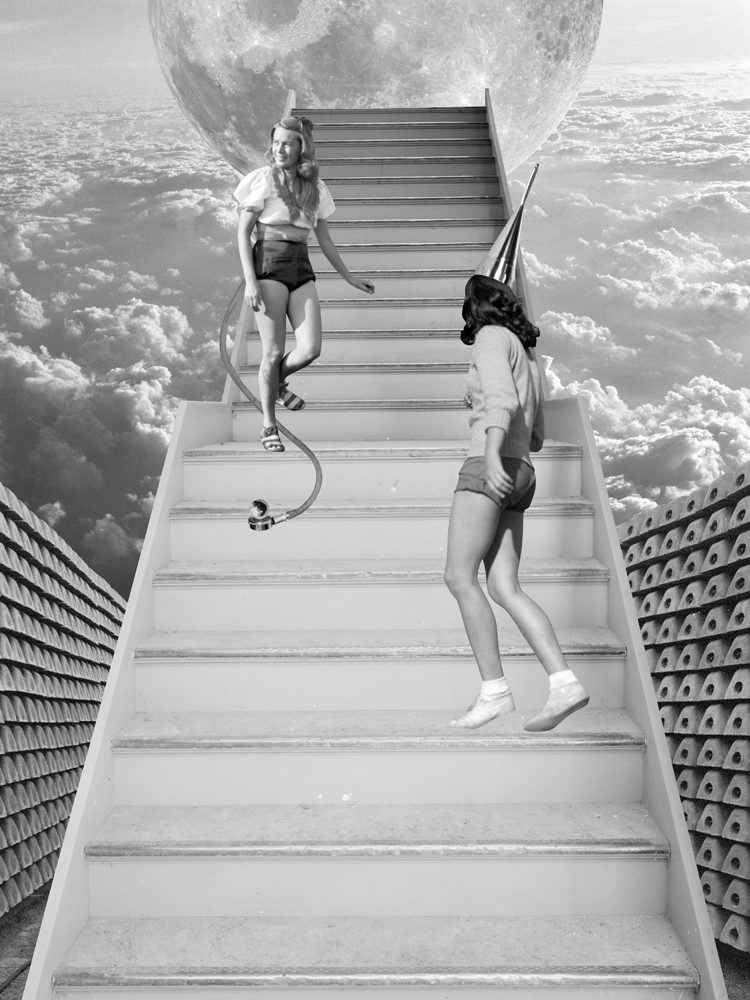
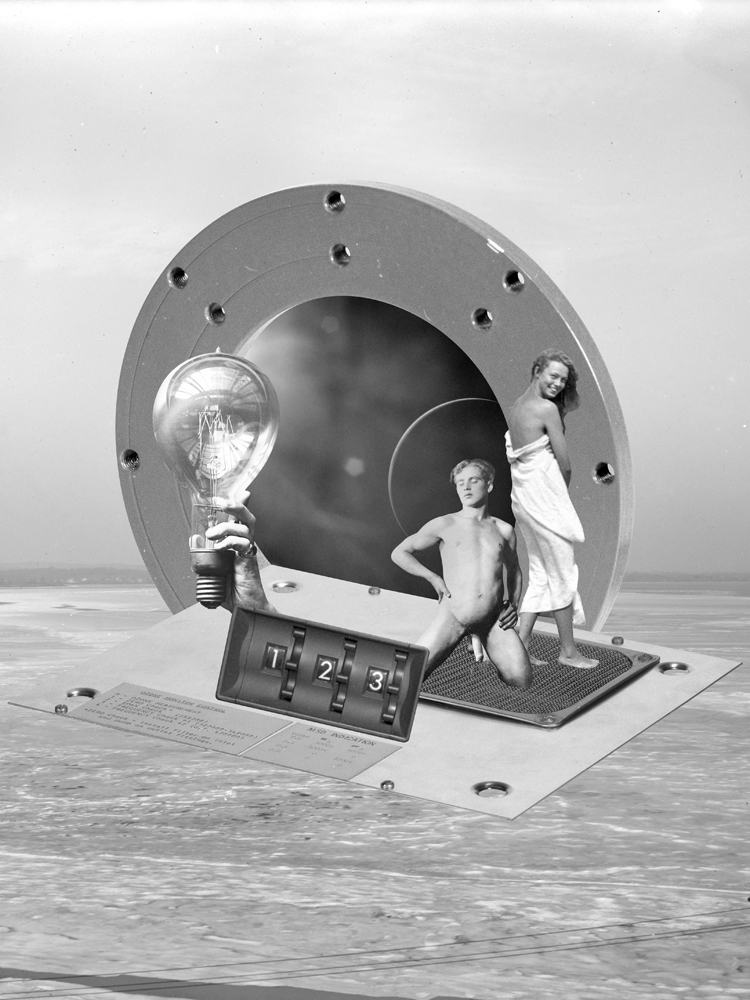
Initiated in 2019, my most extensive series of collages Bianco/Nero still keeps growing, and taking some unexpected twists and turns that reshape its moody dystopian universe. Hereinafter, I present several recently finished 'chapters', and reveal a couple of brand new ones that may be too hot for the social network censors...
Jan 4, 2021
A Selection of Recent Artworks (VI)
Dec 31, 2020
2020 Highlights and 2021 Greetings
Saying that 2020 was challenging would be a severe understatement, given that it turned our reality upside-down, and made it appear borderline surreal (or rather, apocalyptic). When I (reluctantly) look back at it, I am instantly overwhelmed with a bizarre and bewildering mixture of discordant feelings. However, I am grateful to have persevered, and only time will be able to tell how deep my psychological scars are. Although it is hard to speak of personal accomplishments while the world is crumbling down, I will take the liberty to summon up my brightest moments of this extremely dark year.
My collage obsession continued to grow which resulted in close to 300 new pieces, including three short films which I dubbed 'motion picture books' - Untold, In Search of Tanatos and Seven 77 - brought to life through the music of my friends Jelena Perišić (Kemmer), Predrag Karanjac (Mother Beth vs Blondie) and Marko Dabetić (Tearpalm), respectively. Based on the ideas by NYC-based musician & film director Martin Del Carpio, I created visuals for two of his films, Kindle and LOS, which were officially selected by several festivals. In November, Untold and Seven 77 were screened at the 2nd edition of IMAGE PLAY ► International Video Art Festival beautifully organized and curated by Hernando Urrutia, with the event taking place in the mind-blowing auditorium of the Municipal Theater Baltazar Dias, in Funchal, Portugal. Untold also played as a part of the 15th Fonlad Festival of Video Art and Performance.
MeleM (lit. balm, salve) - my second solo exhibition - was held in cafe bar Julijan Djupon in my hometown of Niš, in July and August, and I took the opportunity to show bits of experimental work by artists with whom I collaborated on numerous occasions - Rouzbeh Rashidi's Homo Sapiens Project (101), Daniel & Clara's Espectros Da Terra and Martin Del Carpio's Auricular Confession. I would like to send many thanks to my friends and family for the support, as well as Julijan Djupon staff for their help in organization, and all the visitors who showed interest in my artwork. September was marked by minimalist, Japan-inspired collages that I designed for the upcoming project by German composer and filmmaker Martin Gerigk, and by a promotion of several collages on the theme of body in non-profit online magazine Libartes (currently, their website is under construction). Three 'chapters' of my extensive Bianco/Nero series - La Culla della Strega, Niccolò: L'Avventura Cosmica i Pulcinella è Morto! - were presented at online exhibition New Balkan organized by artists' platform Vijuga, in October.
Most of October and November were fueled by preparations for the sophomore edition of Kinoskop which I co-curated along with three wonderful, witty and dedicated people - Marko Milićević, Ejla Kovačević and Aleksandra Dalichow. During Zoom Q&A sessions, four of us had the pleasure of meeting and speaking to more than 40 participating filmmakers - the champions of celluloid tape - who were eager to share their insights into creative process and challenges they were faced with, supporting our idea of an analog cinema community. Add to that favorable Vimeo statistics, and Kinoskop 3 is very likely to happen in 2021!
Finally, December saw the publication of the second book by Experimental Film Society, Luminous Void: Twenty Years of Experimental Film Society, to which I am deeply honored to have contributed with five of my essays. Edited by Rouzbeh Rashidi, Maximilian Le Cain and Atoosa Pour Hosseini, Luminous Void 2 'examines the ideas and impulses that animate EFS as well as the practices of many of the filmmakers associated with it' and features texts by 'noted critics and curators from across the globe'. For me, this book represents the most important milestone in my orbiting around EFS so far.
Invigorated by these delightful memories, I move on into 2021, and hope that all of you make the most of it. I wish you good health, frequent strokes of luck and the abundance of art, perhaps in autumnal colors... Happy New Year!
Delight / Imperfection (original size: 100x60cm / 300dpi)
Dec 29, 2020
Top 60 (Recent) Films of 2020
Every January, I promise myself to establish a stricter film-evaluation system, only to end up challenged by more than 50 highly rated films as December draws to a close. And although I do my best to catch up with all the current offerings, somehow there's always a lot left to see next year, and not to mention out-of-nowhere blasts from the recent past, which is why you'll find a few mid-decade releases hereinafter.
Emerging from six continents and ranging from the uncompromising experiments to eccentric genre-benders to hyper-stylized dramas to fairy tale deconstructions to video game-like adventures, sixty features - twelve of which are animated - capture my cinephilia at its most eclectic, and represent a counter-balance of sorts to the majority of both mainstream and alternative lists I've checked out so far. They are grouped in six categories whose titles (hopefully) suggest their nature.
BOLD CINE-DREAMS & CHALLENGES OF CONTEMPO-ALCHEMY
1. Last and First Men (Jóhann Jóhannsson, 2020)
2. Valley of the Gods (Lech Majewski, 2019)
3. Accidental Luxuriance of the Translucent Watery Rebus (Dalibor Barić, 2020)
4. Black Sun (Daniel & Clara, 2017)
5. Desire Path (Marjorie Conrad, 2020)
6. Siberia (Abel Ferrara, 2020)
7. Call for Dreams (Ran Slavin, 2018)
8. The Bottomless Bag (Rustam Khamdamov, 2017)
9. Homo Sapiens Project (200) (Rouzbeh Rashidi, 2000-2020)
10. Shell and Joint (Isamu Hirabayashi, 2019)
11. The Tango of the Widower and Its Distorting Mirror (Raúl Ruiz & Valeria Sarmiento, 2020)
12. Its Existence Commenced This Hour (Wolfgang Lehmann, 2019)
13. The Scream (Phillipe Grandrieux, 2019)
14. Sofa (Bruno Safadi, 2019)
15. Minotaur (Zulfikar Filandra, 2020)
1. This Is Not a Burial, It's a Resurrection (Lemohang Jeremiah Mosese, 2019)
2. Angel (Harry Cleven, 2016)
3. The Portuguese Woman (Rita Azevedeo Gomes, 2018)
4. Paul Keller – Silence in the Scream (Axel Loh, 2020)
5. Undine (Christian Petzold, 2020)
6. Mank (David Fincher, 2020)
7. Tesla (Michael Almereyda, 2020)
8. Nevrland (Gregor Schmidinger, 2019)
9. About Endlessness (Roy Andersson, 2019)
10. You Go to My Head (Dimitri de Clercq, 2017)
1. WolfWalkers (Tomm Moore & Ross Stewart, 2020)
2. Children of the Sea (Ayumu Watanabe, 2019)
3. A Yellow Animal (Felipe Bragança, 2020)
4. The Last Fiction (Ashkan Rahgozar, 2018)
5. The Bra (Veit Helmer, 2018)
6. Gretel & Hansel (Osgood Perkins, 2020)
7. Buñuel in the Labyrinth of the Turtles (Salvador Simó, 2018)
8. Pinocchio (Matteo Garrone, 2019)
9. Primal: Tales of Savagery (Genndy Tartakovsky, 2020)
10. Hoffmaniada (Stanislav Sokolov, 2018)
1. Monos (Alejandro Landes, 2019)
2. Diner (Mika Ninagawa, 2019)
3. True History of the Kelly Gang (Justin Kurzel, 2019)
4. The Painted Bird (Václav Marhoul, 2019)
5. Amulet (Romola Garai, 2020)
6. Luz (Juan Diego Escobar Alzate, 2019)
7. Why Don't You Just Die! (Kirill Sokolov, 2018)
8. Beasts Clawing at Straws (Kim Yong-hoon, 2020)
9. The Gangster, the Cop, the Devil (Won Tae-Lee, 2019)
10. Lily Lane (Benedek Fliegauf, 2016)
1. Jesus Shows You the Way to the Highway (Miguel Llansó, 2019)
2. Spontaneous (Brian Duffield, 2020)
3. L.O.R.D: Legend of Ravaging Dynasties 2 (Jingming Guo, 2020)
4. Max Cloud (Martin Owen, 2020)
5. Human Lost (Fuminori Kizaki, 2019)
6. Promare (Hiroyuki Imaishi, 2019)
7. Altered Carbon: Resleeved (Takeru Nakajima & Yoshiyuki Okada, 2020)
8. Mortal Kombat Legends: Scorpion’s Revenge (Ethan Spaulding, 2020)
9. Knives and Skin (Jennifer Reeder, 2019)
10. Birds of Prey and the Fantabulous Emancipation of One Harley Quinn (Cathy Yan, 2020)
DISSOLVE THE SILENCE...
1. Adam’s Passion (Andy Sommer, 2015)
2. Kasper Bjørke Quartet: The Fifty Eleven Project Full Visual Album (Justin Tyler Close, 2018)
3. Island Songs (Baldvin Z & Ólafur Arnalds, 2017)
4. Heavy Trip (Juuso Laatio & Jukka Vidgren, 2018)
5. Qlimax – The Source (Daan Jansen & Stijn Verlinde, 2020)
Dec 28, 2020
Accidental Luxuriance of the Translucent Watery Rebus (Dalibor Barić, 2020)
☼☼☼☼☼☼☼☼☼(☼) out of 10☼
Every encounter with the work of Croatian 'cinexperimenter' Dalibor Barić feels like a wordless conversation or rather, telepathic connection with some obscure entity that frequently changes the shape of its embodiment, ever-intensifying its inscrutability. Full of surprises, whether aesthetic or (anti)narrative, he tends to plunge you into a whole new world of endless (im)possibilities, and leave you there to explore it to your heart's content. The same applies to his feature debut whose deliriously puzzling title suggests vivid and exuberant imagination at work.
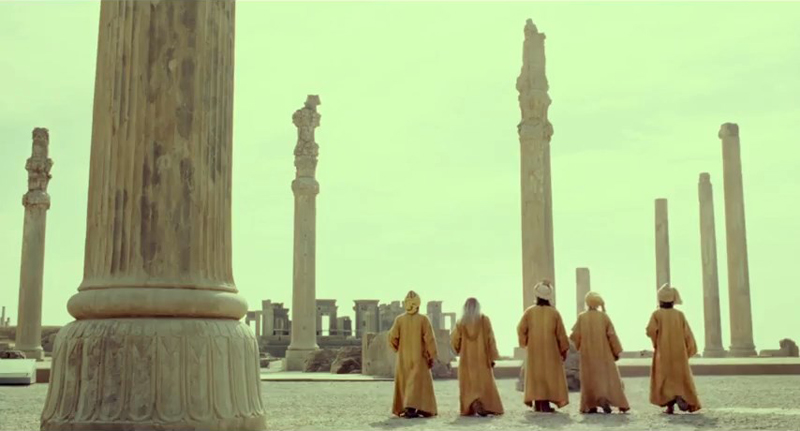
Part cosmogonic neo-noir, and part metafictional tone poem subtly underscored with political/anti-capitalist subtext, Accidental Luxuriance of the Translucent Watery Rebus (hereinafter, ALTWR) can also be labeled as a deeply personal and sublimely absurd meditation on the nature of cinema, self and our place in the universe disguised as a fragmented, heavily deconstructed detective story. Following a couple of revolutionaries, Sara and Martin, as well as an inspector on their trail, the film is set in a grim dystopian society from a conspiracy theorist's worst nightmare. Structured as a 'box within a box within a box' (ad infinitum), it stubbornly refuses to divulge any answers, leaving the viewer - hypnotized and disoriented - in an inescapable labyrinth, and that's exactly where one of its alluring fortes lies. However, not all is doom and gloom (and poeto-philosophical discourse), because Barić owns a wry sense of humor that provides a few moments of relief from the mind-boggling questioning of colliding, and decomposing realities.
The sensation of watching ALTWR is best described in the language of the author's previous offerings - imagine being an amnesiac on the beach that only exists in the darkest recesses of one's brooding mind, or astronaut of featherweight faced with unknown energies and unidentified emotions, and you may get an idea of what to expect from its oneness of space and time immersed in the subconsciousness. A daring, wildly eclectic and incredibly creative amalgam of rotoscopy, collage animation and found footage, the film's eye-popping visual identity is about as idiosyncratic as it gets - like a Dada artist conjured a Godardian flick drenched in the ectoplasm of Stacey Steers's or Irena Evteeva's fantasies and Pynchonian speculations. And what makes it even more fascinating is the fact that Barić made it virtually all - including the intriguing soundtrack - by himself, assisted only by Dino Brazzoduro in the sound design department, Ivan Katić as a producer for Kaos, and several actors lending their voices to deliberately 'defaced' characters, in a stark radio-drama fashion. The diversity of shapes, colors and textures is so overwhelming that you have no choice but to let them wash over you, especially when they transform into elusive, psychedelic abstractions. A piece of huge alchemical potency, ALTWR is one of this year's most stunning experiments.
(The review is based on the screener provided by the author.)
Dec 24, 2020
Top 20 Classic Premieres of 2020
This year, more than sixty 20th century features that I watched for the first time left a strong impression on me, but for my top 20, I deliberately omitted well-known titles and widely recognizable filmmakers that you’re likely to find on the lists such as ‘1001 Films You Must See Before You Die’. The titles are arranged from the 20th to the 1st position.
Dec 23, 2020
Weird Weird Movie Kids Do Not Watch The Movie (Maximilan Le Cain & Rouzbeh Rashidi, 2013)
There are at least three ways to interpret the second collaborative effort of Maximilian Le Cain and Rouzbeh Rashidi. Split in two distinct parts of approximately the same length, their film may appear like a twisted de(con)struction of the Pygmalion and Galatea myth told in reverse, translated to modern times, and adorned with a wry or rather, wicked sense of humor. It can also be viewed as a clash between a man’s conscious and subconscious mind, the former being dominated by (pure) feminine energy, and the latter ruled by (violent) masculine urges (or maybe it’s vice versa?). According to the official synopsis, it chronicles two ‘narratives’ set in parallel dimensions and linked by a seaside residence in which a woman (Eadaoin O’Donoghue) “dissolves her identity into the ghostly resonances”, whereas a man (Rouzbeh Rashidi) “pursues a bizarre and perverse amorous obsession” (code: mannequin).
Regardless of the perspective one takes, the physical space remains a constant – the third character of sorts that shapes and commands the claustrophobic atmosphere, and simultaneously opens its doors and windows to a multitude of possibilities. Imbued with mystery, and often implying some ominous presence (not unlike a David Lynch’s film), the house interior keeps the cinematic air at its thickest, leaving the exterior exposed to a potential illusion-shattering assault. But even those few instances of the “outside world” undermining the film’s uncanny reality paradoxically strengthen the illusion, acting as whims rather than cracks in the 4th wall, the main reason thereof being a strong connection between both authors’ life and creative work.
Speaking of their creativity, Le Cain and Rashidi employ everything from unexpected superimpositions to hypnotic flickering to unsettling juxtapositions to black, white and blue screen intermissions in the process of image-conjuring, and as a result, they elicit a mixture of fascination and puzzlement from the viewer. Draped in a heavy sonic tapestry of moody drones, murky murmurs and unnerving humming, their visuals are, in equal measures, richly textured, almost material, and ghostly ethereal, relentless in their elusiveness. These “grainy apparitions” beautifully capture the woman’s ennui and fluctuating mental states, as well as the man’s impossible romance and simmering frustration stemming from it, yet all the while, they manage to preserve the status of self-sufficient systems...
Dec 22, 2020
Kinoskop Spinoff Vol. 2: Alchemy & Performance
The idea behind Kinoskop spinoff is to promote publicly available celluloid films after the end of the festival season. As the title suggests, its second edition focuses on the alchemical and performative properties of experimental cinema, bringing together six shorts released during the last decade. The first in line is Chris O’Neill’s delightful one-taker Me the Seagull and the Sky which reflects on a moment of oneness with the world through a borderline-hypnotic monologue delivered in a brilliantly deadpan manner (and with an irresistible Irish accent) by Naoimh Looney.
Flickering the viewer away into another, ‘structuralist film’ reality is Homo Sapiens Project (161-170) by the prolific filmmaker and founder of Experimental Film Society Rouzbeh Rashidi who transmutes a couple of Hollywood trailers – for Brian de Palma’s thriller Black Dahlia and 2008 remake of The Day When the Earth Stood Still – into a cryptic ‘cine-entity’ akin to an imposing and foreboding alien transmission.
Edge of Alchemy by American artist Stacey Steers rips open the portal to a whole new dimension where Mary Pickford and Janet Gaynor find themselves as protagonists of a stunningly beautiful and somewhat disconcerting phantasmagoria brought to life by virtue of the imaginatively employed found footage and collage animation. This externalization of women’s innerscapes boasts not only the eye-pleasing visuals, but also a hauntingly immersive score composed by the Quay brothers’ frequent collaborator Lech Jankowski.
Remaining in a fantasy realms, we are taken into a hidden Arcadian grove inhabited by mythic creatures living in harmony with nature. A creek, the Moon and an oak tree whisper ancient secrets of two humans, but one artist Daniel & Clara whose spiritually uplifting Super 8 wonder Espectros Da Terra had the Belgrade premiere at the inaugural edition of Kinoskop in 2019.
Ieva Balode of Baltic Analog Lab proposes ‘cross-cultural, cross-sexual and humanitarian equality’ in her elegant, seductive and socially conscious blend of dance and landscape film Equal Tense that was commissioned by Latvian Centre of Contemporary Art. Draped in a soft, dream catcher-esque sonic veil, her hyper-grainy B&W cinematography is sure to enchant any celluloid cinema aficionado.
Closing the selection is Justin Tyler Close’s poetic exploration of grief, loss and rebirth in The Arrival – a surreal, childlike performance turned healing ritual set in the post-apocalyptic-like ruins of artist Lita Albuquerque’s home studio lost in the Woolsey Fires in 2018. Its inviting imagery and evocative cello-score are perfectly matched in this wordless love letter to everyone affected by climate change.