Dec 24, 2020

Top 20 Classic Premieres of 2020

This year, more than sixty 20th century features that I watched for the first time left a strong impression on me, but for my top 20, I deliberately omitted well-known titles and widely recognizable filmmakers that you’re likely to find on the lists such as ‘1001 Films You Must See Before You Die’. The titles are arranged from the 20th to the 1st position.

20. Oxygen (Matjaž Klopčić, 1970)

19. Velnio nuotaka / Devil's Bride (Arūnas Žebriūnas, 1974)

18. El detective y la muerte / The Detective and Death (Gonzalo Suárez, 1994)

17. La notte brava / The Big Night (Mauro Bolognini, 1959)

16. Palac / The Palace (Tadeusz Junak, 1980)

15. Anaphase (Levi Zini, 1996)

14. The Mask (Julian Roffman, 1961)

13. Сказка странствий (Александр Митта, 1983) / The Story of Voyages (Alexander Mitta, 1983)

12. The Damned (Joseph Losey, 1962)

11. Nukkekauppias ja kaunis Lilith / The Doll Merchant (Jack Witikka, 1955)

10. The Ghost of Sierra de Cobre (Joseph Stephano, 1964)

9. Medea (Frans Zwartjes, 1982)

8. Pożegnanie jesieni / Farewell to Autumn (Mariusz Treliński, 1990)

7. The Scenic Route (Mark Rappaport, 1978)

6. Die Tote von Beverly Hills / Dead Woman from Beverly Hills (Michael Pfleghar, 1964)
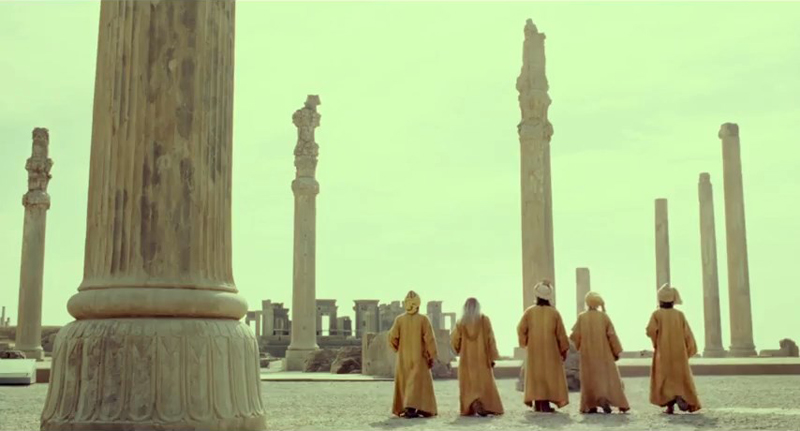
5. Iran saray-e man ast / Iran, My Land (Parviz Kimiavi, 1999)

4. Gza shinisaken / The Way Home (Aleqsandre Rekhviashvili, 1981)

3. Devojka / The Girl (Puriša Đorđević, 1965)

2. Kladivo na čarodějnice / Witchhammer (Otakar Vávra, 1970)

1. Anchoress (Chris Newby, 1993)

Dec 23, 2020

Weird Weird Movie Kids Do Not Watch The Movie (Maximilan Le Cain & Rouzbeh Rashidi, 2013)

There are at least three ways to interpret the second collaborative effort of Maximilian Le Cain and Rouzbeh Rashidi. Split in two distinct parts of approximately the same length, their film may appear like a twisted de(con)struction of the Pygmalion and Galatea myth told in reverse, translated to modern times, and adorned with a wry or rather, wicked sense of humor. It can also be viewed as a clash between a man’s conscious and subconscious mind, the former being dominated by (pure) feminine energy, and the latter ruled by (violent) masculine urges (or maybe it’s vice versa?). According to the official synopsis, it chronicles two ‘narratives’ set in parallel dimensions and linked by a seaside residence in which a woman (Eadaoin O’Donoghue) “dissolves her identity into the ghostly resonances”, whereas a man (Rouzbeh Rashidi) “pursues a bizarre and perverse amorous obsession” (code: mannequin).

Regardless of the perspective one takes, the physical space remains a constant – the third character of sorts that shapes and commands the claustrophobic atmosphere, and simultaneously opens its doors and windows to a multitude of possibilities. Imbued with mystery, and often implying some ominous presence (not unlike a David Lynch’s film), the house interior keeps the cinematic air at its thickest, leaving the exterior exposed to a potential illusion-shattering assault. But even those few instances of the “outside world” undermining the film’s uncanny reality paradoxically strengthen the illusion, acting as whims rather than cracks in the 4th wall, the main reason thereof being a strong connection between both authors’ life and creative work.

Speaking of their creativity, Le Cain and Rashidi employ everything from unexpected superimpositions to hypnotic flickering to unsettling juxtapositions to black, white and blue screen intermissions in the process of image-conjuring, and as a result, they elicit a mixture of fascination and puzzlement from the viewer. Draped in a heavy sonic tapestry of moody drones, murky murmurs and unnerving humming, their visuals are, in equal measures, richly textured, almost material, and ghostly ethereal, relentless in their elusiveness. These “grainy apparitions” beautifully capture the woman’s ennui and fluctuating mental states, as well as the man’s impossible romance and simmering frustration stemming from it, yet all the while, they manage to preserve the status of self-sufficient systems...

Dec 22, 2020

Kinoskop Spinoff Vol. 2: Alchemy & Performance

The idea behind Kinoskop spinoff is to promote publicly available celluloid films after the end of the festival season. As the title suggests, its second edition focuses on the alchemical and performative properties of experimental cinema, bringing together six shorts released during the last decade. The first in line is Chris O’Neill’s delightful one-taker Me the Seagull and the Sky which reflects on a moment of oneness with the world through a borderline-hypnotic monologue delivered in a brilliantly deadpan manner (and with an irresistible Irish accent) by Naoimh Looney.

Flickering the viewer away into another, ‘structuralist film’ reality is Homo Sapiens Project (161-170) by the prolific filmmaker and founder of Experimental Film Society Rouzbeh Rashidi who transmutes a couple of Hollywood trailers – for Brian de Palma’s thriller Black Dahlia and 2008 remake of The Day When the Earth Stood Still – into a cryptic ‘cine-entity’ akin to an imposing and foreboding alien transmission.

Edge of Alchemy by American artist Stacey Steers rips open the portal to a whole new dimension where Mary Pickford and Janet Gaynor find themselves as protagonists of a stunningly beautiful and somewhat disconcerting phantasmagoria brought to life by virtue of the imaginatively employed found footage and collage animation. This externalization of women’s innerscapes boasts not only the eye-pleasing visuals, but also a hauntingly immersive score composed by the Quay brothers’ frequent collaborator Lech Jankowski.

Remaining in a fantasy realms, we are taken into a hidden Arcadian grove inhabited by mythic creatures living in harmony with nature. A creek, the Moon and an oak tree whisper ancient secrets of two humans, but one artist Daniel & Clara whose spiritually uplifting Super 8 wonder Espectros Da Terra had the Belgrade premiere at the inaugural edition of Kinoskop in 2019.

Ieva Balode of Baltic Analog Lab proposes ‘cross-cultural, cross-sexual and humanitarian equality’ in her elegant, seductive and socially conscious blend of dance and landscape film Equal Tense that was commissioned by Latvian Centre of Contemporary Art. Draped in a soft, dream catcher-esque sonic veil, her hyper-grainy B&W cinematography is sure to enchant any celluloid cinema aficionado.

Closing the selection is Justin Tyler Close’s poetic exploration of grief, loss and rebirth in The Arrival – a surreal, childlike performance turned healing ritual set in the post-apocalyptic-like ruins of artist Lita Albuquerque’s home studio lost in the Woolsey Fires in 2018. Its inviting imagery and evocative cello-score are perfectly matched in this wordless love letter to everyone affected by climate change.

Click on the titles to watch the films!
Total duration - 54:11

Me the Seagull and the Sky | Chris O’Neill | 2012 | 16mm | 4:21

Homo Sapiens Project (161-170) | Rouzbeh Rashidi | 2013 | 35mm | 8:07

Edge of Alchemy | Stacey Steers | 2017 | 35mm | 19:19

Espectros Da Terra | Daniel & Clara | 2018 | Super 8 | 4:00

Equal Tense | Ieva Balode | 2018 | 16mm | 7:21

The Arrival | Justin Tyler Close | 2019 | 16mm | 11:03

Dec 15, 2020

L.O.R.D: Legend of Ravaging Dynasties 2 (Jingming Guo, 2020)

 ☼☼☼☼☼☼☼☼(☼) out of 10☼

The continuation of L.O.R.D. saga by controversial young adult writer and pop idol turned director Jingming Guo marks a major milestone in the animation industry of mainland China. Striving to take your breath away with state-of-the-art CGI and over-the-top action sequences, Legend of Ravaging Dynasties 2 is a vast improvement in comparison to its predecessor in terms of both visuals and story whose ostensibly esoteric, convoluted nature poses no obstacle in the way of sheer enjoyment.

Drawing inspiration from various, oft-disparate sources, ranging from Chinese and other mythologies, to several centuries of European architecture, to wuxia and Yimou Zhang's historical spectacles, to Giger's and Beksiński's artwork, to Final Fantasy and Fate/Stay Night franchises, this extremely high gothic fantasy is first and foremost a deliciously fancy feast for the eyes. Its infinitely immersive world of wild magic, unbelievably handsome people and soul behemoths is replete with gorgeous medieval cities, sumptuous Versailles-like castles, seemingly inescapable labyrinthine ruins and bottomless oceans that act as portals to rocky wastelands and abandoned temples. And let's not forget a secret lake of blood inhabited by a slimy, Brobdingnagian triton that would give Guillermo del Toro a run for his money. To say that the attention to detail is awe-inspiring would be a severe understatement, because everything from a lacy, transparent nightgown of lovely princess Tianshu You Hua to splashes of water transforming into killer icicles during the final battle is jaw-droppingly gorgeous!

Speaking of battles, L.O.R.D. 2 is densely packed with elaborate, grandiloquent, gravity-defying set pieces of martial arts and swordplay extravaganza reaching almost poetic heights, despite their undeniable similarity to video game cut-scenes (which, by the way, have been increasingly cinematic in recent years). One particularly impressive sequence involves a flock of dragons and some mind-blowing aerial acrobatics accompanied by a pounding rock number followed by an operatic composition that elevates the grandeur of the proceedings. Eclectically epic in scope, the original score by Taku Iwasaki is perfectly matched to dazzling imagery in any given moment, whether the moment requires string-laden melodramatics or modern metal grinding.

As you might've already figured, Guo's film is all style over substance or rather style as substance, given that the narrative and the character development are of secondary importance. At its core, it is a good vs. evil fable with plenty of baroque flourishes which turn it into a larger-than-life adventure of mystical proportions, and with an enigmatic Duke, Gilgamesh, who is sealed in a God-forsaken cavern posing as a plot device. To learn what's so special about him, we will probably have to wait for the third installment promised by the cliffhanger ending...

Dec 14, 2020

Kinoskop Spinoff: B&W Celluloid Magic

Welcome to the first Kinoskop spinoff! Presented here is a small, yet eclectic selection of seven B&W films released during the past two decades, and publicly available on their respective authors’ Vimeo channels. Arranged chronologically, it opens with Phillip Barker’s illusionary, perspective-bending mystery drama Regarding that makes brilliant use of a single set, then takes a sharp turn into the absurdist territory with Dmitri Frolov’s punkish, darkly humorous piece The Daddy’s Meat, followed by Brittany Gravely’s esoteric music video Black Tide for avant-garde band Neptune set in the otherworldly realm of non-human. 

The longest of the bunch, Medeafilm by Behrad Gramian and Hailey Benton Gates pays a loving homage to silent cinema, as it subverts the Medea myth into a quirky, psychosexual cine-play. Susu Laroche’s less-than-two-minutes-long action fantasy Tzars of Eros elevates grain and scratches to a whole new level, depicting ‘Apollo and Dionysus at loggerheads’. Karissa Hahn turns the mundane into a recurring nightmare in her performative short Cataract Churning Grey marked by the whistling sound of a boiling teapot. And last but not least is Jared Michael Sobotka’s Anima – a dreamlike exploration of self and soul that was screened as a part of ‘Cine-Rituals in Magic & Alchemy’ program at the inaugural edition of Kinoskop in Belgrade, 2019.

Click on the titles to watch the films!
Total Duration - 37:11

Regarding | Phillip Barker | 2002 | 16mm | 4:50

The Daddy’s Meat | Dmitri Frolov | 2004 | 16mm | 3:36

Neptune – Black Tide | Brittany Gravely | 2008 | 16mm | 4:34

Medeafilm | Behrad Gramian & Hailey Benton Gates | 2010 | 16mm | 11:47

Tzars of Eros | Susu Laroche | 2014 | 16mm | 1:40

Cataract Churning Gray | Karissa Hahn | 2017 | Super 8 | 4:07

Anima | Jared Michael Sobotka | 2019 | 16mm | 6:37

Dec 9, 2020

Kinoskop 2 Online

Officially, the second edition of Kinoskop festival has ended, but the spirit of celluloid cinema lives on! In addition to the entire Music Videos selection which was one of this year's novelties, there are ten films publicly available on their respective authors' Vimeo/YouTube/official pages. Just click on the titles to watch them!

Nordic Grammar (Kaspar Peters, 2019) / Audience Award (along with The Man Who Became Everything, 2020, by Michael Alexander Uccello) - a hauntingly beautiful mystery in which interior and exterior spaces become the extension of the heroine's deteriorating state of mind.

My Selves Dissolving (Danielle Wakin, 2020) - meta-existing in a phantasmagorical realm of rambunctious psychedelic abstractions and introspective pseudo-occult rituals charged with glam eroticism, this has to be one of the most bewitching shorts, both aurally and visually, that I've seen this year.

A Body Travels in Darkness (Kyle Ryan, 2020) - if you are a fan of David Lynch's early experiments, don't miss out on this dark, head-scratching piece set in an alternate reality.

Inventory (Joeri De Jongh, 2020) - a tastefully humorous look at one woman's struggle with boredom during the lockdown we've all experienced during this year. (Cat people should know that there's a beautiful feline appearing in a supporting role.)

Espinado (Ivan Cordeiro, 2019) - an uplifting Super 8 documentary on Martin Espino, a composer of indigenous Yaqui and Tepehuano ancestry whose music harkens back to the exotic past...

Roadtrip (Isabel Padilla, 2019) - only two minutes long, this is an absurd, delightfully weird deconstruction of a road-movie happening in the middle of... where?

Crumbs #3 (Cinema Trailer) (Jack Wormell, 2020) - a droll parody of blockbuster trailers, as well as a prickly comment on the hyper-production of landscape films. 

Rainbow in the Dark (Ben Mosca, 2020) - an inspired anti-smoking PSA brimming with mesmerizing apocalyptic imagery.

The Lovers (Justin Brown, 2020) - a meditative romance of ethereal superimpositions which lulls the viewer into a dream state...

Risques (Thomas Gerard, 2020) - a tone poem / essay film / music video depicting inner turmoil, and featuring the strong, magnetic presence of model Rouguy.

Dec 1, 2020

Cinematic Favorites 11/20

This November was marked by intense preparations for the second edition of Kinoskop, yet I managed to see twentysomething features (and be disappointed by most of the recent offerings), and approx. 100 shorts, a good number of which were screened at online editions of North Bellarine and Fonlad film festivals. The following lists are presented in chrono-alphabetical order.

FEATURES


1. Red Desert (Michelangelo Antonioni, 1964) - In Antonioni’s stark psychological drama, Monica Vitti gives a subtly affected, strangely magnetic portrayal of a woman spiraling down into madness, with a fascinating mise-en-scène acting as an extension of her vacillating mind, and pulling the viewer ever deeper into her crumbling world. The boldly used colors and gloomy industrial setting complement each other in an almost surreal fashion...
2. Witchhammer (Otakar Vávra, 1970) - Nothing short of an uncompromising, awe-inspiring masterpiece, Witchhammer boasts superb direction, brilliant screenplay and bravura performances (particularly by Vladimír Smeral as a slimy inquisitor), brims with great allegorical potential and fiercely strikes with its bleak, unfading relevance, and on top of that, it completely absorbs you with its oppressive atmosphere of growing paranoia achieved through a carefully measured pacing, stunningly beautiful visuals of minimal camera movement and brooding music score that evokes the sense of despair and impending doom. This period piece is by no means an enjoyable watch, given the subject matter and all the themes explored, but it is one that leaves a deep, lasting impression.
3. His Motorbike, Her Island (Nobuhiko Ōbayashi, 1986) - Although tinged with nostalgia and inhabited with ghosts of memories, His Motorbike, Her Island appears like an invigorating portrait of temperamental youth, as well as a jovial ode to bikers subculture oft-filtered through the prism of punkish chivalry. Subtly stylized, seasoned with some nudity (that comes across as natural rather than exploitative) and brimming with infectious energy, this tongue-in-cheek melodrama plays out in a dreamlike reality reflected in a playful collision between the monochrome and color imagery. The highly attractive leads – Riki Takeuchi in his big-screen debut, and Kiwako Harada in her sophomore role – both shine in their portrayals of two sympathetic characters, Koh and Miyoko, who seek to scatter their ennui in the wind, eventually becoming inseparable from it...
4. The Bigmoon Nights (Dmitri Frolov, 1989-1993) - a mind-altering cine-delirium that defies any attempt at categorizarion. It has to be seen to be believed (click on the title).


5. Farewell to Autumn (Mariusz Treliński, 1990) - Based on the novel of the same name by Stanisław Ignacy Witkiewicz – eccentric Polish philosopher and multidisciplinary artist, as well as ‘extravagant dandy, erotomaniac and Adolf Hitler impersonator’, as we’re informed in the film’s opening – Farewell to Autumn is a bizarre cinematic equivalent of a feverish dream, one that often makes you disoriented while pulling you in ever-deeper. Part (anti)romantic / historical drama and part philosophical meditation on the decline of bourgeois culture, communism, death and whatnot, it appears like an unruly, yet infinitely charming love child of Chytilová and Żuławski (or maybe Makavejev?). Its sudden mood swings, delirious rhythms, and decadent beauty that is best reflected during the orgiastic wedding party eventually crashed by the revolutionaries are integral to its brazen seductiveness.
6. Anchoress (Chris Newby, 1993) - Anchoress is, hands down, one of the most incredibly gorgeous period pieces that my eyes have had the honor to feast upon! It is an incessant, overwhelming stream of stunning tableaux vivants that reach the deepest layers of the subconscious mind, and it is also one of those films that rekindle my love for cinema right from the get go. If I had to draw comparisons, I’d mention the likes of Bergman, Vláčil and Tarkovsky. I’m awestruck by its magic...
7. Planet of the Cannibals (Hans-Christoph Blumenberg, 2001) - Made on a modest budget, but directed with gusto (and a tongue deeply planted in cheek), and beautifully captured in noirish, high contrast B&W, Planet of the Cannibals is a witty sci-fi satire (set in 2020!) that pokes fun at mass media, conspiracy theories, fascist governments and B-movies to which it simultaneously pays a loving homage. Involving a deadly TV quiz, a live talk-show with a Hannibal Lector-like superstar and aliens integrated into human society, the film runs at brisk pace, and brings a few twists and turns along the way, all for a delightfully weird viewing experience. A superb ensemble of actors lends gravitas to its quirky cast of comic-book-inspired characters, with a special appearance by filmmaker Fatih Akin in the role of a nicotine-dealer, Mr. Dark. 
8. Minotaur (Zulfikar Filandra, 2020) - Co-produced by Experimental Film Society, Dublin, and Kolumbija, Sarajevo, Minotaur is a bold, playful (or rather, puckish) and deeply personal feature debut from young Bosnian filmmaker Zulfikar Filandra. Part fragmented self-portrait (selfilm) and part meditation on life’s evanescent beauty, this peculiar docudrama is an ever-mutating collage of author’s home movies shot on various formats. Edited into a singular entity – a memory-labyrinth of which Filandra is not only the builder, but the monster and the hero as well – these moving images serve as reminders that poetry in its raw form can be found (and captured) in the mundane, whether you’re alone or in the company of family, a friend or a lover.

SHORTS


1. Trauma Industries (Jethro Massey, 2017)
2. Dada Time (Gwendolyn Audrey Foster, 2018)
3. Field of Infinity (Guli Silberstein, 2018)
4. mirARTE 010… (Hernando Urrutia, 2018)
5. Anatomy of Waters (Roland Quelven, 2019)
6. Come (Daniela Lucato, 2019)
7. Finding Uranus (Ivan Li, 2019)
8. Juniper (Robert William & Anchuvas Pereña, 2019)


9. Nostalgia in Domicella (Carla Forte & Alexey Taran, 2019) (excerpt)
10. Aegra timoris (Sick of Fear) (Úrsula San Cristóbal, 2020)
11. Autumn Walk (Eija Temisevä, 2020)
12. Drift (Elisabeth Lowe, 2020)
13. Elements (Simon Hardwick, 2020)
14. Polka-Dot (Alexandra Niemczyk, 2020)
15. Puparia (Shingo Tamagawa, 2020)
16. Water Blues (Francesca Fini, 2020)