Feb 1, 2022

Best Premiere Viewings of January 2K22

1. Un uomo a metà / Almost a Man (Vittorio de Seta, 1966)


“I do not exist. I feel like I’m dreaming. I look at the other people... Young, happy... How does it feel to be like that? What do they feel? I don’t know. I never felt it. The important thing... is to know.”

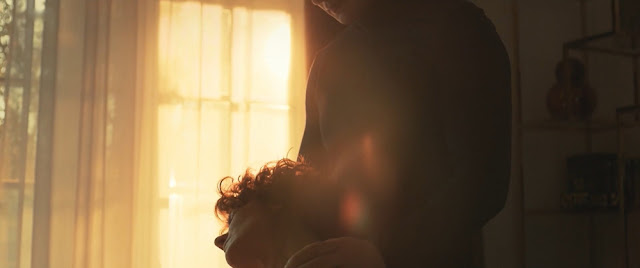
Stunningly captured in high-contrast to milky B&W cinematography by Dario Di Palma, and soaked in deep silences and broodingly atmospheric, texturally rich score by maestro Ennio Morricone, Almost a Man is a triumphant psychological drama and an insightful character study that takes the viewer to a dark forest of dreams, memories and fragments from the life of a troubled writer, Michele (the bravura performance by Jacques Perrin). The desperate, disenchanted, sexually repressed and paranoid hero’s slow-burning descent into madness triggered by an existential crisis is directed with a master-level precision and keen sense of cinematic poetry by Vittorio de Seta who creates a hallucinatory atmosphere of oneiric dread, bringing to one’s mind the likes of Bergman, Resnais and Antonioni.

2. Das Totenschiff / Ship of the Dead (Georg Tressler, 1959)


Ship of the Dead is easily one of the most absorbing pieces of (European) classic cinema that I’ve had the honor of seeing. Based on the novel by the mysterious B. Traven best known for The Treasure of the Sierra Madre, it follows an American sailor, Philip ‘Pippip’ Gale, who loses his papers to a prostitute in Antwerp and later finds himself slaving away on Yorikke, a decrepit ship owned by smugglers. As things go from bad yet manageable to virtually inescapable worse for our hero, Tressler demonstrates impressive versatility in helming his vessel across both calm and troubled waters, eliciting a diverse range of moods from the viewer, with little to no effort. Assisted by Heinz Pehlke’s expressive, gritty, noir-like cinematography, and Roland Kovac’s doom-portending score, he creates a number of individual scenes worthy of detailed analysis for their own immense strength, as well as for their irreplaceable value for the film as an engaging whole that is charged with anti-capitalist sentiment. Boosting this adventurous drama’s power is a perfect cast, with Horst Buchholz in a leading role that sees him transforming from a charming, if reckless vagabond into a victim of poor life choices, and Mario Adorf portraying a Stockholm syndrome-suffering seaman, Lawski, whose conflicting friendship with Pippip is the very emotional core of the feature’s darker second half.

3. Popioły / The Ashes (Andrzej Wajda, 1965)


Wow! Epic in scope (the running time is almost 4 hours) and absolutely stunning in its visuals (captured by Jerzy Lipman of Knife in the Water fame), The Ashes is one of the most fascinating pieces of Polish cinema that I’ve seen so far. Andrzej Wajda – assisted by none other than his namesake Żuławski – directs with a painter’s eye, poet’s heart and keen sense of both humor and grandeur, effortlessly transforming into a madman during the scenes of war which dominate the film’s second half. Particularly memorable in its almost surrealist, disquietingly mesmerizing delirium is the chapter Beyond the Mountains which depicts the massacre in the Spanish city of Saragossa. And on its gentler side, The Ashes is no less powerful, grounded in strong performances or rather, sympathetic characters of Rafał Olbromski and Krzysztof Cedro. 

4. Girl with Green Eyes (Desmond Davis, 1964)


She is a ‘mixture of innocence and guile’, her favorite novelist is F. Scott Fitzgerald, she puts a sweet smile when someone quotes James Joyce, and lights remind her of ‘all the people in the world waiting for all the other people to come to them’. Contrary to what her bestie Baba (Lynn Redgrave) thinks of her, she does know how to attract men, even though she bites her nails, isn’t very sophisticated and tends to be jealous, possibly because of her green eyes.

Given the film’s (beautiful!) B&W imagery, we can’t see the color, but we can often feel its intensity in the girl’s gazes and glances, or rather, in her youthful vivacity. And Rita Tushingham is extremely charming in the casual portrayal of this lassie, Kate Brady, whose life is Dublin may be a way to escape her Catholic, not to mention sternly patriarchal upbringing in a country. The story of Kate’s falling for a soon-to-be-divorced erudite, Eugene, who’s twice her age (Peter Finch, superb) couldn’t be simpler, yet it works wonders thanks to both Edna O’Brien’s witty, insightful writing and Davis’s refined, inviting and engaging direction marked by great attention to details. Equally praiseworthy are John Addison’s deeply evocative score, and Brian Smedley-Aston’s playful editing, with spatio-temporal ‘jumps’ emphasizing the increasing power of Kate and Eugene’s love. 

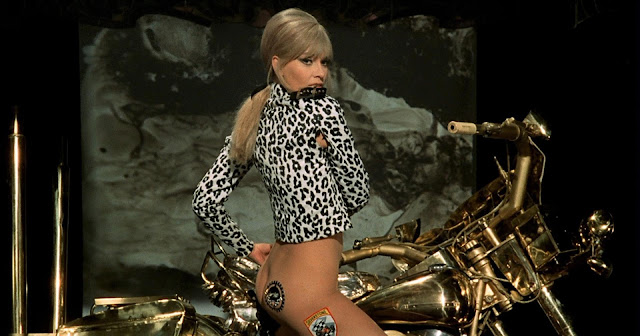
5. La Prisonnière / Woman in Chains (Henri-Georges Clouzot, 1968)


In Henri-Georges Clouzot’s intoxicating swan song whose strange melody brings to mind Peeping Tom, Belle de Jour, and The Umbrellas of Cherbourg, foreshadowing Grillet’s Eden and After, op and pop art intertwine with suppressed passion, as petit bourgeois sensibility clashes with the liberating power of submission. Through the spellbinding use of color, the most mundane of scenes open a door towards über-reality, often signifying (or concealing?) the characters’ mental and emotional states, with the simmering chemistry between Elisabeth Wiener as Josée and Laurent Terzieff as Stanislas creating strong erotic tension. And even when the film appears to have lost some of its steam, the power of visuals alone keep the viewer glued to the screen, preparing you for one of the most psychedelically mind-blowing dream sequences in the history of cinema.

6. Nightmare Alley (Guillermo del Toro, 2022)


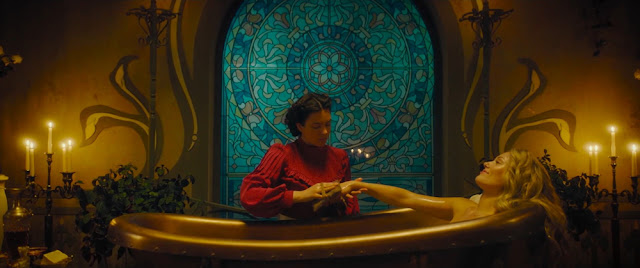
Guillermo del Toro’s latest offering - neo-noir Nightmare Alley - made the evening of January 24 for my dear friend Milena and me. Both of us were particularly impressed by the sheer brilliance of the performance from Cate Blanchett who fiercely dominates every scene she is in, as if possessed by the spirits of most if not all of the Golden Age femme fatales. There’s a lot to love about the film, from the great production design to inspired cinematography, but that woman is just out of this world.

7. Black Out p.s. Red Out (Menelaos Karamaghiolis, 1998)


Cinematically opulent, i.e. simmering with wildly varied references overtly woven into an intricate web of sex, lies and audio tapes, Black Out p.s. Red Out begins with a funeral, and ends on the way to a maternity hospital. Imbued with subtle eroticism, it recounts a fragmented, increasingly mystical story centered around an electrified love triangle between a pilot, Hristos, a model, Maria, and a photographer (+ the leader of a secret sect?), Stavros, plunging us into a surreal world that appears as if reflected in a broken mirror. Its main forte lies in hyper-stylized visuals beautifully captured in both color and chiaroscuro B&W by DoP Elias Kostandakopoulos who would collaborate with Antouanetta Angelidi on her 2001 avant-garde fantasy Thief or Reality (also highly recommended). And Fassbinder fans will probably recognize German actress Hanna Schygulla in the role of enigmatic Martha...

8. Szép lányok, ne sírjatok! / Don’t Cry, Pretty Girls! (Márta Mészáros, 1970)


When this film and Valerie and Her Week of Wonders – a seminal work of Czech New Wave – were released, Jaroslava Schallerová was only 14, and yet her confidence and magnetism, even seductiveness in leading roles far surpassed her age. In Márta Mészáros’s rock drama heavy on music and light on dialogue, she portrayed a young woman, Juli, yearning for freedom that had been limited by her brother and fiancé or, generally speaking, traditional values, and what she demonstrated in her performance was nothing short of awe-inspiring. All of those subtle micro-expressions and the way she interacted with both the setting and her partners came across as pure, simultaneously natural and stylized as if she were born in the world of cinema. Simply fascinating! And of course, given that it was Mészáros behind the helm, her face and other faces as well were irresistibly framed in B&W, perpetuated in the most fleeting of moments of love, ennui, delight, melancholy and rumination... 

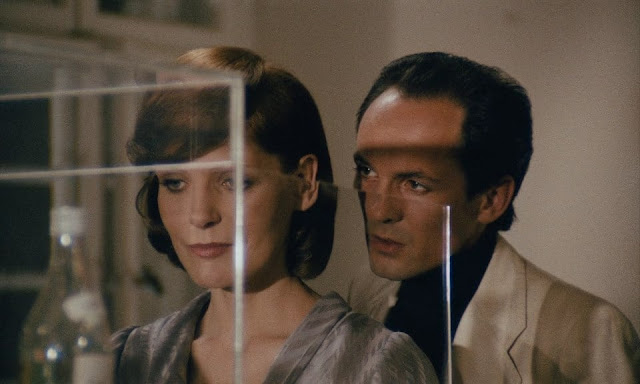
9. Chinesisches Roulette / Chinese Roulette (Rainer Werner Fassbinder, 1976)


Through a glass dirty... Meaningful silences and soul-piercing glances. Contempt and discontent of a dysfunctional bourgeois family, in beautifully shot or rather, ‘choreographed’ frames charged with dramatic tension.

10. Latitude Zero (Ishirō Honda, 1969)


“Politics are only needed by people incapable of running their own lives.”

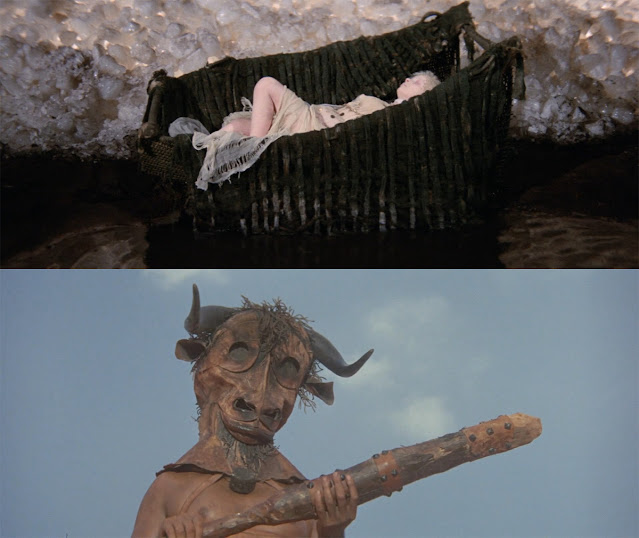
There’s plenty of extra swinging in this 60’s Japanese-American co-production that out-camps Barbarella with its brilliantly silly B-movie shenanigans obviously inspired by Jules Verne’s writings. Coming across as a live-action prototype of some weird 80’s sci-fi anime, it is deeply rooted in Utopian ideas delivered with a childlike sincerity. Infectiously imaginative, it throws at you everything from a multi-colored smoke of a volcano explosion to scientists in queer outfits to the underwater society that knows no greed and nations, with all-you-can-take diamonds lying around the domed place, and ‘immunity baths’ providing 24-hour invincibility for dangerous missions. Add to that Batman’s mutated cousins, giant rats and a manticore with human brain, and you got yourself an insanely groovy movie which leaves you highly entertained.

11. Жажда страсти (Андрей Харитонов, 1991) / Thirst of Passion (Andrey Kharitonov, 1991)


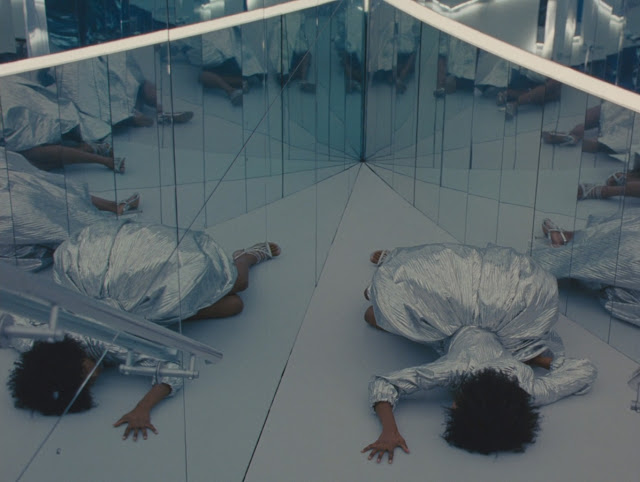
The sole directorial effort from actor Andrey Kharitonov (1959-2019), Thirst of Passion is somewhat of an anomaly in Russian cinema. Quite possibly the weirdest film released in what was then still USSR, it stands out as a deeply flawed, yet intriguing multi-genre curiosity which blends everything from gothic horror to giallo to sexploitation to period melodrama to psychological fantasy into a campy piece of cine-madness involving an evil doppelgänger of an unnamed heroine, murderous mirror reflections and mysterious men clad in black one of whom is a ghoulish creature or a vampire. In the leading role credited only as ‘She’, it features Anastasiya Vertinskaya who starred in adaptations of classics such as Hamlet, War and Peace and Anna Karenina during the 60’s, and portrayed the love interest of Amphibian Man (1962) – a lovely sci-fi romance I ‘discovered’ in 2021. A bold and beautiful nonsense marked by ‘glowing’ cinematography.

12. L'éveillé du pont de l'Alma / The Insomniac on the Bridge (Raúl Ruiz, 1985)

“Seeing a chimera is not impossible, the chimera itrself, that's another thing.”

The strangeness of this film should be measured in indivisible dream units... or in the words uttered by shadows, perhaps?

13. Eyes of Laura Mars (Irvin Kershner, 1978)


Hollywood goes giallo, with exquisite performances from Faye Dunaway and Tommy Lee Jones in leading roles.

14. Una sull'altra / One on Top of the Other (Lucio Fulci, 1969)


At his most Hitchcockian, Fulci delivers a delightfully sleazy and visually pleasing thriller that feels like a precursor to some 80’s and 90’s additions to the genre, with Riz Ortolani’s godlike jazz score pulling you deep into the world of deceits, sexy doppelgängers and murderous jealousy.

15. Sanctorum (Joshua Gil, 2019)


“Humankind sees the world through suffering. They walk like a lost child. Not knowing what they are looking for. Not knowing what they have. Only love can save them.”

16. Meng jing ren sheng / I Dreamed a Dream (Qihua Duan, 2021)


Shihao Li: “30 seconds in reality is an hour in dream time.”
Liying Zhu: “But, we’re not dreaming!”
Shihao Li: “Movie is a dream.”

Dreams, memories and reality are densely interweaved in the ambitious if flawed directorial debut from Qihua Duan, as a protagonist, Crystal, tries to uncover the secrets from her comatose father’s past through the technique of ‘dream yoga’ which allows lucid dreaming. An exploration of sub- and unconscious mind, her meandering journey takes the viewer through the labyrinth of Rashomon-esque structure, thematizing young love, rivalry, betrayal, and traumas turned into healing fantasies. Amongst numerous characters who – as both their younger and older selves – slip in and out of each other’s oft-fabricated stories, one can easily get lost, yet by the end Duan manages to tie all the narrative threads together, for better or worse. Where his film excels is the stylish cinematography coupled with great, occasionally baroque production design, and complemented by gentle, romantic score.

17. The Flower Thief (Ron Rice, 1960)


In what appears like a neo-Dadaist experiment conducted in a freewheeling way, Warholite Taylor Mead embarks on a San Francisco adventure of pure randomness and oft-childlike lollygagging captured in grainy 16mm imagery and accompanied by wildly eclectic score, with Rice’s playful editing adding to the film’s loony sincerity.

18. Hayop ka! / You Animal! (Avid Liongoren, 2020)


Ralph Bakshi’s cult feature debut Fritz the Cat gets a sort of a spiritual successor in romantic satire You Animal! – a tongue-in-cheek parody of Pinoy telenovelas in which characters reportedly scream the titular phrase at each other in the heat of an argument. Deliciously saucy and irreverently melodramatic, it revolves around a love triangle between a saleslady or rather, salescat, Nimfa, her macho mongrel boyfriend, Roger, who works as a janitor, and a purebred (husky?) playboy industrialist, Iñigo Villanueva, with whom she fulfills her fantasy of climbing up the social ladder. (Did I mention that the story is actually prophesized by an octopus fortune teller?)

The colorfully mesmerizing artwork may look cute, with all protagonists being talking animals, but this is by no means a kids cartoon, given its rampant sex jokes and lines such as ‘my bun is quite content with your hot dog’, not to mention a highly stylized (read: deliberately kitschy) intercourse scene. However, it is not to be taken too seriously either, which Liongoren and his team of artists constantly emphasize through visual gags such as witty inscriptions hanging all around ‘Zootopia-fied’ Manila, some literal catfight or a rage-fueled scene inspired by the Street Fighter car-crashing bonus game. The social commentary is there, but it is the animators’ wild and free imagination that comes first, reflected in a wonderful world building, and full control of the medium.

19. The King’s Daughter (Sean McNamara, 2022)


After facing zombies, infected dobermanns and other mutant creatures as Claire Redfield in lovingly trashy true-to-game adaptation Resident Evil: Welcome to Raccoon City, Kaya Scodelario jumps with great gusto into elegant dresses as the titular princess, and makes a contact of the mermaid kind (so, there’s also a lot of jumping into the water). Her father is a historical figure known as le Roi Soleil, but it’s best you forget about the facts, because what we get here is a work of pure, decontextualized fiction (well, I already mentioned the mythological maid of the sea, didn’t I?).

Being a big sucker for fairy tales, I found The King’s Daughter to be quite an enjoyable, throwback-to-the-childhood experience, in spite of all the (compulsory?) clichés and predictable outcome of the story which is loosely based on Vonda N. McIntyre’s novel The Moon and the Sun. Innocently romantic, baroquely flamboyant and playfully anachronistic (I couldn’t be gladder they decided not to include those terrible wigs of the period), this high fantasy boasts dazzlingly colorful visuals assisted by slightly outdated, yet beautiful CGI reminiscent of Chinese cinema, which should come as no surprise given that half of the budget was reportedly provided by China’s Kylin Films. (Not to mention that the mermaid is modeled after Bingbing Fan.) Lending it some serious gravitas is the trio of veterans, Julie Andrews as the Narrator, Pierce Brosnan as King Louis XIV, and William Hurt as his spiritual guide, Pere La Chaise, all of who seem to enjoy their roles. Scodelario proves to be an interesting choice for convent-raised, but rebellious, musically talented and of course righteous Marie-Josephe D'Alembert whose heart gets stolen by a ‘commoner’ that is adventure-seeking fishermen captain, Yves De La Croix, portrayed by Benjamin Walker.

20. Iris Warriors (Roydon Turner, 2022)

Awww... this was sweet!

Somewhere in England, during the WWII bombings, a group of children and their teacher, Miss Shaw, get trapped in a cellar. To strip away the young ones’ fears, she reads them a story of Darkness and Light, and of their offspring – seven colors known as Iris Warriors. The book seems to have magical powers, so the brick wall in the candlelit shelter turns into a portal towards the mythical world whose inhabitants – adorned in ‘spiky’ costumes – dance the lovely fairy tale on a diamond-shaped entity floating in space. Paired with on-a-budget, yet attractive visuals, the simple narrative works well in stimulating imagination, even though the viewer can predict the happy ending coming its way. Transcending the tale’s familiarity are the soothing voice of Jessica Brown Findlay perfectly cast as Miss Shaw, and striking combination of angular (some may even say obsolete) CGI with stagey mise-en-scène. Iris Warriors is not a masterpiece, but it’s unorthodox style is what makes it worth a watch. 

“You can dance anywhere, even if only in your heart.”

Honorable mention:

Post Mortem (Péter Bergendy, 2020)

In Péter Bergendy’s horror debut set in a Hungarian village after the WWI, ghosts manifest as shadows who whisper, moan and sigh creepily, lifting the living up in the air when not moving and throwing various objects around. A young post mortem photographer, Tomás (Viktor Klem), joins a 10-yo girl, Anna, whose face appeared to him during his near-death experience, to discover the reason(s) of haunting. Not trying to reinvent the wheel as many of his contemporaries do (only to fail miserably), Bergendy employs some good ol’ scare tactics and they work like a charm that makes all of your bodily hair raise. Assisted by the bleakly picturesque cinematography of withered colors, befittingly chilling score, and skin-crawling sound effects, he establishes a dense, immersive atmosphere which, to a certain point, dissolves in the final chapter of a Hollywood-like VFX trickery threatening to turn the film into a parody of the genre. However, even its most problematic section provides some beautifully poetic moments that manage to anchor over-the-top goings-on to a solid ground.

Jan 25, 2022

A Selection of Recent Artworks (XI)

Verità Magica - Arte o Morte / Магична истина: Уметност или Смрт / Magical Truth: Art or Death

Partenza / Одлазак / Departure

La Bellezza della Solitudine / Лепота самоће / The Beauty of Loneliness

La Saggezza della Follia / Мудрост лудости / The Wisdom of Madness

Simulacro / Симулакрум / Simulacrum

Idra / Хидра / Hydra

Il Regno / Краљевство / The Kingdom

Jan 21, 2022

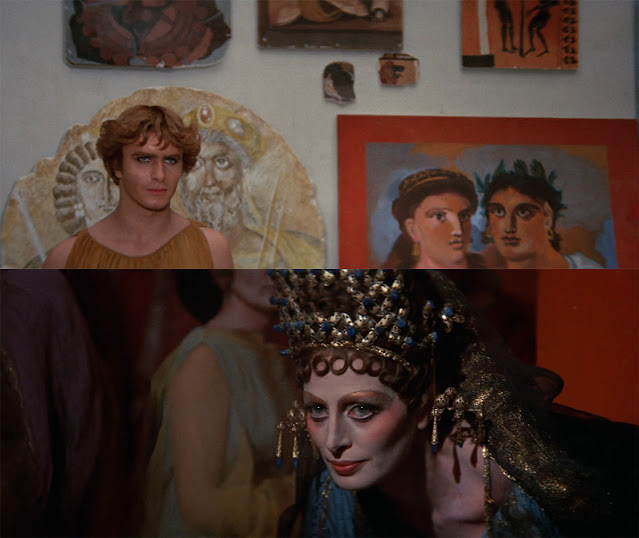
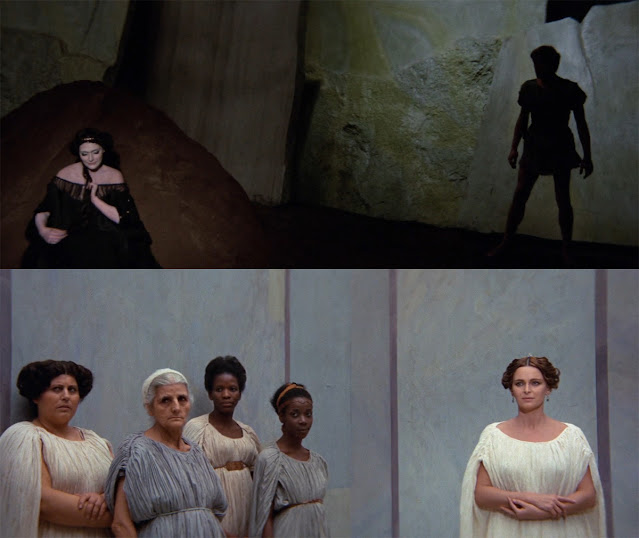
Fellini Satyricon (Federico Fellini, 1969)

(re-watch impressions)


Dubbed ‘science fiction of the past’ by Fellini himself, Satyricon belongs to none of the presents – it exists beyond the ancient future, in a place unknown and unreal, imagined as timelessness that invokes the artist’s spirit into new, yet primordial lives. Bolder than any mythological hero, and more vivid than the colors of all seasons bleeding into an eternal stream of light, it flows like a dream (or the most delicate of nightmares) and it follows its logic, inviting you to a mysterious circus run by all perverse demons and deities, their tent fixed to remote corners of the universe.

A sultry melody of dissonance, the coolly flame of widely open skies, and the boiling wave of thoughts roaming free, it devours your soul only to vomit it back shrouded in a glittering veil, and amalgamated with liquid entities of ultimate pleasure. Luridly beautiful, sublimely grotesque, overtly titillating and profoundly alienating, this pansexual phantasmagoria transcends genre conventions, always a grin away from a comedy, too enchanting to be a fairy tale, and thrice as visually exciting as an adrenalized adventure. Directed at the highest peak of creative madness and liberty, it licks your mind until its saliva reaches and electrifies your subconscious, simultaneously exploding and imploding it.

Out-kitsching the rambunctious flamboyance of kitsch, while turning a multitude of lies into ultimate truths, Satyricon acts as an erected hermaphrodite-parent breast-feeding the likes of Jodorowsky’s The Holy Mountain, Pasolini’s Trilogy of Life and Terayama’s Pastoral: To Die in the Country, Jarman’s queer cine-reveries, Angelidi’s Topos and Greenaway’s oppressive hyper-theatrics, Maddin’s The Forbidden Room and Rashidi’s Luminous Void: Docudrama, among its other wild children.

Dec 31, 2021

Top 95 Premiere Viewings of 2021 (2000-2021 Edition)

This year, I was pretty generous with ratings, finding myself surrounded by almost 100 highly appreciated films (including some not-so-fresh, but newly discovered titles), which is why I decided to sort them out into eight thematic categories. As you may already assume, Thrills & Chills, Mysteries & Monstrosities is dominated by horror genre, yet there are a few dark thrillers, atmospheric / perplexing and sci-fi flicks included for the diversity sake. Down the Rabbit Hole is high on fantasy or deep in magic realism, whereas Future Imperfect & Disturbances in Kafkaland blends features of dystopian and/or Kafkaesque qualities. A variety of formally or stylistically challenging experiments oft-unsparing of the viewer come together in No Compromise! complemented by another ten unconventional, but more accessible flicks of Beautiful Weirdos. Named after Björk’s 1993 single, Big Time Sensuality is a domain ruled by (panesexual) Eros, though it holds some surprises, and Still Waters Run Deep synthesizes lyrical, methodical and slow cinema into a gentle organism. Finally, self-explanatory Action! is the most entertaining among these ‘selections’, with B-movie spirit soaring into the sky.

THRILLS & CHILLS, MYSTERIES & MONSTROSITIES

1. Mad God (Phil Tippett, 2021)
2. Antlers (Scott Cooper, 2021)
3. Far From the Apple Tree (Grant McPhee, 2019)
4. Junk Head (Takahide Hori, 2017)
5. The Night House (David Bruckner, 2021)
6. Gwleđđ / The Feast (Lee Haven Jones, 2021)
7. Come True (Anthony Scott Burns, 2020)
8. Some Southern Waters (Julian Baner, 2020)
9. Dýrið / Lamb (Valdimar Jóhannsson, 2021)
10. Limbo (Soi Cheang, 2021)
11. Invisible Alien (Jintao Lu & Dawei Zhang, 2021)
12. Nagwonui bam / Night in Paradise (Hoon-jung Park, 2020)
13. Ventajas de viajar en tren / Advantages of Travelling by Train (Aritz Moreno, 2019)
14. De Uskyldige / The Innocents (Eskil Vogt, 2021)
15. Hunted (Vincent Paronnaud, 2020)
16. The Night (Kourosh Ahari, 2020)
17. The Awakening of Lilith (Steven Adam Renkovish, 2021)
18. Aragne no Mushikago / Aragne: Sign of Vermillion (Saku Sakamoto, 2018)
19. Oxygen (Alexandre Aja, 2021)
20. The Dark and the Wicked (Bryan Bertino, 2020)

DOWN THE RABBIT HOLE

1. Śniegu już nigdy nie będzie / Never Gonna Snow Again (Malgorzata Szumowska & Michal Englert, 2020)
2. Ryū to sobakasu no hime / Belle (Mamoru Hosoda, 2021)
3. The Rainbowmaker (Nana Dzhordzhadze, 2008)
4. Batokin Yasokyoku / Nocturne of the Horse-headed Fiddle (Takeo Kimura, 2007)
5. Eld & lågor / Swoon (Måns Mårlind & Björn Stein, 2019)
6. Miao Xian Sheng / Mr. Miao (Lingxiao Li, 2020)
7. The Burial of Kojo (Blitz Bazawule, 2018)
8. Jiang Ziya / Legend of Deification (Teng Cheng & Li Wei, 2020)
9. The Green Knight (David Lowery, 2021)
10. Das kalte Herz / Heart of Stone (Johannes Naber, 2016)
11. Віддана / Felix Austria (Christina Sivolap, 2020)
12. Xin shen bang: Ne Zha chong sheng / Nezha Reborn (Ji Zhao, 2021)
13. The Blazing World (Carlson Young, 2021)
14. Cryptozoo (Dash Shaw & Jane Samborski, 2021)
15. Bright: Samurai Soul (Kyohei Ishiguro, 2021)

FUTURE IMPERFECT & DISTURBANCES IN KAFKALAND

1. Сентенция / Sententia (Dmitry Rudakov, 2020)
2. Den Næstsidste / The Penultimate (Jonas Kærup Hjort, 2020)
3. Služobníci / Servants (Ivan Ostrochovský, 2020)
4. The Wanting Mare (Nicholas Ashe Bateman, 2020)
5. Ja teraz kłamię / I Am Lying Now (Paweł Borowski, 2019)
6. Alephia 2053 (Jorj Abou Mhaya, 2021)
7. Baz ham sib dari? / Have You Another Apple? (Bayram Fazli, 2006)
8. Ukkili kamshat / The Owners (Adilkhan Yerzhanov, 2014)
9. Undergods (Chino Moya, 2020)
10. The Trouble with Being Born (Sandra Wollner, 2020)

NO COMPROMISE!

1. Az itt élő lelkek nagy része / Most of the Souls That Live Here (Ivan & Igor Buharov, 2016)
2. Северный ветер / The North Wind (Renata Litvinova, 2021)
3. Aapothkalin Trikalika / The Kali Of Emergency (Ashish Avikunthak, 2016)
4. The House That Eats the Rabbit (Cosmotropia de Xam, 2021)
5. The Lost Record (Ian F Svenonius & Alexandra Cabral, 2020)
6. Homo Sapiens Project (201) (Rouzbeh Rashidi, 2021)
7. Night Has Come (Peter van Goethem, 2019)
8. How the Sky Will Melt (Matthew Wade, 2015)
9. Annette (Leos Carax, 2021)
10. Das Massaker von Anröchte / The Massacre of Anroechte (Hannah Dörr, 2021)

BEAUTIFUL WEIRDOS

1. Titane (Julia Ducornau, 2021)
2. The Nowhere Inn (Bill Benz, 2020)
3. Hogtown (Daniel Nearing, 2014)
4. L’extraordinaire voyage de Marona / Marona’s Fantastic Tale (Anca Damian, 2019)
5. Безразличие / Indifference (Oleg Flyangolts, 2010)
6. The Goddess of 1967 (Clara Law, 2000)
7. Spoguli / In the Mirror (Laila Pakalniņa, 2020)
8. Prisoners of the Ghostland (Sion Sono, 2021)
9. Wolf (Natalie Biancheri, 2021)
10. Carro rei / King Car (Renata Pinheiro, 2021)

BIG TIME SENSUALITY

1. Aviva (Boaz Yakin, 2020)
2. Jìyuántái qihào / No. 7 Cherry Lane (Yonfan, 2019)
3. Show Me What You Got (Svetlana Cvetko, 2019)
4. Blanche comme neige / Pure as Snow (Anne Fontaine, 2019)
5. Split (Deborah Kampmeier, 2016)
6. Playdurizm (Gem Deger, 2020)
7. Senso ’45 / Black Angel (Tinto Brass, 2002)
8. Demonios (Marcelo D’Avilla e Marcelo Denny, 2019)

STILL WATERS RUN DEEP

1. Muukalainen / The Visitor (Jukka-Pekka Valkeapää, 2008)
2. Armugan (Jo Sol, 2020)
3. Lúa vermella / Red Moon Tide (Lois Patiño, 2020)
4. Das Mädchen und die Spinne / The Girl and the Spider (Ramon & Silvan Zürcher, 2021)
5. The Card Counter (Paul Schrader, 2021)
6. Ste. Anne (Rhayne Vermette, 2021)
7. The Man Who Knew 75 Languages (Anne Magnussen & Paweł Dębski, 2016)
8. Atarrabi & Mikelats (Eugène Green, 2020)
9. Ofrenda / Offering (Juan Mónaco Cagni, 2020)
10. Daughters (Hajime Tsuda, 2020)
11. Mariphasa (Sandro Aguilar, 2017)
12. Nadzieja / Hope (Stanislaw Mucha, 2007)

ACTION!

1. The Spine of Night (Philip Gelatt & Morgan Galen King, 2021)
2. Free Guy (Shawn Levy, 2021)
3. The Suicide Squad (James Gunn, 2021)
4. Майор Гром: Чумной Доктор / Major Grom: Plague Doctor (Oleg Trofim, 2021)
5. Zach Snyder’s Justice League (Zach Snyder, 2021)
6. The Witcher: Nightmare of the Wolf (Kwang Il Han, 2021)
7. Mortal Kombat (Simon McQuoid, 2021)
8. Mortal Kombat Legends: Battle of the Realms (Ethan Spaulding, 2021)
9. America: The Motion Picture (Matt Thompson, 2021)
10. Boss Level (Joe Carnahan, 2020)

And I would also like to honorably mention five series which I enjoyed the most, even though I’m not a big fan of the format:


1. Hausen (Thomas Stuber, 2020)
2. Crisis Jung (Baptiste Gaubert & Jérémie Hoarau, 2018)
3. Masters of the Universe: Revelation (Kevin Smith, 2021)
4. Crna svadba / Black Wedding (Nemanja Ćipranić, 2021)
5. Invincible (Robert Kirkman, 2021)

Dec 30, 2021

Top 100 Premiere Viewings of 2021 (Pre-2000 Edition)

Judging by the number of entries on the following list – arranged chrono-alphabetically, one film per author – my time machine got seriously overheated during 2021, with the 60’s emerging as the most visited period. I caught up with some critically acclaimed classics, discovered a plethora of underappreciated arthouse and B-movies, enjoyed delightfully oddball trash flicks, and eventually got lost in the enchanted labyrinth of imaginative high fantasies, sophisticated film-noirs, moody gothic horrors, peculiar sci-fi offerings, as well as formally challenging, quirky and queer cinema. If you search through the blog or my Facebook profile, you’ll find a few words written on most of the included titles... 

The Dance of the Paroxysms | The Thief of Bagdad | The Uninvited

1. The Hands of Orlac (Robert Wiene, 1924)
2. The Thief of Bagdad (Raoul Walsh, 1924)
3. The Dance of the Paroxysms (Jorge Brum de Canto, 1929)
4. About Nice (Boris Kaufman & Jean Vigo, 1930)
5. Ecstasy (Gustav Machatý, 1933)
6. Mad Love (Karl Freund, 1935)
7. Casablanca (Michael Curtiz, 1942)
8. The Climax (George Waggner, 1944)
9. The Uninvited (Lewis Allen, 1944)
10. The Beast with Five Fingers (Robert Florey, 1946)

Body and Soul | Corridor of Mirrors | Fabiola

11. Under the Bridges (Helmut Käutner, 1946)
12. Body and Soul (Robert Rossen, 1947)
13. Adventures of Don Juan (Vincent Sherman, 1948)
14. Corridor of Mirrors (Terence Young, 1948)
15. He Walked by Night (Alfred L. Werker & Anthony Mann, 1948)
16. Alias Nick Beal (John Farrow, 1949)
17. Fabiola (Alessandro Blasetti, 1949)
18. Follow Me Quietly (Richard Fleischer, 1949)
19. Roman Holiday (William Wyler, 1953)
20. The Wild One (László Benedek, 1953)

The Cranes Are Flying | East of Eden | Amphibian Man

21. Dementia (John Parker & Bruno VeSota, 1955)
22. East of Eden (Elia Kazan, 1955)
23. Marianne of My Youth (Julien Duvivier, 1955)
24. The Cranes Are Flying (Mikhail Kalatozov, 1957)
25. The Lady in Black (Arne Mattsson, 1958)
26. The Long, Hot Summer (Martin Ritt, 1958)
27. Hercules in the Haunted World (Mario Bava, 1961)
28. Night Tide (Curtis Harrington, 1961)
29. Amphibian Man (Vladimir Chebotaryov & Gennadiy Kazanskiy, 1962)
30. Fire and Ice (Alain Cavalier, 1962)

The Depths | The Demon | The Servant

31. Lawrence of Arabia (David Lean, 1962)
31. A Dream Play (Ingmar Bergman, 1963)
33. Flaming Creatures (Jack Smith, 1963)
34. The Demon (Brunello Rondi, 1963)
35. The Depths (Nikos Papatakis, 1963)
36. Night of the Eagle (Sydney Hayers, 1963)
37. Sweet Skin (Jacques Poitrenaud, 1963)
38. The Servant (Joseph Losey, 1963)
39. Vertigo (Karel Kachyňa, 1963)
40. The Golden Fern (Jirí Weiss, 1963)

Men and Women | The Masque of Red Death | Eye of the Devil

41. Castle of Blood (Antonio Margheriti & Sergio Corbucci, 1964)
42. Crypt of the Vampire (Camillo Mastrocinque, 1964)
43. Men and Women (Walter Hugo Khouri, 1964)
44. The Masque of Red Death (Roger Corman, 1964)
45. The Mysterious Magician (Alfred Vohrer, 1964)
46. Empty Dream (Hyun-mok Yoo, 1965)
47. The 10th Victim (Elio Petri, 1965)
48. The White Moor (Ion Popescu-Gopo, 1965)
49. Before Tonight Is Over (Peter Solan, 1966)
50. Eye of the Devil (J. Lee Thompson, 1966)

The Girl | Invasion | Paul

51. Face to Face (Roviros Manthoulis, 1966)
52. Murderers’ Row (Henry Levin, 1966)
53. Detour (Grisha Ostrovski & Todor Stoyanov, 1967)
54. Fire! (Gian Vittorio Baldi, 1968)
55. I, the Executioner (Tai Katō, 1968)
56. Signs of Life (Werner Herzog, 1968)
57. Summer (Marcel Hanoun, 1968)
58. The Girl (Márta Mészáros, 1968)
59. Invasion (Hugo Santiago, 1969)
60. Paul (Diourka Medveczky, 1969)

The Effect of Gamma Rays on Man-in-the-Moon Marigolds | The Garden of Stones | The Swimming Pool

61. Princess (Herman Wuyts, 1969)
62. The Swimming Pool (Jacques Deray, 1969)
63. King of the Reindeer (Pavel Arsenov, 1970)
64. Queens of Evil (Tonino Cervi, 1970)
65. Zacharaiah (George Englund, 1971)
66. The Effect of Gamma Rays on Man-in-the-Moon Marigolds (Paul Newman, 1972)
67. Sensuela (Teuvo Tulio, 1973)
68. The Golden Voyage of Sinbad (Gordon Hessler, 1973)
69. Pavle Pavlović (Mladomir ‘Puriša’ Đorđević, 1975)
70. The Garden of Stones (Parviz Kimiavi, 1976)

Chess of the Wind | God’s Gift | Beasts

71. Chess of the Wind (Mohammad Reza Aslani, 1976)
72. Beasts (Živko Nikolić, 1977)
73. Lost Soul (Dino Risi, 1977)
74. Hallucinations of a Deranged Mind (José Mojica Marins, 1978)
75. Midnight Cowboy (John Schlesinger, 1978)
76. The Bermuda Depths (Tom Kotani, 1978)
77. God’s Gift (Gaston Kaboré, 1982)
78. The Harlem Valentine Day (Shigeru Izumiya, 1982)
79. Breathless (Jim McBride, 1983)
80. Háry János (Zsolt Richly, 1983)

Vigil | The Tribulations of Balthazar Kober | Luminous Woman

81. The Beast and the Magic Sword (Paul Naschy, 1983)
82. Variety (Bette Gordon, 1983)
83. Dorian Gray in the Mirror of the Yellow Press (Ulrike Ottinger, 1984)
84. Vigil (Vincent Ward, 1984)
85. Zygfryd (Andrzej Domalik, 1986)
86. Luminous Woman (Shinji Sōmai, 1987)
87. The Forest Woman (Nicolae Margineanu, 1987)
88. The Tribulations of Balthazar Kober (Wojciech Has, 1988)
89. War Requiem (Derek Jarman, 1989)
90. Pink Ulysses (Eric de Kuyper, 1990)

Cavafy | The Garden | Luminous Motion

91. The Blue Note (Andrzej Żuławski, 1991)
92. American Cyborg: Steel Warrior (Boaz Davidson, 1993)
93. Mazeppa (Bartabas, 1993)
94. Hammer and Sickle (Sergey Livnev, 1994)
95. Mechanical Violator Hakaider (Keita Amemiya, 1995)
96. The Garden (Martin Šulík, 1995)
97. Cavafy (Yannis Smaragdis, 1996)
98. No Sympathy for the Devil (Dimitris Athanitis, 1997)
99. Luminous Motion (Bette Gordon, 1998)
100. Shattered Image (Raúl Ruiz, 1998)

Best Premiere Viewings of December

1. The Effect of Gamma Rays on Man-in-the-Moon Marigolds (Paul Newman, 1972)


Joanne Woodward gives a force-of-nature performance in a bitterly funny, emotionally intense and tautly directed drama whose depressing visuals are elevated by colorful characters. The strong impression it left me with can be summarized in a line that brought tears to my eyes: “My heart is full!” A masterpiece.

2. Shatranj-e baad / Chess of the Wind (Mohammad Reza Aslani, 1976)


Banned in 1979 by Iran’s new regime, and more than three decades later rediscovered and restored, Chess of the Wind is a film of incredible cinematic power, one that has been compared to masters such as Ophüls, Visconti and Parajanov. Its multi-layered, decidedly anti-patriarchal tale of greed and oppression, as well as of gender and class struggle opens as a moody melodrama, transforms into a Shakespearean tragedy, then gradually approaches the psychological thriller domain where it remains during the climactic twenty minutes. All the while, it is handled with extraordinary formal discipline and intelligence that find support in a most elegant art direction, picturesque cinematography and hauntingly tense score synthesizing experimental jazz and traditional Persian music. A gorgeously furnished mansion which serves as the (claustrophobic) setting becomes a character in its own right, pulling the viewer into a dense microcosm of intrigue. On top of that, Chess of the Wind introduces a couple of strong female leads – brilliantly portrayed by Fakhri Khorvash and Shohreh Aghdashloo – whose relationship is subtly infused with lesbian subtext. 

3. Śniegu już nigdy nie będzie / Never Gonna Snow Again (Malgorzata Szumowska & Michal Englert, 2020)


Szumowska & Englert invoke the spirit of Tarkovsky through direct references to the master’s work in nostalgia-imbued dreams and visions of their hero – a young, enigmatic immigrant from the East, Zhenia (Alec Utgoff in a career-defining role) who speaks several languages and works as a masseur-turned-hypnotist guru of a wealthy gated community somewhere in Poland. However, even the peculiarly cinematic and often darkly humorous ‘reality’ of the duo’s surrealist drama shimmers with numerous moments of stark visual poetry, providing you with a hauntingly enchanting experience. Gently wrapped in moss-colored velvet, their satirical blade cuts deeply into the wounds of modern society, as if reaching for some long-buried truth, with Zhenia embodying that very truth – the secrets we may never know. There’s an almost saintly aura surrounding him and – complemented by his broad shoulders – making him the object of both spiritual and carnal lust for the poor wretches he regularly visits, armed with a portable massage table, and healing powers. So, if you’re looking for a delicately mysterious, charmingly doomy and/or ecologically conscious film, Never Gonna Snow Again is the one you shouldn’t miss. 

4. Miao Xian Sheng / Mr. Miao (Lingxiao Li, 2020)


A promising debut for Lingxiao Li, Mr. Miao is a lush, somewhat esoteric fantasy adventure which betrays the influences of wuxia films, Hayao Miyazaki, and to a certain degree, anime series Mushishi. It follows a couple of mysterious ‘tracers’, elder Liang Yan and his disciple Ding Guo, on their quest to eradicate so-called Equinox Flowers which possess corruptive powers, albeit being hosted exclusively by kindhearted souls. Faced with the dilemma of killing a few good men and women to save the world from debauchery, they travel the land struck by poverty and ravaged by crime, with the orders of titular (and unseen) entity as their only guide...

Episodic in its narrative structure, Mr. Miao is reminiscent of a road movie set in the mythologized version of ancient China where fire cicada sloughs have higher value than money... and thy neighbor. The fever dream-like journey towards the answers hidden in Thousand Buddha Cave feels simultaneously perplexing and fairly intoxicating, all by virtue of lovely hand-drawn designs, painterly backgrounds, and mellifluously melancholic score, all wonderfully complementing each other. The surreal, or rather mystical beauty of the world infused with magic and slight humor (code: ducks) reaches its full bloom in the cathartic finale which depicts the decisive battle in a transcendental whirlwind of light and colors.

5. Strip-tease / Sweet Skin (Jacques Poitrenaud, 1963)


Oh là là! Strip-tease gets transformed into fine art with a hint of camp in Jacques Poitrenaud’s entertaining drama starring Nico as a starving ballerina, Ariane, who breaks through the world of exotic dancing, and catches the eye of a rich and handsome playboy, Jean Loup (Jean Sobieski). The sadness in her big, round eyes, gorgeous B&W cinematography and energetic soundtrack by Serge Gainsbourg and Alain Goraguer (who would work on the cult animated film Fantastic Planet 10 years later, then compose scores for adult films in the late 70’s) make for an absolutely charming combination.

6. Віддана / Felix Austria (Christina Sivolap, 2020)


“People see only what they want to see. People yearn for illusions.”

Directed with a great sense of style that brings to mind Jeunet and Gondry, Christina Sivolap’s feature debut is a charming period piece heavily inspired by magic realism in its approach to storytelling, as well as by Art Nouveau in its enchanting visual flourishes (many kudos to costume designer Lesia Patoka and art director Aleksandr Batenev). Set in a small Austro-Hungarian town at the turn of the 19th century, this fantasy drama chronicles the tale of a maid with the heart of gold, Stefania, who spices up the life of her half-sister mistress, Adela, and her husband, Petro, with delicacies that are so meticulously shot that you can almost smell their aroma! And what adds extra flavor to the viewing pleasure is the sparkling chemistry between the leading actresses Marianna Januszewicz and Alesya Romanova, whose characters appear to be founded on Grimm-like opposites.

7. Ste. Anne (Rhayne Vermette, 2021)


Existing in a liminal space between fiction and documentary / deeply personal film and archetypal pseudo-myth / family drama and haunting mystery, and resisting every attempt to be clearly defined, ‘Ste. Anne’ feels like a cinematic equivalent of a half-forgotten childhood memory turned into snow that covers the abstract landscape of the filmmaker’s very soul. Warmly shot on 16mm, it eschews both narrative and structural conventions in favor of a poetic, evocative, mysterious and contemplative atmosphere which shrouds you in a hand-woven tapestry of non-sentimental familiarity... 

8. De Uskyldige / The Innocents (Eskil Vogt, 2021)


Told and shot from the children’s perspective, The Innocents – not to be confused with Jack Clayton’s 1961 masterpiece – is a deliberately paced, densely atmospheric and emotionally harrowing drama with supernatural / horror elements thanks to which it fills you and leaves you with the feeling of uneasiness bordering pedophobia. Vogt elicits brilliant, eerily natural performances from young debuting actors, whereby Sturla Brandth Grøvlen’s delicate cinematography coupled with a brooding score by Pessi Levanto makes their world in equal measures alluring and unwelcoming...

9. Wolf (Natalie Biancheri, 2021)


(read my short review HERE)

10. Xin shen bang: Ne Zha chong sheng / Nezha Reborn (Ji Zhao, 2021)


The Chinese mythology surrounding prince Nezha gets a steampunk upgrade in the sophomore feature from Ji Zhao who debuted alongside Amp Wong in a gorgeous 2019 wuxia fantasy White Snake. A simple, yet undying story of good vs. evil seems to be there only for the animators to demonstrate their enviable talents, because it is the colorful, aesthetically stunning visuals that carry you through the film. The beautifully lit industrial setting which takes cues from 1920’s Shanghai and 1940’s Hollywood crime movies poses for a retro-futuristic dystopia in which the water shortage is caused by ancient deities reincarnated as arrogant magnates. What they (and some protagonists) lack in the character development department is compensated by fascinating designs, not to mention breathtaking action sequences that involve everything from exciting moto-races to spectacular taming of raging dragons. Judging by one of the post-credit scenes, the amazing universe of Nezha Reborn will be expanded next year...

Dec 29, 2021

Kinoskop Spin-Off Vol. 6: Towards 2022

A cold December day feels much cozier with tactile textures of films shot on celluloid soothing your eyes. For that reason, Kinoskop presents another selection of recently released, publicly available shorts, to give you a boost of inspiration for the upcoming year.

The 6th spin-off opens with Howard Davidson’s Reflections – a loving homage to American photographer Francesca Woodman (1958-1981) – which introduces a mesmerizing interplay of light and shadows, model Anna Berg (in her birthday suit) embodying the spirit of the tragically short-lived artist. This delicately and melancholically erotic meditation finds a complementary continuation in performative piece Being in the Touch by Margarita Raeva who aspires to re-establish and strengthen the primordial connection of human body and nature through CG manipulations of a 16mm footage. Also not shying away from nudity is Vira-Lata’s visually liberating music video Medo for Brazilian indie rockers Terno Rei; a vivid, borderline sci-fi exploration of inner thoughts of three young people trapped in a confined space, and yearning to run wild and free.

Another great example of coping with isolation through externalizing one’s own imagination is oneiric dance-monodrama Nightscape by choreographer and director Jenna Borisevich whose heroine portrayed by Billie Rose Owen turns her living room into an intimate fairy tale, as cinematographer Robert Mentov captures her elegant moves in warm earthy tones and energizing hues of violet. Digging deeper into solitude caused by pandemics is Theo Le Sourd’s Sometimes I Wonder – a sensual, wistfully diaristic dive into the memories of a young New Yorker, Jospehine, whose wanderings around the city and small, yet precious moments spent at home are accompanied by calming voice-over. Yearning for love and contact is strongly felt in the following entry, See You Again, as well – director Hector Prats and German singer and songwriter Roosevelt (born Marius Lauber) deliver a colorful, retro-futuristic / synth-pop take on a virtual world, a limbo where bonding through bytes may prove truer than life.

Choreographed dance returns in Cara Stricker’s ritualistic, techno-surrealist fantasy Every Step Is a Prayer that takes cues from biomimicry, Afro-futurism, somatic healing and symbology of Seminole & Miccosukee tribes indigenous to Miami area, pulling you into a utopian universe based on a harmonious coexistence between our body and the land, nature and technology, individual and collective. Romy Martini’s Les trois citrons keeps us still in the domain of fairy tales, deconstructing Goldilocks and the Three Bears into an abstract garden-adventure, with titular beasts replaced by lemons, and lost heroine’s identity remaining a puzzle. An extra dose of quirkiness paired with a punkish attitude comes with Daffodil by Daniel Rodriguez who depicts a deadly romance of a couple ‘with secret professions’ (code: contract killers). And last but certainly not least is a super-grainy mystery If You Had Known surrounding a suitcase with a creepy rabbit mask not unlike the one worn by the character of Frank in Donnie Darko. This uncanny, Lynchian short is the final entry in the Bunny trilogy by German filmmaker Lars Kemnitz.

Program duration: 54:53
(Click on the titles to watch the films.)

Reflections | Howard Davidson | 2021| USA | 6:42 | Super 8


Being in the Touch | Margarita Raeva | 2021 | Russia | 8:13 | 16mm


Terno Rei – Medo | Vira-Lata | 2021 | Brazil | 4:28 | 16mm


Nightscape | Jenna Borisevich | 2021 | Canada | 4:30 | 16mm


Sometimes I Wonder | Theo Le Sourd | 2021 | USA | 5:42 | 16mm & 35mm


Roosevelt – See You Again | Hector Prats | 2021 | Spain | 4:44 | 16mm


Every Step is a Prayer | Cara Stricker | 2021 | USA | 8:34 | 35mm


Les trois citrons | Romy Martini | 2021 | Australia | 3:07 | Super 8


Daffodil | Daniel Rodriguez | 2021 | USA | 3:20 | Super 8


If You Had Known | Lars Kemnitz | 2021 | Germany | 5:33 | Super 8

Follow Kinoskop:
Facebook / Instagram