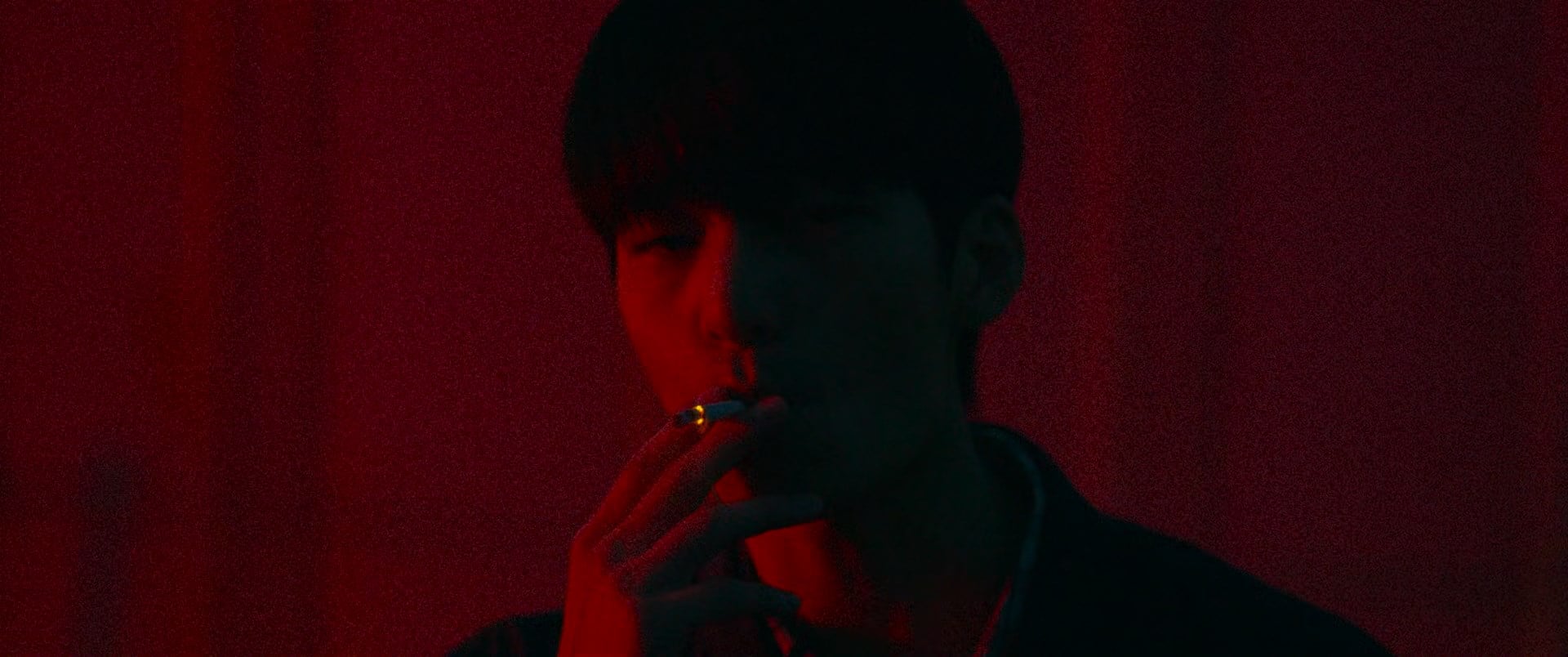
1. Последняя ‘Милая Болгария’ (Алексей Федорченко, 2021) /
The Last Darling Bulgaria (Aleksey Fedorchenko, 2021)
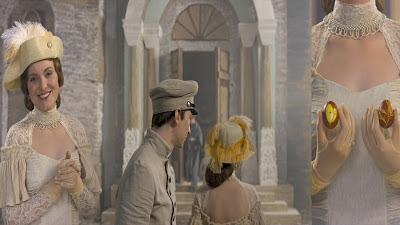
The Last Darling Bulgaria (Aleksey Fedorchenko, 2021)

Sergei Eisenstein (portrayed by Aleksandr Blinov and instantly recognizable in spite of remaining unnamed) appears like a Looney Tunes character in a farcically surreal tragicomedy that sees him assisting a young fruit breeder, Leonid (Ilya Belov), in his attempts to unveil the true cause of death of a depressed writer, Semyon Kurochkin, while also carrying on his own father’s apple-growing legacy. Kurochkin is one of the pseudonyms of the Russian writer, satirist and translator Mikhail Zoshchenko (1894-1958) whose novella Before Sunrise serves as the main source of inspiration for Aleksey Fedorchenko and Lidia Kanashova’s intricately woven screenplay indulging in a plethora of eccentricities and mockeries.
A deep, headfirst dive into Kurochkin’s writings (almost burned on a cold, rainy night) treats the viewer with a fascinating series of wonderfully composed split-screen tableaux vivants in which facts and fiction, dreams and memories, cinema and reality become inseparable from each other, as the bright-colored veneer sprinkled with great, somewhat irreverent humor gently covers dark periods of the 20th century history. The film bounces back and forth between the 1920s and 1943, without ever losing the thread or the heart of the story, keeping you invested by means of its formal playfulness. In equal measures wildly entertaining and boldly experimental, The Last Darling Bulgaria (whose title references a made-up apple variety) operates as a celebration of creativity and obsession – a kind of madness that keeps an artist sane.
2. Rara (Sylvano Bussotti, 1969)


Wow! A reflection on / exploration of the corporeality of music (and spiritual potentials of the body?), the first feature from Sylvano Bussoti (1931 – 2021) – an Italian composer, painter, writer, stage and costume designer, opera director and manager – is a mighty fine piece of the 60’s underground cinema. Operating on the same wavelengths as the works of Anger, Schroeter, Jarman and Pasolini, Rara can also be seen as the queer predecessor to the offerings of Experimental Film Society, particularly of its founder Rouzbeh Rashidi, as it seems to embrace a very similar approach to filmmaking. Rather than employing images and sounds to illustrate the scripted story, it lets the abstract narrative(s) emerge from their interaction, or rather occasional, unexpected intersections of the two independent, free-wheeling entities. It starts as a documentary of sorts, but gets increasingly chimeric (and formally challenging) with its DADA-esque mysticism, transcendental eroticism, and cacophonous congregation of haunting piano strokes, delirious violin solos, and uncannily immersive vocalizations.
3. Hotel Poseidon (Stefan Lernous, 2021)

Just when I thought that I had seen the greatest among the weirdest films there were to see, Hotel Poseidon came along with its crushing waves of absurdity, surrealism, existential dread and misery porn mixed with insane amounts of dirt as in ‘wanna take a shower, wash the clothes & dishes that have already been washed, and get a tetanus shot only ten minutes into it’.
Think Lynch at his most eccentric meeting Andersson at his most depressingly humorous in a suffocatingly claustrophobic setting which parallels the twisted world of Jeunet and Caro’s Delicatessen, all filtered through the prism of the Buharov brothers (!), yet somehow idiosyncratically bizarre in its bold, uninhibited, genre-defying what-the-fuckery. Creating a brimful of oddball characters who feel like ciphers when they’re not grotesque caricatures (such as a bartender who was forced-fed the pages of kids’ Bible in her childhood), actor-turned-director Stefan Lernous employs a number of formal and structural tricks to make the pulling of the rug under your feet go smoothly every time he does it... and he does it often. On top of that, he is in absolute control of both aural and visual aspects of his feature debut, with heavy drones and ominous strings inflating the atmosphere of inevitability, and excellent camerawork turning decrepitude into beauty.
4. After Blue (Paradis sale) / After Blue (Dirty Paradise) (Bertrand Mandico, 2021)
.jpg)
“Our conscience makes cowards of us all.”
In Bertrand Mandico’s exquisite sophomore feature, Kate Bush is not the English singer-songwriter with an impressive vocal range, but the moniker of Katarzyna Buszowska – a dangerous, mysterious, wish-fulfilling criminal on a distant planet of After Blue inhabited only by women (all men died because their hair grew inside). She has a third eye between her legs, and gets released from the sand prison by a naive village girl, Roxy (nicknamed Toxic by her frenemies), only to wreak havoc. Now, it is up to Roxy and her hairdresser mother Zora to go after her into the poisonous mountains, and eliminate her with a custom-made shotgun.
Once again working alongside an all-female cast (and a blind, sexless android, Louis Vuitton, equipped with tentacles), Mandico delivers another quaint, chimeric, highly eccentric film, both genre- and gender-fluid; an uninhibited neo-western/fantasy mutant that firmly embraces all the freedom and dreaminess Cinema can offer. Armed with a keen sense of camp and humor, he imbues it with the velvet darkness extracted from fairy tales, subtly twisted eroticism of the 70’s Eurotrash, and psychedelic scenery that wouldn’t feel out of place in a René Laloux’s sci-fi flick or some surreal piece of Japanese animation. Assisting him in bringing his boldly fetishistic vision to bizarre life is, of course, his muse Elina Löwensohn (portraying Zora), as well as his frequent DoP collaborator Pascale Granel who wonderfully captures the otherworldly set design, and fashionable costumes, with Pierre Desprats providing a sultry electric score.
One of the strongest feature debuts in the history of (slow-burn) cinema, His Daily Bread is a tour de force of visual poetry which ‘out-Bressons’ Bresson whom it is undoubtedly inspired by. Through its author’s unmistakable control over mise-en-scène, it effortlessly transcends banalities (and waitings) of everyday life, with the simplest of actions turned into sublime micro-poems. Brimful of lingering, stunningly beautiful close-ups of women’s faces, and gently interwoven with deep, poignant silences, this formally ambitious drama isn’t about WHAT it shows, but HOW it is shown.
Personal and collective history clash and intertwine in the first entry of the Diary trilogy by the acclaimed Hungarian filmmaker Márta Mészáros. Even if you’re not familiar with the story of the director’s life, you can easily recognize or rather, deeply sense autobiographical elements in a film-loving protagonist, Juli (a fascinating performance by 17-yo Zsuzsa Czinkóczi), whose strong will and rebellious nature are nothing short of inspiring. The young heroine is all the more sympathetic thanks to her confrontational perseverance in the unwelcoming post-WWII environment in Hungary, with Stalinist madness on the rise, and hypocrisy raring its ugly head behind every corner. The harshness of her reality is only alleviated by idyllic memories (growing bleaker towards the end) and the darkness of the cinema venue, as well as by all the small perks of coming-of-age, such as the first love. And it is with great skill, not to mention confidence and gentleness that Mészáros balances between the private and the political / poetic and prosaic, making her 80’s drama appear like a lost artifact from the 50’s or 60’s by virtue of (her son) Nyika Jancsó’s absorbing B&W cinematography.
5. Uski Roti / His Daily Bread (Mani Kaul, 1970)


One of the strongest feature debuts in the history of (slow-burn) cinema, His Daily Bread is a tour de force of visual poetry which ‘out-Bressons’ Bresson whom it is undoubtedly inspired by. Through its author’s unmistakable control over mise-en-scène, it effortlessly transcends banalities (and waitings) of everyday life, with the simplest of actions turned into sublime micro-poems. Brimful of lingering, stunningly beautiful close-ups of women’s faces, and gently interwoven with deep, poignant silences, this formally ambitious drama isn’t about WHAT it shows, but HOW it is shown.
6. Napló gyermekeimnek / Diary for My Children (Márta Mészáros, 1984)


Personal and collective history clash and intertwine in the first entry of the Diary trilogy by the acclaimed Hungarian filmmaker Márta Mészáros. Even if you’re not familiar with the story of the director’s life, you can easily recognize or rather, deeply sense autobiographical elements in a film-loving protagonist, Juli (a fascinating performance by 17-yo Zsuzsa Czinkóczi), whose strong will and rebellious nature are nothing short of inspiring. The young heroine is all the more sympathetic thanks to her confrontational perseverance in the unwelcoming post-WWII environment in Hungary, with Stalinist madness on the rise, and hypocrisy raring its ugly head behind every corner. The harshness of her reality is only alleviated by idyllic memories (growing bleaker towards the end) and the darkness of the cinema venue, as well as by all the small perks of coming-of-age, such as the first love. And it is with great skill, not to mention confidence and gentleness that Mészáros balances between the private and the political / poetic and prosaic, making her 80’s drama appear like a lost artifact from the 50’s or 60’s by virtue of (her son) Nyika Jancsó’s absorbing B&W cinematography.

8. Re Granchio / The Tale of King Crab (Alessio Rigo de Righi & Matteo Zoppis, 2021)


In their first fiction feature that also marks (brilliant!) on-screen debut for filmmaker Gabriele Silli and the great majority of non-professional cast members, Rigo de Righi and Zoppis elicit authentic performances, and seamlessly blend a number of disparate influences – Pasolini, Azevedo Gomes, Herzog, Rohrwacher & Leone – into a familiar, yet spellbinding two-act folktale of forbidden love, rebellion, greed and redemption, capturing the spirit of the 19th century, and framing the action, particularly of the romantic first half, as true masters of painting, with the 16mm texture lending warmth to their potent, meticulously composed shots.
9. Where Is Anne Frank (Ari Folman, 2021)


My encounter with Ari Folman’s three animated features could be described as ‘the Goldilocks experience’, with the first one being too hot, the second one too cold, and the latest one just right. Simultaneously poetic and didactic, personal and political, Where Is Anne Frank does a remarkable job at bridging the gap between the past and the present, reality and fantasy, trauma and comfort. From the very moment Anne’s imaginary friend Kitty materializes out of ink in Amsterdam of our times, the film casts a spell on the viewer with its lush, elegantly stylized visuals which – complemented by Karen O’s dreamy vocals on the delicate score – guide you through the bittersweet ode to imagination, compassion and the power of memories. Its emotional punch may not be as strong as that of Ivan’s Childhood, Grave of the Fireflies or any other masterpiece portraying children in war, but it will certainly reach both the minds and hearts of people who haven’t fallen into the hateful pits of Holocaust denial.
10. Bina / The Antenna (Orçun Behram, 2019)


“One gets used to rotting. I also like silence, you know...”
Slowly and insidiously, dread creeps or rather, drips into the bleak lives of apathetic high-rise inhabitants in Orçun Behram’s promising, formally disciplined feature debut – a conspicuous allegory of a totalitarian, media-controlled society set in an unnamed city, during unspecified time that gives off the 80’s-behind-Iron-Curtain vibes. Taking cues from Polanski’s psychological thrillers, Cronenberg (Videodrome, in particular) and Nakata (Dark Water), the author demonstrates impressive talent in visualizing his ideas which – despite their on-the-nose nature – never stand in the way of establishing a dense atmosphere of increasing paranoia, as well as of producing some effective, skin-crawling moments. Assisted by cinematographer Engin Özkaya, he treats us to a copious amount of taut, tension-filled shots, with the sound design team and first-time score-composer Can Demirci submerging the viewer in ominous soundscapes. And that synthwave crescendo à la Carpenter adds some extra oomph to the unnerving proceedings.
11. Misiunea spațială Delta / Delta Space Mission (Mircea Toia & Călin Cazan, 1984)


René Laloux meets Vladimir Tarasov in the first Romanian animated feature – a beautiful, if a bit rough-around-the-edges cosmic adventure in which a diamond-shaped super-intelligent computer of Delta research station falls for an intergalactic journalist with a turquoise skin and face straight out of a Modigliani painting, Alma. This crush leads to the clash between human(oid)s and robots, but thankfully, Alma’s best friend Tin – an alien dog that looks like a two-legged frog with a cow tail – has ‘a bad habit of chewing metals’...
Recently remastered and released on blu-ray and Amazon Prime platform by Deaf Crocodile Films, Delta Space Mission blasts its way to the viewer’s heart with its colorfully wobbly, often psychedelic imagery wonderfully complemented by a bizarre, pulsating synth score that ‘sounds like a cross between Tangerine Dream and a malfunctioning Atari 2600’ (George J .Smalley, 366 Weird Movies). Its flat-shaded character designs and kaleidoscopic backgrounds depicting Delta’s high-tech interiors, futuristic cities and surrealistic jungles reflect both the artists’ wild imagination, and ‘sweet tooth’ for pulp sci-fi. Adding an extra layer of strangeness is mostly deadpan delivery of lines, as well as a healthy dose of offbeat humor.
“Imagine an early 80’s Eastern European space-prog album high on sugary breakfast cereal, ‘Heavy Metal’ magazine, Hanna-Barbera cartoons and 8-bit arcade games like Galaxian and Asteroids, and you have some idea of the otherworldly weirdness of the Romanian animated sci-fi film DELTA SPACE MISSION.” (Deaf Crocodile Films)
12. Storia di una monaca di clausura / Story of a Cloistered Nun (Domenico Paolella, 1973)


One of the most eye-pleasing and least sleazy nunsploitation flicks, Story of a Cloistered Nun follows a young aristocrat, Carmela (ethereally beautiful Eleonora Giorgi), who is forced into a convent only because she opposed a marriage arranged when she was but an infant. Once in her new home, she faces jealousy and hypocrisy, humiliation in the name of temptation, as well as a different kind of forbidden love than the one she experienced in her former life. It is in a debauched sister, Elisabeth (excellent Catherine Spaak who unfortunately passed away just yesterday), that she finds a sole friend... unaware of her vengeful character. Reportedly inspired by the authentic 17th century chronicles, Carmela’s bittersweet drama is helmed with an assured hand, but it is the trinity of Cristina Lorenzi’s extravagant costumes, Piero Filippone’s terrific production design and Armando Nannuzzi’s painterly cinematography that keep taking your breath away.
13. The Lost City (Aaron and Adam Nee, 2022)

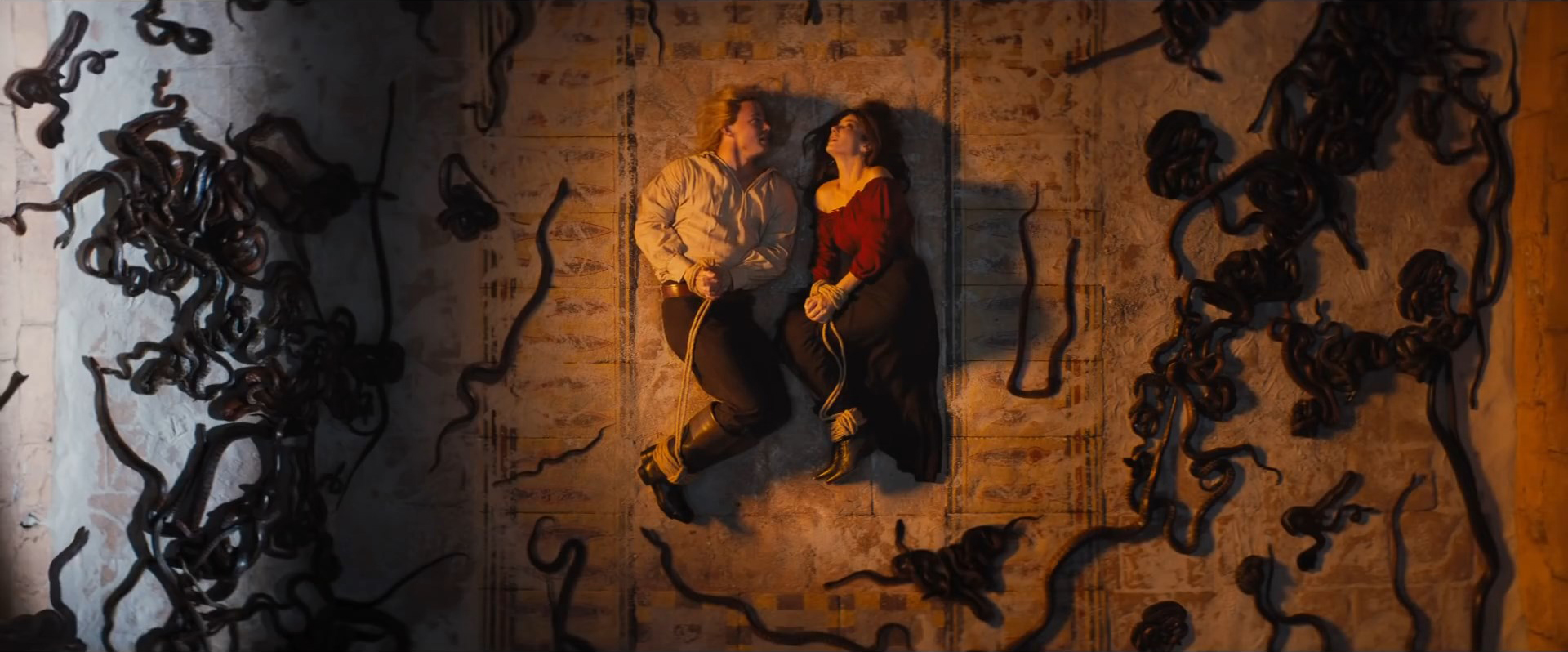
It’s been a long while since we had a love letter to Romancing the Stone and its one year younger sequel The Jewel of the Nile, so The Lost City comes across as a welcome, nostalgia-fueled refreshment in the mainstream cinema. This action-adventure rom-com is perfectly aware of its unrestrained goofiness and delightful cheesiness, and everybody plays their parts accordingly. As the main baddie, Daniel Radcliffe relishes in nibbling on the scenery, and the starring duo of Sandra Bullock and Channing Tatum firmly embrace self-parody, with their screwball chemistry often lighting up the screen. Increasing the star-power is always reliable Brad Pitt in an über-cool cameo role. Some of the jokes don’t hit the intended mark, but the ones that do made me laugh till I had to pull out the paper handkerchief and wipe the tears to enjoy the beautifully captured Caribbean locales.
14. The Sadness (Rob Jabbaz, 2021)


What happens when a mysterious virus awakens the very literal worst in most of the people? The answer marked by outbursts of physical and sexual violence lies within the blood-and-gore-soaked madness of The Sadness – the feature shocker-debut from Canadian-Taiwanese filmmaker Rob Jabbaz. Informed by the Covid-19 pandemic, with the incompetent governments, conspiracy theorists and pretty much the rest of our society subjected to criticism, this bold deviation of the zombie subgenre is one of the most visceral cinematic offerings in recent memory. What makes it highly memorable are brilliantly sickening practical effects, and Tzu-Chiang Wang’s admirably psychotic performance as the Businessman. ‘Not for the faint of heart’ goes without saying.
15. The Beast from 20,000 Fathoms (Eugène Lourié, 1953)


“This is such a strange feeling. I feel like I am leaving a world of untold tomorrows for a world of countless yesterdays.”
Nothing says ‘charming’ like Ray Harryhausen’s wonderful stop-motion creation wrecking everything from boats to a lighthouse to New York locales, and inspiring a number of giant monster features, most famously the long-running ‘Godzilla’ series.

Vulnerability-(Kinoko-II).jpg)