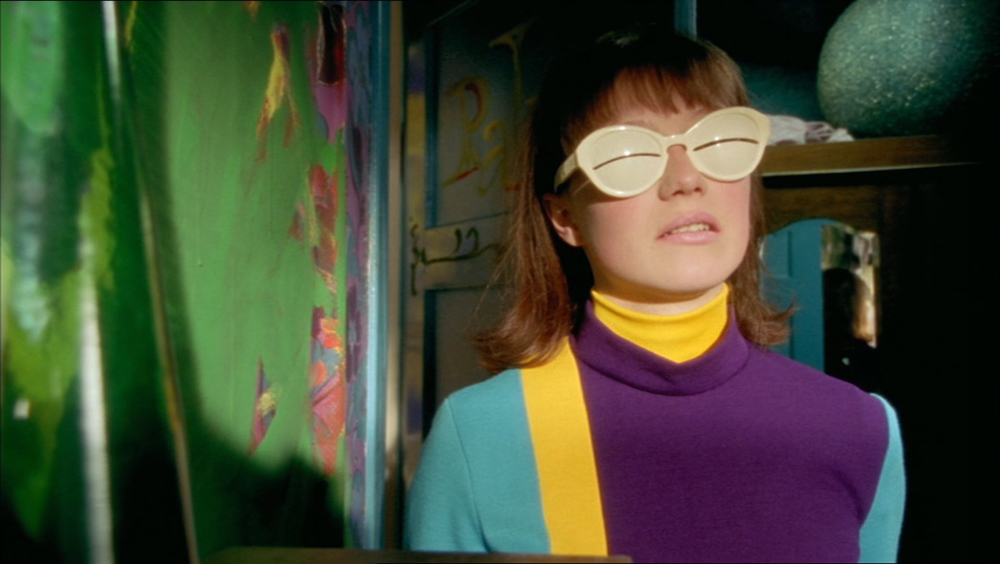
When compiling my annual lists, one usually encompasses the personal 20th century premieres, whereas the other includes films released from 2001 onward. This year, however, I decided to make my job much easier by pulling focus on 2021-2023 features, and excluding blockbusters in favor of experimental, arthouse and genre offerings, as well as of animation that is so often unjustly overlooked. I will take this opportunity to wish all my friends and followers a year of numerous socio-political improvements, good health and bold cinema!
1. Elpis (Rouzbeh Rashidi, 2023)
“Achingly lyrical and lushly ethereal, this film compellingly synergizes the soul of cinema, the soul of the artist, and the soul of Mother Nature into the transcendental awareness of the (motion) picture and its sanctity, inspiring us to resist our insignificance in the grand scheme of things, and keep reaching for the farthest recesses of our inner universe...”
2. Les chambres rouges / Red Rooms (Pascal Plante, 2023)

If I were asked to describe ‘Red Rooms’ in a single word, I would probably opt for ‘anti-sensationalist’, which also perfectly suits the author’s measured approach to the razor-sharp dissection of modern society, or rather, its evils, collective and individual alike, as well as to the stark, mystery-imbued study of a character fascinated by a heinous crime. Firmly anchored in the central, utterly magnetic performance from Juliette Gariépy whose micro-acting skills give Mads Mikkelsen a good run for his money, this stellar, thought-provoking, impressively cold, steely unnerving and formally ingenious psycho-drama/thriller needs no Hollywood-style ‘fireworks’ to keep you glued to screen. Right from the get-go set in a featureless, yet instantly captivating courtroom, it snatches your attention by virtue of extraordinary camerawork, especially the expert use of long takes, at once immersive and chillingly uncanny sound design, elaborate music score which elevates the bleakness of the atmosphere, and above all, incredibly pedantic direction marked by eerie, Haneke-like austerity, and to a certain degree, methodical mannerism of late Schrader. Beneath its ‘frigid’ surface of brilliantly played understatements, simmers a well of intense emotions, lending a refined patina to the proceedings...
3. Koński ogon / The Horse Tail (Justyna Łuczaj, 2023)
In a modern re-imagination of the Oedipus myth, first-time director Justyna Łuczaj discovers sublime beauty amidst mud, garbage and intricate relationships stained with traumas and erotic tension. Setting her (superb!) debut in an unwelcoming middle-of-nowhere – various decrepit locales in Poland and Slovakia – surrounded by a lush forest, she confidently builds a weird, borderline post-apocalyptic world, far removed from regal Thebe. Her hero is a young, orphaned outcast, Maj (a bold big-screen inauguration for magnetic Remigiusz Pocica), raised by a peculiar ‘daddy’ figure, Hans (uninhibited Przemysław Bluszcz, giving off some Udo Kier vibes), the boy’s estranged mother is an elderly sex-worker, Diana (the phantasmal presence of Ryta Kurak), and king Laius’s reflection is a deranged policeman, Max (Wojciech Bialas, imposing as a vile embodiment of toxic masculinity / authority).
They all yearn for love, each one in their own (degenerate?) way, and incessantly fail to achieve it, although Maj is allowed a few moments of tenderness with his (yet unknown to him) half-sister Dagmara (Anouchka Kolbuch) whose character shines a short-living light of hope and innocence on her sibling’s bleak struggle. Dark hairs (of the titular horse tail?) float down the river, as a warning of impending doom, all the while the toothless narrator (Tomasz Mularski) – a deliberate vulgarization of Greek chorus – adds a few more pinches of filth into a fragmented, provocative and to a certain point puzzling narrative. Łuczaj demonstrates uncompromising resolve in her formally challenging, subtly transgressive portrayal of lost, lonely, loveless souls, eliciting immediate performances from a largely non-professional cast, and transforming the obscure reality of her protagonists into an emotionally raw ‘unreality’, simultaneously surreal, twisted, repellent and fascinating.
4. Сказка (Александр Сокуров, 2022) / Fairytale (Alexander Sokurov, 2022)
In the artists’ purgatory, Dante meets Beckett by way of Goya and Doré, their souls converge into a sly entity that possesses Sokurov’s dreams, and as a result of this esoteric act, he delivers a fascinating piece of experimental animation. Cleverly utilizing a combo of deepfake technology and archive footage, the Russian master brings four historical figures in their multiple versions to (after)life, and pokes some serious fun at them against the backdrop of foggy limbo where they’re stuck believing they deserve to enter paradise. The plot sounds like the beginning of a political joke that involves Stalin, Churchill, Mussolini and Hitler, with cameos by Jesus and Napoleon, and indeed, one can’t help but laugh at those egotistical, imperialistic mugs bickering about various topics, from their clothes and hygiene to religion and ideological isms. However, sardonically titled ‘Fairytale’ isn’t just an absurdist collection of darkly humorous quips – it is a powerful, provocative artistic experience that often remind us of history’s inconvenient tendency to repeat itself:
“Don’t lament, my brother. All will be forgotten, we’ll start anew... The best it yet to come... Soon, soon...”
5. Totsukuni no Shōjo / The Girl from the Other Side (Yutaro Kubo, 2022)
Nothing short of a modern anime classic, though bound to appeal to a niche rather than mainstream audience, Yutaro Kubo’s impressive feature debut attains an almost perfect balance between the unconventional style and gloomy content. Part melancholic tone-poem, and part mystery-imbued fantasy of the Victorian Gothic atmosphere, it appears like a soothing soul successor to Oshii’s masterpiece ‘Angel’s Egg’ and Takahata’s magical swan song ‘The Tale of the Princess Kaguya’. Based on Nagabe’s manga previously adapted into a (lovely!) short in 2019, it gently addresses the themes of loneliness, ostracism, surrogate parenthood, the loss of innocence and death, drawing you into its quaint, peculiar world with an irresistible charm. Favoring lyrical mood over puzzling story, ‘The Girl from the Other Side’ rests upon a dreamy, hauntingly poignant score, and a delightful hand-drawn artwork akin to a childhood-favorite picture-book, with Jun Fukuyama’s and Rie Takahashi’s superbly attuned voices breathing life into leading characters.
6. Moon Garden (Ryan Stevens Harris, 2022)
In his sophomore feature, Ryan Stevens Harris casts his own daughter as a comatose girl struggling to regain consciousness after a freak accident at home. Her name is Haven Lee and she is heavenly as the five year old heroine Emma stuck in a nightmare intertwined with past events that help her find her way back to reality. A simple tale is rendered with an astounding amount of creativity that puts the viewer in Emma’s tiny shoes, chiming in with her limited perspective, and wide-eyed curiosity. And those eyes – so innocent and sincere!
‘Moon Garden’ is a dark fantasy with horror undercurrents, so there has to be a monster. That role is filled by Morgana Ignis under a heavy mask, as a void-faced boogeyman Teeth that appears like the Pale Man’s equally grotesque cousin who escaped from the hell of Phil Tippett’s masterpiece ‘Mad God’. Speaking of inspiration sources, ‘Alice in Wonderland’ is the first one that comes to mind, but think Švankmajer’s stop-motion version by way of David Lynch and Dave McKean (Mirrormask). The industrial dreamscape where Emma’s eerie adventure begins may be taking cues from Wes Craven’s seminal shocker ‘A Nightmare on the Elm Street’, whereby lighting often suggests Bava and Argento. Steampunk elements, such as a tear-collecting machine, evoke Caro & Jeunet’s ‘The City of Lost Children’, with the precious memories of time spent with mom and dad channeling Terrence Malick’s poetic sensibility. Some parallels can also be drawn with Neil Jordan’s ‘The Company of Wolves’, and there’s even that frequently quoted ‘Alien 3’ shot, but make no mistake – ‘Moon Garden’ is not just a sum of its influences. Harris rises high above mere mimicry, delivering a film that is both visually and aurally dazzling, emotionally resonant, and tailor-made for the central performance that puts Haven Lee on the map of the finest child actors in the history of cinema.
7. Megalomaniac (Karim Ouelhaj, 2022)
At once repulsive and spellbinding, naturalistically dirty and nightmarishly surrealistic, ‘Megalomaniac’ is a relentlessly grim, thoroughly unsettling and viscerally thought-provoking exercise in evil of the human kind, blurring the line between the perp and the victim, reality and fiction. Directed with an assured hand and keen sense of ambiguity which permeates the story (based on a real-life serial killer in 90’s Belgium), it depicts the violence at its most disgusting, venomous and hard-hitting, as it sets a new milestone in the horror genre. Boasting a stylized, darkly arresting cinematography (François Schmitt) and haunting, insidiously evocative score (Simon Fransquet & Gary Moonboots), the film is also praiseworthy for superb performances by the entire cast, particularly from Eline Schumacher, awe-inspiring and subtly unhinged in the role of a mentally unbalanced Martha. A severely underrated flick!
8. L’envol / Scarlet (Pietro Marcello, 2022)
Once again, Pietro Marcello delivers a wondrous piece of cinema that is lost and beautiful (a reference to his 2015 docu-fantasy-drama ‘Bella e perduta’, for the uninitiated) – lost in time, as it appears like a precious artifact from the 20th century, and beautiful not only on the utterly charming surface, but also at its big, unprejudiced heart. A loose adaptation of Alexander Grin’s 1923 novel ‘Scarlet Sails’, the film – in spite of its simplicity – poses a challenge when it comes to the classification, gently meandering between a period coming-of-age drama and a whimsical fairy tale, a socially conscious ode to craftsmanship and a rapturous poem of love, platonic, familial and romantic.
Set between the two World Wars, ‘Scarlet’ belongs to neither the past, nor the future, appropriating the outsider attitude of its protagonists who live modestly, yet complacently, ever-strengthening their libertarian spirit, and bonds of togetherness, guided by intuition and creative impulses. Revolving around an idealized father-daughter relationship, it portrays peculiarities of life in broad, yet sensitive strokes filled with dreams, longing and nostalgia. Its delightful 35mm cinematography lends it a soft, almost palpable texture, as well as an exquisitely painterly quality, further enhanced by seamlessly interwoven archive footage which is given a hand-tinted-like overhaul. The harmonious symbiosis of visuals and narrative evokes the delicate lyricism of Franco Piavoli, with Gabriel Yared’s emotional score bringing to mind the yearning romanticism of Jacques Demy, particularly during the musical acts of the amiable heroine, Juliette (an unaffected performance from newcomer Juliette Jouan).
9. Leda (Samuel Tressler IV, 2021)

Not a single word is spoken in Samuel Tressler’s bold, dazzlingly beautiful feature debut which transmutes the Leda myth into an ethereally uncanny nightmare, part surrealistic period piece and part highly poeticized gothic psychodrama. Decidedly elliptical in its storytelling or rather ‘storyshowing’, this superb indie flick comes across as a cryptic, sensorial mood piece delicately touching upon a childhood trauma, rape, madness, loneliness and pregnancy. Densely atmospheric, in equal measures ominous and soothing, it unfolds in a deliberate pace towards a subtly visceral epilogue that further amplifies the all-pervasive ambiguity. Tressler and his co-writer Wesley Pastorfield keep pulling the rug from under the viewer’s feet, and each time they do so, you find yourself falling deeper into the rabbit hole of Leda’s dreams, memories and hallucinations. All the while, cinematographer Nick Midwig lulls you into a dreamlike state with eloquent B&W imagery immersed in a hauntingly minimalist score by Andre Barros and Björn Magnusson.
Highly recommended for the fans of ‘Meshes of the Afternoon’ (1943), ‘Angel’s Egg’ (1985), ‘Under the Skin’ (2013) and ‘November’ (2017).
An interesting piece of trivia: One of the supporting roles is played by Nicolle Marquez who reminded me of Maya Deren in ‘Dawn’ – a delightful 35mm short presented as a part of Reality (Un)Check selection at the third edition of Kinoskop in Yugoslav Film Archive in 2021.
10. New Religion (Keishi Kondo, 2022)
Utterly hypnotizing in its portrayal of grieving process and its transformative potentials, Keishi Kondo’s crowdfunded feature debut comes across as an impressive calling card not only for its author, but also for a bunch of newcomers in his team, from the entire cast to cinematographer Sho Mishina. (According to IMDb, only colorist Dmitry Kuznetsov and co-editor Aleksandar Milenković have several short films under their belts.) Right from the experimental prologue soaked in deep reds (later turned into a leitmotif) and brooding drones (that dominate the haunting score), ‘New Religion’ pulls the viewer into its disjointed reality – one akin to a dream in which a dreamer is dreamed... perhaps by a moth.
Kondo could be quoting a couple of lines from Cronenberg’s defining body horror ‘The Fly’, yet his keen sensibility is much closer to that of Kiyoshi Kurosawa’s brand of ‘slow terror’, as well as to David Lynch’s penchant for the unknowable, cryptic symbolism and bizarre characters... such as a presumably non-human photographer who speaks through an electrolarynx. Both his direction and editing are assured and precise, as he employs meticulously composed imagery, and uncannily immersive sound design to create a dense and heavy atmosphere of bleak melancholy, understated eeriness and deliberate disorientation. Lingering below the ostensibly desensitized surface of his puzzling psychological drama is a creeping sense of madness and dread in the face of a child loss, with the elliptical story unfolding from the unreliable perspective of a heroine, Miyabi (Kaho Seto, admirable at micro-acting). The horror underpinnings may prove too subtle for the hardcore genre aficionados, and the ever-present irrationality will significantly limit the audience, but if you’re looking for something refreshingly off-the-wall, just let ‘New Religion’ convert you...
11. Le pharaon, le sauvage et la princesse / The Black Pharaoh, the Savage and the Princess (Michel Ocelot, 2022)
If Michel Ocelot did not exist, it would be necessary to invent him. His latest opus – a fairy tale omnibus that celebrates multiculturalism, and mocks autocratic figures – is so enchanting, that I was under its spell the moment it began. Emotionally resonant in their (timeless) simplicity, three stories are presented in a gorgeous animation style that channels the spirits of, respectively, artists of ancient Egypt, the one & only Lotte Reiniger, and masters of arabesque, with the lavish orchestral score elevating the viewing experience. For 80 minutes, I felt like a child listening with wide-eyed attentiveness to the voice of its kind grandfather...
12. Kerr (Tayfun Pirselimoglu, 2021)
The echoes of COVID-19 isolation hang on decrepit walls of a small, purgatorial town in Pirselimoglu’s absurdist dramedy that sees its clueless, hapless hero (superbly cast Erdem Şenocak) lost in a Kafkaesque nightmare – as metaphysically inescapable as it gets. Injected with measured doses of wry, deadpan humor,
‘Kerr’ gives no answers to a lot of its questions, putting the viewer in the protagonist’s shoes that go with a dark coat of bewilderment. On the other hand, the embodiment of mystery wears a yellow coat surrounded by a ‘double agent’ aura, and even though her screen time is limited, she heads a weird bunch that wouldn’t be out of place in a David Lynch’s psychological thriller. The same could also be said for a jazzy theme that pays a loving homage to the genius of Angelo Badalamenti, as well as for a dimly lit nightclub, its backstage hidden behind a red curtain. Ever-growing despair is emphasized by the wintry weather, as the loudspeaker announcements warn of rabid dogs prowling the streets, and seemingly bottomless holes appear all around, out of nowhere, sucking in most of the possible meanings. There’s also a murderer on the loose, yet neither the police, nor the people seem to give a damn, their provincial mentality paralyzing Şenocak’s unnamed character. Deliberate pacing intensifies the cold, thick atmosphere of detachment, and the quiet denouement comes across as another ellipsis in this beautifully framed mindfuck of a film.
13. Mammalia (Sebastian Mihăilescu, 2023)
In Sebastian Mihăilescu’s bold fiction feature debut, the existential absurdity of Roy Andersson is filtered through the prism of the Greek Weird Wave (and the Buharov brothers’ work?) into a surrealistic, double-edged satire of gender norms, as well as of any attempt to soften their rigidity. Entirely composed of long and static takes beautifully shot on 16mm, with the main course of action often pushed into the background or even off-screen, this genre-defying experiment poses a formal challenge alleviated by deadpan humor. Its idiosyncratic tableaux vivants turn banalities of life (and the dangers of dildo-carving cults) on their head, putting the viewer in an awkward position between a nervous chuckle and invigorating befuddlement.
14. Müanyag égbolt / White Plastic Sky (Sarolta Szabó & Tibor Bánóczki, 2023)
Being a sucker for both post-apocalyptic fiction and rotoscoped animation, I am utterly impressed by the first collaborative feature from Sarolta Szabó and Tibor Bánóczki. Set 100 years in the future,
‘White Plastic Sky’ explores the burning issue of ecological sustainability, proposing a society that sees humans turned into trees once they reach 50. Opening in domed Budapest where holographic flora adorns a memorial park, its melancholy-fueled story moves on to the high-security ‘Plantation’ which introduces the viewer with the process of euthanizing transmutation, and later on, across the eroded wasteland and ghost towns remaining in the aftermath of a high-level devastation. In a manner that is in equal measures thought-provoking and de-sentimentalized despite a ‘parents who lost a child’ cliché attached to the film’s emotional core, it chronicles a return to a place that may become Eden with no humans to exploit it senselessly, shining over and again in the world-building department. A seamless blend of traditional and modern techniques – reportedly, 8 years in production – results in beautiful, immersive visuals of hyper-stylized realism, with sober pacing allowing us to feel all the textures, and an unobtrusively wistful score elevating the watching experience.
15. Divinity (Eddie Alcazar, 2023)
A strong contender for the most (insanely!) stylish pulp experiment of the year, Eddie Alcazar’s sophomore feature is a bold, dazzling, overwhelming assault on the viewer’s senses. Stunningly shot on 16mm B&W film, with deep shadows absorbing its flaws all the while emphasizing its esoteric qualities, ‘Divinity’ comes across like an intoxicating concoction of wildly varied influences, from the psychotronic sci-fi of the mid-20th century and Ray Harryhausen’s brand of stop-motion to disturbing body horror of David Cronenberg, fever dream-like surrealism of David Lynch and, unexpectedly, fighting games à la ‘Mortal Kombat’.
At once quaint and futuristic, it examines our unending search for immortality and tackles the ethical issues thereof, casting a satirical lens on the modern society obsessed with superficial beauty and hedonistic frenzy. Whimsical in its plotting, it invites a mysterious couple of cosmic siblings (Moises Arias and Jason Genao) to Earth, and pits them against a mad scientist with serious daddy issues, Jaxxon (Stephen Dorff), and his appropriately named brother Rip (Micheael O’Hearn), in and around a desert house that – similarly to the movie itself – exists in an unspecified space between the past and the future / twisted geometries of German expressionism and imposing grandeur of Brutalist architecture. The sinister mansion plays a significant role in establishing the sombre and chimeric atmosphere of human decadence, further enhanced by forebodingly hazy electronic soundscapes from DJ Muggs (of Cypress Hill fame) and Dean Hurley (who has previously collaborated with David Lynch and Chrysta Bell).
Unlike Alcazar’s ambitious, but ambiguously messy debut ‘Perfect’ excessively hampered by ad-and-music-video-like aesthetics, ‘Divinity’ actually benefits from its author’s background in commercials, with form and content / carnal and transcendental / articulate and ineffable being in a considerably improved balance. It blurs the boundary that separates the miraculous from the grotesque, and just for fun, subverts some Biblical themes as it pokes fun at New Age pretensions. The cult status is almost certainly guaranteed.
16. Suzume no Tojimari / Suzume (Makoto Shinkai, 2022)
Growing along with its young heroine, the latest offering from Makoto Shinkai – a household name in the world of japanimation – portrays grieving process and nostalgia for the faithful departed in an equally poignant and clever fashion, with a quirky sense of humor keeping sentimentality at bay. Oh, and the animation is positively dazzling!
17. Sweet Dreams (Ena Sendijarević, 2023)
Deserving a place somewhere between Lucrecia Martel’s
‘Zama’ and Yorgos Lanthimos’s
‘The Favorite’,
‘Sweet Dreams’ presents a big leap forward for its author Ena Sendijarević. Directed with more confidence, greater stylistic flair, and keener sense of pacing than her formally strong, yet emotionally numb road-movie debut
‘Take Me Somewhere Nice’, this wry period piece boasts exquisite, appropriately decadent costume (Bernadette Corstens) and production design (Myrte Beltman), with bold colors popping out of the screen by virtue of Emo Weemhoff’s disciplined framing, particularly of interior spaces. By ‘squeezing’ all characters in 4:3 ratio, Sendijarević and Weemhoff strive to abolish the hierarchy of the (subtly caricatured) colonizers and the (delightfully deadpan) colonized in the story set around a sugar plantation in 1900 Indonesia, with the film’s aesthetical lavishness skillfully matched to both its acerbic insightfulness and satirical absurdity.
18. Saules aveugles, femme endormie / Blind Willow, Sleeping Woman (Pierre Földes, 2022)
I am not familiar with Haruki Murakami’s short stories the film is based upon (I’ve only read
‘Dance Dance Dance’ several years ago), but I will surely be keeping my eye on composer turned filmmaker Pierre Földes. Addressing the stresses of everyday life and attempts of ordinary people to find its meaning (if any),
‘Blind Willow, Sleeping Woman’ is a finely nuanced amalgam of light philosophical musings and quirky flights of fancy. Magic realist at its core, it introduces an anthropomorphic, Nietzsche-and-Hemingway-quoting frog as one of the guides in interconnected existential crises of three people stuck in their dead-end job, marriage or solitude. At once detached and compassionate, this fantasy-drama flows like a slightly disorienting dream in which almost each encounter gives off a Schrodinger’s cat vibe, and the cat has both the first and last name – Noboru Watanabe. The employed technique of animation similar to rotoscoping goes well with the liminal realities of the narrative, with Földes’s piano-heavy score conveying the brooding, yet comforting feeling of chronic melancholy.
19. Saltburn (Emerald Fennell, 2023)

Not to be taken too seriously, nor to be dismissed as ‘off the mark’ in its examination of toxic elitism, envy, desire, class conflict, and social privilege, dark, whimsical, psychosexual dramedy ‘Saltburn’ cements Barry Keoghan’s position among the finest actors working today. His devilishly on point and, ultimately, daringly uninhibited or, simply put, ‘cocky’ take on Oliver Quick – a young opportunist as talented as Tom Ripley, and as increasingly insidious as Martin from ‘The Killing of the Sacred Deer’ – constitutes the focal point in the film brimming with provocative eccentricities and slyly inserted cine-references. Supported by the likes of Rosamund Pike (brilliantly campy) and Richard E. Grant (playfully weird), Keoghan effortlessly sparks strong chemistry with his colleagues, particularly when partnered by Jacob Elordi and Archie Madekwe, as his anti-heroic character navigates the turbulent sea of decadent opulence. Speaking of which, Fennell finds superb conspirators of eye-pleasing pleasure in production designer Suzie Davies, supervising art director Caroline Barclay, and cinematographer Linus Sandgren, with some wittily inserted musical numbers amping up the twisted atmosphere.
Also, after that bathtub scene, I’ll never hear the chorus of No Doubt’s ‘Bathwater’ in the same way again...
“... But I still love to wash in your old bathwater
Love to think that you couldn’t love another
I can’t help it, you’re my kind of man...”
20. La bête dans la jungle / The Beast in the Jungle (Patric Chiha, 2023)
Henry James’s 1903 novella ‘The Beast in the Jungle’ (which I haven’t read) reaches the big screen through a couple of (loose) adaptations this year – one is Bertrand Bonello’s (yet to be seen) sci-fi upgrade ‘The Beast’, starring Léa Seydoux and George MacKay, and the other is Patric Chiha’s neo-surrealist drama with Anaïs Demoustier and Tom Mercier as May and John waiting for an unknown event in a nameless nightclub supervised by Béatrice Dalle’s mysterious Physiognomist. Already provoking polarizing reactions, the latter film comes across as an oneiric tone poem, strangely hypnotic in its ambiguous languor set against disco-to-techno rhythms which mark the passing of time from 1979 to 2001, even though the protagonists remain ostensibly unaffected by its tooth. A meditation on lost opportunities, unfulfilled dreams and wasted youth, or in broader terms, love(lessness), life and death, it turns the setting into a sexy and sweaty purgatory of hedonistic rapture, yet it manages to keep the viewer bewitched in the duo’s puzzling, emotionally inert, but intimate orbit, largely by virtue of Demoustier’s and Mercier’s stellar performances. Both the dancefloor intoxication and anticipation of the right moment are beautifully captured by DP Céline Bozon, with warm tones of the 80’s gradually fading into darkness as the 20th century approaches its end. There’s a ‘Last Year at Marienbad’ vibe attached to the proceedings, though it appears as if refracted through the queer prism of Yann Gonzalez.