FEATURES
1. Shadow of a Doubt (Alfred Hitchcock, 1943)
From the emerald ring to strong incestuous undertones (pretty bold for the time, if I may add), it’s easy to see ‘Shadow of a Doubt’ as one of major influences on ‘Twin Peaks’, and it’s no secret that Lynch has taken many cues from Hitchcock. What makes this superb thriller still engaging eight decades later is the masterly built suspense, particularly in its second half, with the psychological tension between a heroine, Charlie, and her namesake uncle antagonist (stellar performances from Teresa Wright and Joseph Cotten, respectively) oozing from the screen.
2. Le mur / The Wall (Serge Roullet, 1967)
One cell. Three men. Sentenced to death. Time: the Spanish Civil War.
Co-written by director Serge Roullet and playwright/philosopher Jean-Paul Sartre, ‘The Wall’ comes across as a sullen and solemn meditation on the absurdity of existence, or rather on humans’ torturous inability to accept their own imminent end, and grasp what comes afterwards, for those who remain. The film’s many silences, some of which act as pitch-black voids for the answers, fall as heavy as dirt and rocks tossed on the coffin, their funereal attributes emphasized by the tomb-like coldness of the prison, as well as by the gravely beautiful B&W cinematography. Highly evocative of Bresson, especially of ‘Procès de Jeanne d'Arc’, in its narrative economy, camera’s languorous movements, and desensitized performances from the largely non-professional cast, this harrowing drama is not an easy watch, but it is a powerful piece of art cinema.
3. Fiul Stelelor / The Son of the Stars (Calin Cazan, Dan Chisovski & Mircea Toia, 1985)
(read my mini-review
HERE)
4. Veneno para las hadas / Poison for the Fairies (Carlos Enrique Taboada, 1986)
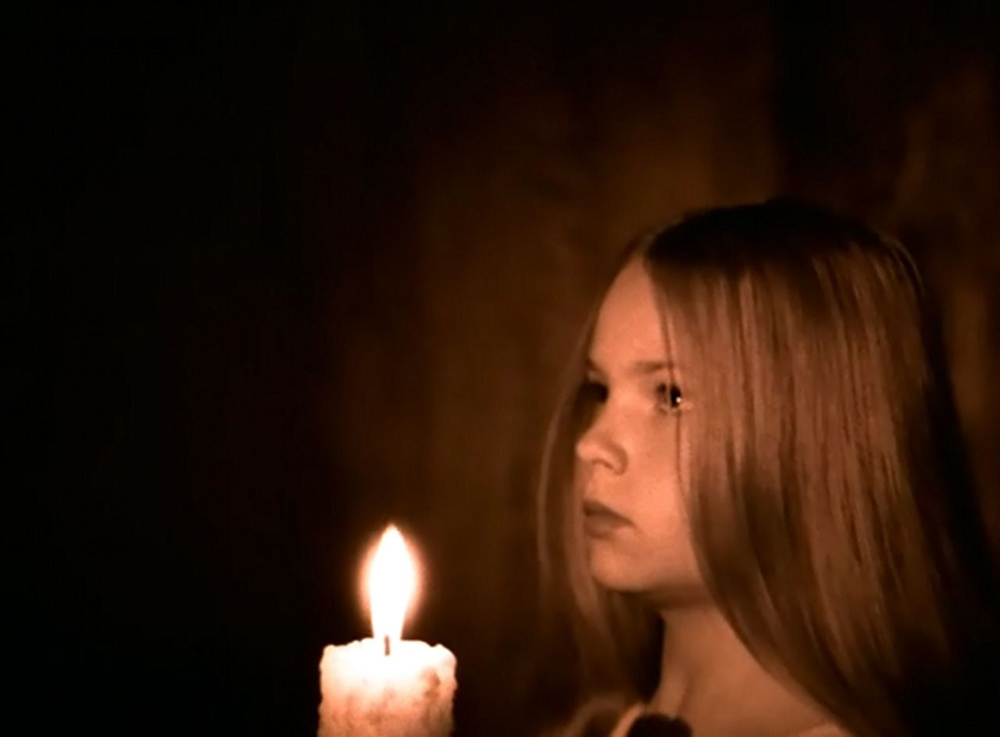
Ana Patricia Rojo (only 12 at the time of the film’s release) brilliantly portrays one of the most dominant and manipulative pubescent girls of cinema, Verónica, with Elsa María Gutiérrez in her first and only screen role making for her perfect partner, as a submissive and oh-so-naive Flavia, in a wicked modern fairy tale that grows increasingly unsettling, like a children’s movie subverted through the prism of (unconventional) horror. What makes their strained, toxic ‘friendship’ – speeding on a highway to the Loss of Innocence city – quite discomforting to watch is the perspective of a minor that Taboada opts for to tell the story, shooting the film from the angles that conceal adults’ faces, with a few ‘reveals’ reserved for traumas and nightmares. (This may be seen as a gimmick by some viewers, yet it works like a charm, with Guadalupe García’s crisp cinematography giving off a picture-book vibe). Twisted dynamics between the two main characters reflect the themes of jealousy, class tension, superstition vs. reason, and the power of suggestion reaching alarming heights when the fantasy it conjures becomes reality fueled by fear and despair...
5. L’Alliance / The Wedding Ring (Christian de Chalonge, 1970)
Based on a story by Jean-Claude Carrière who also co-stars with Anna Karina, ‘The Wedding Ring’ is a sly, slow-burning, subtly surreal study of paranoia that re/deconstructs the Adam and Eve myth and, in a certain way, anticipates Victor Pelevin’s novel ‘The Life of Insects’. Imbued with both wry humor and the sense of impending doom, it provides you with a bizarre ‘eyegasmic’ experience by virtue of its autumnal palette of ripe yellow-oranges, leaden grays and earthy tones occasionally (and beautifully!) complemented by velvety shades of blue. The increasingly foreboding presence of mostly exotic animals – the male protagonist’s ‘patients’ – brings forth a soundscape of squeaks, squeals and screeches made even more disquieting by sparingly employed cacophonies of gloom from Gilbert Amy. The film’s elusive, anti-Eden mood is further enhanced by Carrière’s deadpan professionalism, and impenetrable secrecy surrounding Karina’s character.
6. Romeo Is Bleeding (Peter Medak, 1993)
At once a hard-boiled neo-noir and a camp-infused near-parody of the genre, ‘Romeo Is Bleeding’ is a richly woven tapestry of morally conflicted anti-heroism (Gary Oldman’s stellar, increasingly melodramatic take on the crooked cop stereotype), a feverish femme fatale delirium (Lena Olin at her most obscenely elegant and slyly domineering), Dariusz Wolski’s classy lensing that intensifies the sense of impending doom often coupled with the sexual and/or psychological tension, and Mark Isham’s smoky, melancholic jazz perfectly compatible with both the story’s seedy milieu and the protagonist’s macho-romanticism. What makes the impression even stronger are remarkable supporting performances from Michael Wincott, his gravelly voice unmistakably disquieting, Roy Scheider, intimidating as a crime boss with a cold gaze, and Juliette Lewis whose character of a hussy lover remains memorable, in spite of being underused.
7. Zero Patience (John Greyson, 1993)
Synonymous with unhinged weirdness, ‘Zero Patience’ subverts the discriminatory urban legend of HIV ‘patient 0’ Gaëtan Dugas (1952-1984) into a campy, audacious musical comedy that has garnered polarizing opinions during three decades of its existence. Fighting sensationalism with sensationalism, film pokes fun at mass hysteria caused by the abuse of information by both tabloids and mainstream media (on a dangerous rise in recent years), and thus provides a healthy dose of thought-provoking entertainment. On top of that, director/writer John Greyson injects his story with spicy elements of exuberant phantasmagoria, bringing to modern life Victorian adventurer and sexologist Sir Richard Francis Burton (1821-1890), and materializing the ghost of ‘Zero’ guided by the desire to clear his name (paradoxically, never mentioned). As the former is the only one who can see the latter, it is only a matter of time before the two men get up close and personal, with catchy pop numbers along the lines of Duran Duran and Pet Shop Boys operating as a connecting tissue. Taking the stage, among others, are a bathhouse trio whose performance in the shower evokes the absurd humor of Monty Python sketches, a butthole duet accompanied by nude aerobics, and a drag-personification of HIV falsetto-ing ‘Scheherezade’ from under the microscope. Yes, it’s queer cinema at its most whimsical.
8. De cierta manera / One Way or Another (Sara Gómez, 1977)
The first Cuban offering directed by a woman marks the feature debut from Sara Gómez who died at only 31, right after the shooting was completed. Edited by her colleagues and released three years after hear death, ‘One Way or Another’ is a fascinating account on post-revolutionary Cuba, focusing on a growing romance between an independent schoolmistress, Yolanda, and a macho factory worker, Mario, against the backdrop of (still marginalized) Afro-Cuban community. An experimental symbiosis of anthropological documentary, neorealist drama with a feminist edge, and keen examination of the communist propaganda, it insightfully captures a tumultuous chapter in history, with all of its cultural and socio-political specificities viewed from the perspective of rapid changes... or the illusion thereof. Gómez takes a matter-of-fact-like approach in her direction, and treats the camera as an objective observer, so even the fictionalized parts of her film give off ‘cinéma vérité’ vibes, as the largely non-professional cast coalesce into the stream of daily life.
9. Still Breathing (James F. Robinson, 1997)
Behind a corny poster hides a delightfully quirky romantic dramedy that marks director/writer/producer James F. Robinson’s first and sadly only fiction feature. Like the vast majority of similar offerings, it comes across as a beautiful, typically filmic lie that you just can’t help but cherish, as it self-consciously jokes about itself being a real life. A great part of the film’s off-kilter charm can be credited to the leading duo – Joanna Going’s tastefully sensual, subtly campy take on a wannabe-cynical L.A. con artist, Rosalyn, and Brendan Fraser’s disarmingly candid portrayal of a psychic, soft-spoken Texan marionettist, Fletcher, who expresses his creativity through collages, stone stacking and playing Verdi in a trumpet-euphonium duo with his eccentric grandmother (Celeste Holm, utterly endearing in her supporting role). Rather then being star-crossed lovers, these two meet in (black and white) dreams as their boy and girl selves, with the innocence of their fated affair lending color to the proceedings, even during the scenes of simmering eroticism, such as the one of Rococo paintings projected on Rosalyn’s body. The peculiar chemistry between the stars makes the suspension of disbelief easier, as their characters’ fairy tale blooms to a soundtrack as diversified as a 90’s mix-tape of a sentimental jazz enthusiast.
10. 2 ou 3 choses que je sais d’elle / 2 or 3 Things I Know About Her (Jean-Luc Godard, 1967)
“Today, when revolutions are impossible and bloody wars loom, when capitalism is unsure of its rights and the working class is in retreat, when the lightning progress of science makes future centuries hauntingly present, when the future is more present than the present, when distant galaxies are at my doorstep.”
At his most socialist / anti-consumerist, Jean-Luc Godard speaks truths and eerily accurate predictions in a whisperry voice, bringing about the birth of a whole universe in a cup of coffee. The city of lights acts like a microcosm of the prostituting society, as primary colors train the viewer’s eye to hunt for details, for neither god nor devil are in them, but the remnants of humanity (gradually losing to indifference). The boundaries between politics and poetics, personal and common are torn, leaving you defenseless against an intentionally dry, genre-defying piece of cinema, in equal measures Pop Art and Brutalist.
11. The Sleeping Tiger (Joseph Losey, 1954)
Marking Joseph Losey’s first British film and the beginning of his (great!) collaboration with Dirk Bogarde, ‘The Sleeping Tiger’ is a pretty neat blend of melodrama and thriller that goes slightly off the rails (and into the viewer’s face) towards the end, but most of the time poses as a nuanced character study of a ‘bad apple’. Malcolm Arnold’s sweeping score and Harry Waxman’s handsome lensing both work like a charm, with the aforementioned actor’s performance being the film’s most valuable asset.
12. Rosen für Bettina / Ballerina (Georg Wilhelm Pabst, 1956)
Elisabeth Müller radiates timeless elegance as the titular ballerina, Bettina Sanden, who is diagnosed with polio just before the rehearsals for the production of Boléro are about to start, in the second to last film by Austrian filmmaker Georg Wilhelm Pabst. A classic melodrama that may appear a bit reactionary nowadays finds its anchor in composed direction, beautifully noirish cinematography, and inspired portrayal of human perseverance.
13. The Bedroom Window (Curtis Hanson, 1987)
‘The Bedrom Window’ may not be ‘Rear Window’, but there’s more than enough itching suspense in this pulpy neo-noir thriller, particularly during its final act, to earn it the ‘Hitchcockian’ label. The unlikely cast of Isabelle Huppert (nonchalantly injecting the film with femme fatale iciness), Steve Guttenberg (of ‘Police Academy’ fame, bringing boyish charm to his reckless hero) and Elizabeth McGovern (transforming from a vulnerable victim into a determined avenger) works weirdly well, with a bit of sex appeal attached to each of their roles. And Brad Greenquist with his eerily piercing blue eyes is perfectly cast as the psycho perpetrator of the intricate tale adapted from the novel ‘The Witnesses’ by Anne Holden. Also memorable are Ron Foreman’s neat production design, with the unexpected image of E.A. Poe delineated in neon as a nightclub decoration, and the charmingly understated cinematography by Gilbert Taylor (Dr. Strangelove, Repulsion, Frenzy, The Omen).
14. Světlonoc / Nightsiren (Tereza Nvotová, 2022)
“The Sun can burn you, but the Moon is different... It’s like a caress.”
In Tereza Nvotová’s sophomore fiction feature, biting social commentary on superstition, prejudice and the position of women in a traditional community outlines the tale of a girl, Šarlota, haunted by the ghosts of the past. The setting is modern, yet the belief in witches still lives, and brings forth tension in a remote mountain village surrounded by the fog of god-fearing, patriarchal-minded hypocrisy. A sense of foreboding is present right from the get-go, and it grows stronger with each Šarlota’s step, especially after she becomes close to a mysterious herbalist, Mira, both of them rejecting some of the locals’ advances. The (magnetic!) duo may be falsely accused of witchcraft, but they do cast a spell on the viewer by virtue of finely tuned performances from Natalia Germani and Eva Mores (a superb big-screen debut!), as Nvotová balances between drama and folk horror, leaving something to be desired in her mostly restrained treatment of the latter genre. Elevating the director’s efforts in her examination of real evils against the hints of supernatural is the beautiful forest where much of the action takes place, especially in the second half that rewards our patience – required for a slow build-up – with a highly memorable sequence of rave-like sabbath.
15. Thanh Sói / Furies (Veronica Ngo, 2022)
Veronica Ngo and the trio of badass heroines she commands both behind and in front of the camera pull no punches in the first Netflix original from Vietnam – a prequel to Le-Van Kiet’s solid 2019 flick ‘Furie’ (Hai Phuong). Directing with verve and intensity, she delivers a stylishly pulptastic mix of drama, revenge thriller and action laced with feminist ferocity, and set in the underbelly of Saigon awashed in garish colors and dazzling neon lights that evoke Ninagawa and Refn. Although her wig and CG effects tend to be a bit jarring, the aftertaste of adrenaline-fueled fighting sequences and that one motorcycle chase involving some more kicking and clashing of cold weapons make you turn a blind eye to the film’s flaws.
16. Sri Asih (Upi Avianto, 2022)
Is it possible to make a solid superhero flick on a budget tighter than what the team of Donner’s ‘Superman’ (released 45 years ago!) lost solely on flying tests? According to Upi Avianto, the answer is ‘yes’. Based on the characters appearing in the comics released by Indonesian entertainment company Bumilangit, ‘Sri Asih’ brings the origin story of the titular heroine – an orphaned girl, Alana, trained as a MMA fighter by her adoptive mother, to incarnate the goddess of all good in life, when the time comes. She can be described as a mix of Wonder Woman, Cole from the latest ‘Mortal Kombat’ flick, and Rose from ‘Street Fighter’ series, given that she uses a scarf as a weapon. Opposing her is a group of ‘businessmen’ involved in gentrification plans, and tightly knit with the corrupted police (not to mention dark supernatural forces), so one can say that the narrative is laced with some biting socio-political commentary. Its ‘by the Marvel-and-DC numbers’ traits are elevated by local flavors, such as the ritual surrounding the ‘harnessing’ of Alana’s powers, making ‘Sri Asih’ a worthy follow-up to Joko Anwar’s ‘Gundala’ (2019) – the first feature of Bumilangit Cinematic Universe. Also, there’s a satisfying sense of poetic justice in seeing a girl beat the crap out of a privileged misogynist whose famous daddy bribes him out of any trouble, especially when you’re familiar with a real-life case of hit-and-run in which the son of a sycophant TV-station owner destroyed an innocent life, and was punished with an ankle-bracelet house arrest...
MEDIUM-LENGTH + SHORTS
1. Le rideau cramoisi / The Crimson Curtain (Alexandre Astruc, 1953)
Directed by French critic Alexandre Astruc revered for his ‘caméra-stylo’ contribution to the auteur theory, ‘The Crimson Curtain’ takes a simple premise of forbidden romance and gently filters it through the prism of gothic horror, its elegantly lavish costume + production design (Mayo), and highly expressive black and white cinematography (Eugen Schüfftan) stealing your breath away with their awe-inspiring beauty. Though a protagonist’s voice-over narration slightly stains the purity of visual / dialogue-free storytelling, this mid-length piece of cinema – a brooding chamber drama with a tragic denouement – deeply impresses time and again, awaking a sense of wonder with nothing but a touch under the table, and evoking Poe’s apparitions by means of Anouk Aimée’s ethereal, otherworldly presence in her big-screen debut.
Modern dance interpreted in the language of avant-garde cinema to the music of Franz Schubert. A dream-stream of colors, movements and overlays.
If you like your films poetic, dreamy, opaque, darkly romantic, deliberately paced, and gorgeously shot in high-contrast B&W, then Tessa Sheridan’s 37-minute debut will surely mesmerize you.
4. Dream Work (Peter Tscherkassky, 2001)