CLASSIC CINEMA
1. Одинокий голос человека (Александр Сокуров, 1987) / The Lonely Voice of Man (Aleksandr Sokurov, 1987)
“The fish floats between life and death. That’s why it’s dumb... It knows everything. It’s a special being, a sacred one. Because it knows the secret of death.”
The deepest of melancholies drenched in all the pain, despair and misery of human condition, then liquefied and distilled into a slow-burning piece of pure cinema that reaches the darkest corners of one’s soul and/or subconscious with its sooty, bleakly poetic visuals, ruminative silences and moody, hauntingly elegiac music...
2. Dim / Smoke (Slobodan Kosovalić, 1967)
“You are mistaken, young man. No one knows history well!”
Co-penned by director himself and Borislav Pekić – one of the most revered writers from around these parts, and set in an unspecified German town covered by a heavy patina of past traumas, Slobodan Kosovalić’s fiction debut is an unorthodox piece of Yugoslavian / Serbian cinema, as well as an unusual representative of the revenge subgenre. Not even slightly exploitative, it is permeated by a deep sense of melancholy, loss and foreboding embodied in a reticent protagonist – young Jew Georg Anders (Milan Milošević, stoically composed) who is after a former concentration camp commander, Newermann (Janez Vrhovec, at his most repellent in a limited screen time), returning from prison after serving a minimum sentence. The film’s appropriately ‘smoky’ B&W visuals that at times bring to mind early Makavejev and Puriša Đorđević create the atmosphere of suppressed guilt and overarching sorrow, further intensified by the uncannily brooding score from Croatian composer Branimir Sakač. Appearing in supporting roles are always reliable Milena Dravić (as an unnamed, mysterious girl) and Pavle Vuisić (as a compassionate bartender) whose ‘subdued’ performances complement the solemn tone and moody poetics of Smoke.
3. Dancing Lady (Robert Z. Leonard, 1933)
If the sparks between Joan ‘mesmerizing eyes’ Crawford and Clark Gable had been materialized (along with a strong sexual tension that culminates in a leg massage scene), there would’ve been a spectacular light show in my living room last night. And what a visually climactic performance that final act is – like a juicy, fiery red cherry on top of the cake! Not to mention that it would’ve been virtually impossible to stage in a theatre; only cinema allows all the wonderful ‘magic’ on display.
4. Salomé (Charles Bryant & Alla Nazimova, 1922)
One of the earliest pieces of American queer / feminist cinema and the last of Charles Bryant’s three features,
Salomé is a deliberately hyper-theatrical adaptation of Oscar Wilde’s play co-written by ex-lovers Natacha Rambova (also credited as art director and costume designer), and star Alla Nazimova (who employs highly expressive mannerisms to convey a character almost thrice as young as she was back then). Minimalist in set design that channels the spirit of Art Nouveau style, the film shines a spotlight on emotionally unrestrained performances of the entire cast adorned in fascinatingly extravagant creations that appear like a missing link between
Triadisches Ballett and Jean Paul Gaultier’s outrageous work for
The Fifth Element. Its quirky, decadent beauty is further amplified by 2018 version score composed by award-winning Serbian musician Aleksandra Verbalov who open-mindedly experiments with everything from Byzantine chants (sung by the Kovilj monastery monks) to intense bursts of cello energy and mystical musings of clarinet and piano.
5. Le Vampire de Düsseldorf / The Secret Killer (Robert Hossein, 1965)
It is with great subtlety, skill and insight that Robert Hossein approaches both the direction and his portrayal of real-life serial killer Peter Kürten (1883-1931) known as
The Vampire of Düsseldorf (aka
The Secret Killer) in a stylish, quietly impressive period piece which explores both the crimes and reclusiveness of a mentally disturbed individual against the backdrop of collective evil, revealing the hypocrisy and monstrosity of a fascist regime in 30’s Germany. Hossein’s modus operandi seems to be out of touch with the iconoclasm of La Nouvelle Vague movement, but also not quite like that of the classic filmmakers (one can sense the influence of Welles and Hitchcock), which results in an idiosyncratic blend of biopic/drama and thriller, in equal measures uncanny and melancholic, disturbing, yet strangely poetic. He avoids sensationalism by framing most of the murders from a distance or letting them happen off-screen, as if paying respects to the victims, and simultaneously emphasizing the coldness of Kürten’s acts. And through a romantic subplot that involves utterly magnetic Marie-France Pisier in the commanding role of cabaret singer Anna, he probes into his subject’s gentler side and makes the dance between Eros and Tanatos more hypnotic.
6. Sayehaye bolande bad / Tall Shadows of the Wind (Bahman Farmanara, 1979)
An eerie choral invocation heard during the striking opening sequence sets the uncanny tone for Bahman Farmanara’s mystery drama which was reportedly banned by both pre- and post-revolution regimes in Iran. Flirting with the subgenre of folk horror, the film plays out like a political allegory of power structures, as the fear of an idolized scarecrow grows among the superstitious villagers. Only a bus driver, Abdollah, who draws a face on the said object of worship seems to be immune to the anxiety-fueled hysteria that permeates the dense atmosphere of uneasiness. The overwhelming feeling of dread is intensified by Ahmad Pezhman’s doom-laden score, and Ali Reza Zarrindast’s beautifully morose cinematography dominated by earthy colors.
7. Ludwig – Requiem für einen jungfräulichen König / Ludwig: Requiem for a Virgin King (Hans-Jürgen Syberberg, 1972)
“Art is the serenest form of existence.”
The film's heightened theatricality, aesthetic artifice and playful anachronisms make it appear as a spiritual predecessor to Mark Rappaport’s Mozart in Love (1975) or Scenic Route (1978), Éric Rohmer’s Perceval le Gallois (1978) and João César Monteiro’s Silvestre (1981), as well as to a great deal of Jarman’s and Greenaway’s opuses. Not as wild as Ken Russell’s madly creative biopics with which it also shares some similarities, but still a fascinating, if demanding watch.
8. A Taste of Honey (Tony Richardson, 1961)
A lovely, exquisitely shot ‘kitchen sink’ (melo)drama which marks the brilliant big-screen debut for round-eyed Rita Tushingham, and intricately weaves a number of themes into a socially conscious story populated with authentic characters. Although based on a play, the film rarely feels stagy, and despite the depiction of working class’ trials and tribulations in a bleak environment, it surprisingly gives off uplifting vibes.
9. El fantasma del convento / The Phantom of the Convent (Fernando de Fuentes, 1934)
A fine example of early Mexican Gothic,
The Phantom of the Convent blurs the boundaries between a ghost story and character study, creating a dense, immersive atmosphere of silent dread through a tight symbiosis of expressive, shadow-infested cinematography, sweeping orchestrations, and labyrinthine setting of dark secrets where the trio of protagonists is forced to spend the night.
10. Carevo novo ruho / The Emperor’s New Clothes (Ante Babaja, 1961)
Completely filmed in a white studio, with only a few colorful props and extravagant costumes breaking the illusion of infinite space, Ante Babaja’s feature debut is a singular piece of Croatian / ex-YU cinema. A witty adaptation of H.C. Andersen’s well-known fairy tale, it also takes cues from Orwellian fiction in its biting mockery of autocratic idiocy, marrying its experimental, deliberately cartoonish visuals to over-the-top histrionics.
CONTEMPORARY CINEMA
1. Пiсня пiсень (Єва Нейман, 2015) / Song of Songs (Eva Neymann, 2015)
As if possessed by the spirits of Tarkovsky and Parajanov, the former guiding the camera during admirable long takes, the latter ‘flattening’ numerous scenes into breathtakingly beautiful tableau vivants, Ukranian director Eva Neymann and her DoP Rimvydas Leipus paint an inspired, highly romanticized portrait of life in a shtetl at the beginning of the 20th century. Borrowing motifs from several stories by Yiddish author and playwright Sholom Aleichem (1859-1916), Neymann comes up with a poetically rambling / Sokurov-esque screenplay that – softly spoken or whispered by her reticent characters – transmutes into a hypnotizing aura of half-remembered dreams and memories shrouding the meticulously composed imagery. She knowingly captures the emotional naivety of her main protagonist Shimek’s childhood, as well as the lyrical power of his love for a girl next door, Buzya, initially expressed through fairy tale-like narratives, and later, by way of youthful yearning and hazy nostalgia. ‘Song of Songs’ is also another triumph for Leipus who has already proven to be a reliable visualist working on films such as
The Corridor (1995) and
The House (1997) by Šarūnas Bartas, and
Khadak (2006) by Belgian duo of Brosens and Woodworth.
2. Strawberry Mansion (Kentucker Audley & Albert Birney, 2021)

In their second collaborative effort which marks my initiation into their (highly whimsical!) cinematic world, Kentucker Audley (who also stars as a mild-mannered dream auditor, James Preble) and Albert Birney (in a supporting role of a baritone frog waiter who plays the sax) let their imagination run wild, naked and free, fetishizing analog technologies and pretty much all things vintage. Set in a retro-futuristic dystopia in which the government imposes taxes on people’s nighttime adventures, Strawberry Mansion comes across as a sparkling satire of corporate advertising that is seamlessly blended with an eccentric star-crossed romance of picture-book-like qualities, and a love letter to the art(ifice) of filmmaking written or rather, illustrated from the perspective of an 80’s child high on the 40’s detective flicks, 50’s sci-fi and 60’s pop-art and fantasies featuring Harryhausen’s creations. As preciously old-school as it gets, the film wonderfully and effortlessly captures the irrational nature of dreams, and kaleidoscopic disintegration of the near-future reality in its deliberately ‘outmoded’ special effects handcrafted with utmost care, ‘scratchy’, candy-colored visuals shot digitally then transferred to 16mm, and absorbing synth-heavy score that enhances the plasticity of images.
3. Lingui, les liens sacrés / Lingui, the Sacred Bonds (Mahamat-Saleh Haroun, 2021)
Quietly and leisurely told from the perspective of a single mother, Amina, and her 15-yo daughter, Maria,
Lingui is an unobtrusively poignant, yet powerful drama that delivers poetic justice with a heavy blow, all the while employing dazzling, beautifully captured colors and patterns of women’s clothing to put you under its spell. Sensitive subjects of (unwanted) teen pregnancy and abortion in a society which condemns it both legally and morally are approached with utmost care by writer/director Mahamat-Saleh Haroun who proudly waves a feminist flag in his exploration of tight-knit solidarity in times of need, simultaneously warding off the stench of colonial breath.
4. Midnight (Oh-seung Kwon, 2021)
An impressive calling card for Oh-seung Kwon,
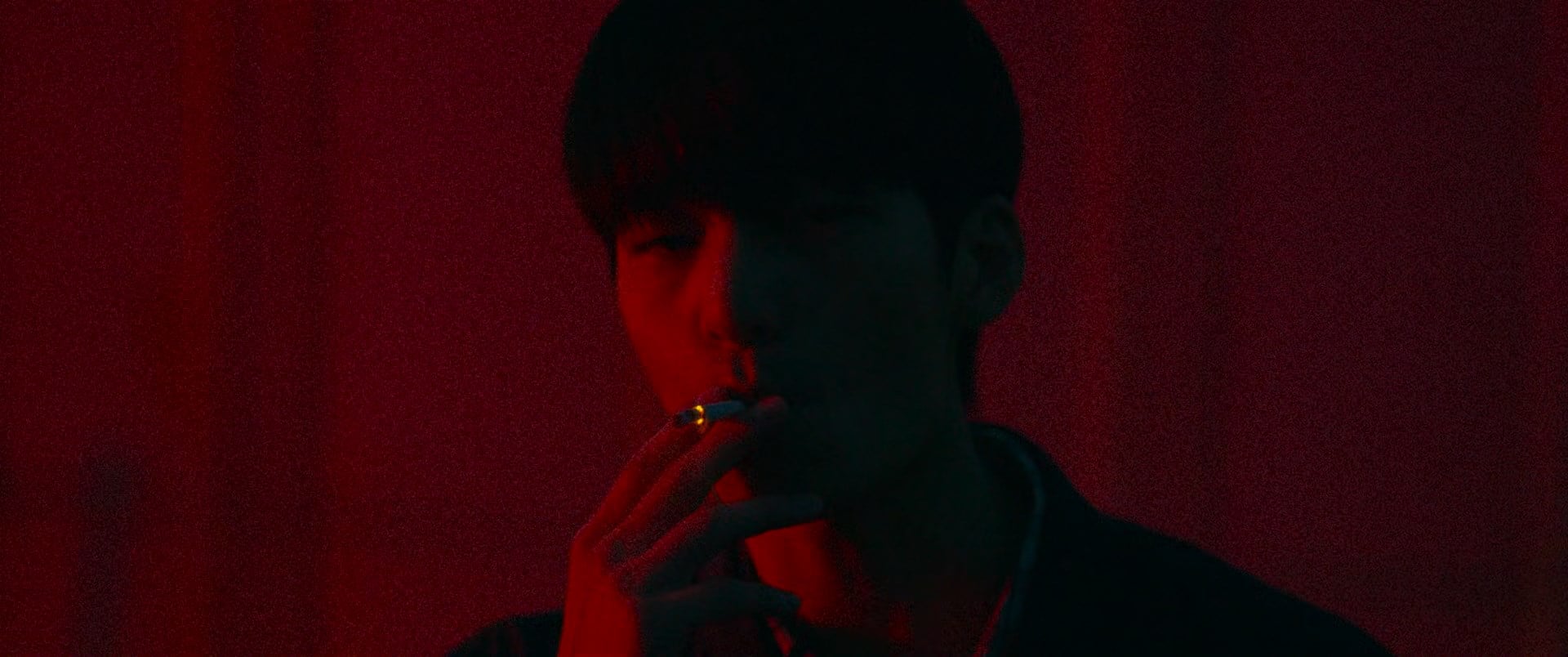
Midnight is a nail-biting, adrenaline-pumping, edge-of-the-seat thriller laced with sharp social commentary, and elevated by performances so convincing that you often want to smash Wi Ha-joon’s poster-boy face to a bloody pulp, as he channels pure, wolf-in-the-sheep-clothing evil in his role of a murderous psychopath. Equally praiseworthy is Ki-joo Jin in her portrayal of a sweet and vulnerable, yet resourceful deaf-mute heroine, Kyung-mi Kim, whose silent world the viewer is often plunged into through the clever sound design, making her plight quite palpable. And all the night-time tension and creepiness of suburban back alleys are beautifully captured by cinematographer Taek-gyun Cha.
5. Bo we mnie jest seks / Autumn Girl (Katarzyna Klimkiewicz, 2021)
Quite possibly the most vibrant representation of socialist era Poland, Autumn Girl is a breezy and sensual musical biography about ‘the Polish Marilyn Monroe’ – actress and singer Kalina Jędrusik (1931-1991) who ‘subverted cultural norms’, as noted by Mikołaj Gliński in the article for Culture.pl. Soaked in soft pastels contrasted by juicier, more saturated colors, the film takes cues not only from the facts, but also from rumors, depicting events that ‘did not necessarily happen’, and according to the thanks in the ending credits, with support and trust of Jędrusik’s descendants.
Opening with an eye-catching sequence of retro-stylized collage animation, this irreverently glitzy portrait of the free-spirited sex symbol often brings to mind the audacity of Ken Russell’s biopics, and Anna Biller’s keen sense of camp, with a dash of Wes Anderson’s whimsical aesthetics. Brimful of life, it pulls you into its borderline fantastical world of the 60’s, all the while being carried on the shoulders of Maria Dębska who shines through and through in the leading role that marries feminine charm to libertine insolence, as well as nerve to vulnerability in a male-dominated show-biz environment. In the final song – a sultry jazz-pop tune which gives the original title – she performs the ultimate act of seduction using both her body adorned in a backless dress, and tricky soul whose power is felt in her delicate, dreamy voice.

Vulnerability-(Kinoko-II).jpg)