Nov 12, 2022

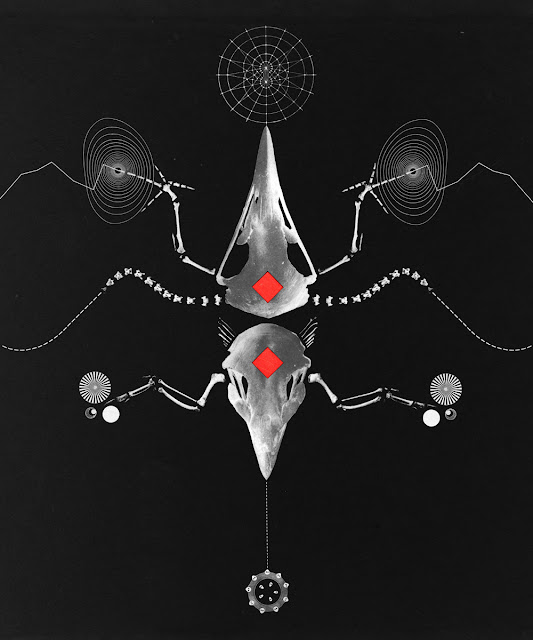
Les Fleurs du Mal

Experiments in darkness, out of my comfort zone.
The first 12 pieces of my recently started series of ‘negative’ collages.
The title is borrowed from Baudelaire’s book of poetry.

💀💀💀💀💀💀


The Mind of the Universe


A Word Written by Darkness


The Blind God of the Mirror


Three Lupine Sunsets


The Celestial Body of Fear


2 Things Bloom in the Devil's Womb


The Spectrogram of Inner Voices


Archangels Cry for the Lost Eye


The Bleeding Unknown Breaks the Boundary


A Supernova in the Truth Seeker's Path


The Nightmare Doesn't Recognize Me

The Moon Is but an Illusion

Nov 1, 2022

Best Premiere Viewings of October 2K22

1. 1000 Könige / 1000 Kings (Bidzina Kanchaveli, 2019)


A one-of-a-kind piece of experimental cinema, Bidzina Kanchaveli’s feature-length debut plants the viewer in a strange, parallel world supervised by Primal Mother, and populated by 1000 ‘people’ whose only task is to lit up mysterious spheres, with the help of the Chosen One. The confined space they populate is governed by its own set of rules, and its dissolution could be a solution to a cosmogonic puzzle – the beginning of everything, as the director himself notes in an interview for Indie Activity. Imbued with mythological qualities and ontological implications, 1000 Kings comes across as the extension of Samuel Beckett’s TV play Quad by way of its creator’s 2007 short / installation 6 Pictures of a Universe, eschewing words for radiant colors and symphonic score which elevates ostensibly simple, meticulously choreographed visuals. It is a difficult film to put into words or recommend, but one thing I’m pretty sure of is that I felt at home in it, both on conscious and subconscious levels.

2. Terrifier 2 (Damien Leone, 2022)


Bigger, crazier, nastier and, in a way, funnier in its pitch-black, blood-soaked humor than its predecessor, Terrifier 2 capitalizes H (as well as all the remaining letters) in ‘horror’, providing the viewer with what will probably prove to be the most visceral, gut-wrenching experience of 2022. Increasingly surreal, not to mention relentlessly nightmarish in the irrational mayhem on display, the film sees David Howard Thornton reprising the silent role of the demonic, seemingly indestructible Art the Clown. Armed with brilliant mime skills, he steals the gory show, cements his character’s position in the pantheon of the creepiest bogeymen, and once again makes Pennywise look like a children’s party entertainer, with Killer Klowns from Outer Space reduced to Teletubbies. As Art rips, slashes and bludgeons his wicked way through the flesh of the victims who often deserve more sympathy than the cannon fodder of Terrifier, Leone creates a strong heroine, i.e. ‘final girl’ in Sienna portrayed by magnetic Lauren LaVera, raising the cine-fantasy bar pretty high during the climactic confrontation. If another sequel is in plans (the morbid post-credit scene hints it is), it would be a shame not to have her return, and perhaps kick Art’s butt in some meta-universe, why not? Whatever the director has in store for us next, we can’t help but admire the mad love invested in creating Terrifier 2, and reflected in gruesomely awesome practical effects, Paul Wiley’s energizing synth-heavy score that evokes the 80’s, and eye-pleasing (or, rather, eye-piercing?) visuals elevated by great lighting, all on a pretty tight $250,000 budget.

3. 2551.01 (Norbert Pfaffenbichler, 2021)


In an inhospitable world that appears to be a post-apocalyptic dystopia of some alternative universe, an ape-faced man and a kid with a sack on its head wander around a bunker-like underground inhabited solely by grotesque figures, each one wearing a mask more freaky than the next. Or maybe those aren’t masks at all, but rather disfigured faces of mutant beings embodying the worst traits of humanity? Whatever the case may be, 2551.01 is a morbidly, painfully beautiful piece of punk / DIY cinema that manages to transcend the budgetary constraints, and fiercely plunge you in its nasty, twisted universe right from the abrasive get-go – a stroboscopic sequence of violent protests accompanied by a pounding speed / black metal track. Following the intensely electrifying opening is a series of ultra-bizarre events that involve a family dinner from the worst nightmares, the creepiest of kindergartens, and laboratory experiments of nauseating qualities, as they evoke the memories of wide range of films, from the silent era and Lynch’s haunting debut Eraserhead, to The Texas Chainsaw Massacre and Yevgeny Yufit’s necrorealism, to cult favorites such as Begotten and Rubber’s Lover. It goes without saying that 2551.01 is an epitome of creative madness; a bold, visceral, inspired and uncompromising work of art, pulling no punches and – in the complete absence of dialogues – superbly exemplifying the ‘show, don’t tell’ approach to filmmaking.

4. Cast a Deadly Spell (Martin Campbell, 1991)

“My name is Lovecraft and I am the guy who knows. Just about the only guy who knows it all and who’s still breathing.”

A highly entertaining and stylishly crafted mélange of ‘gumshoe’ noir, horror and comedy, ‘Cast a Deadly Spell’ sees perfectly cast Fred Ward as a hard-boiled, no-nonsense, chain-smoking private eye, H. Phillips ‘Phil’ Lovecraft, searching for stolen Necronomicon in alternate 1948 L.A. where everyone – except him – uses magic. He is provided with an amazingly strong support in another distinguished character actor, David Warner, portraying a rich esotericist, brilliantly femme-fatale-ing Julianne Moore in one of her earliest roles, and Clancy Brown of ‘Highlander’ fame as an ex-cop, now unmistakably villainous owner of ‘The Dunwich Room’ nightclub, with honorable mention going to Arnetia Walker as a witchy, thick-accented landlady, Hypolite, who shares her last name with the Russian anarcho-communist Peter Kropotkin (1842-1921). The motley crew of protagonists and antagonists also includes the last of the unicorn hunters, and a whole bunch of creatures, from mischievous Gremlins to a gargoyle familiar to a representative of the Great Old Ones from the Lovecraftian lore, all given their rightful place in a compellingly built world of what is a taut and surprisingly cinematic TV production. Martin Campbell directs with great ease and assured pacing, daringly eschewing political correctness in favor of the period authenticity, which he wouldn’t have been allowed to do nowadays...

5. Kaidan semushi otoko / House of Terrors, aka The Ghost of the Hunchback (Hajime Satō, 1965)


Applying Western formula for Gothic horror, Hajime Satō – whose work I’m encountering for the first time – delivers eerie atmosphere in spades, only to amp up the pulp and irrationality to eleven during the final and most nightmarish third of his haunted house flick. Often preposterous story is served with such verve and gusto, that you can’t help but go along with its madness, as you relish in the stunningly beautiful B&W cinematography complemented by creaky noises, spine-chilling ghost moans, over-the-top evil laughter, and sudden gushes of wind through the hall decorated by a grotesque statue of the Devil.

6. Wspólny pokój / One Room Tenants (Wojciech Has, 1960)

“There’s no liar bigger than one’s imagination.”

The fragile lives of an aspiring writer, his poet friends, law and medicine students, a prostitute, a left-wing activist, and an aristocratic couple intertwine on a shaky field of hopes, dreams and aspirations during the lazy days and drunken nights in Poland between the two world wars. Their frequent joking dipped in alcohol may fool the ever-growing pessimism, but it can not cheat the impending death which stains the final third of this initially (and ostensibly) jovial existential drama. Mostly set in a tenement inhabited by the poor of the abovementioned bunch, One Room Tenants delights with the ‘battle’ of thespian wits, as many shots linger on performers’ faces, and enchants with an incredibly fluid camerawork that dispels the limitations of claustrophobic spaces. A fascinating microcosm of Polish society of the time is rendered in noirish grays, as Wojciech Has – best known for his surrealist tour de force The Hourglass Sanatorium – directs the film as if it were the easiest thing in the world, bringing to life colorful characters based on Zbigniew Unilowski’s novel.

7. Matar a la Bestia / To Kill the Beast (Agustina San Martín, 2021)


Oozing with and heavily relying on sultry atmosphere of teen melancholy, subtle eroticism and superstition-infused mystery, Agustina San Martín’s feature debut is a risky, unapologetically lyrical take on coming-of-age-and-out story. Set in a misty village tucked away on the Argentinian border with Brazil, it enchants you with its liminal, hypnagogic qualities, as the lines between dream, myth and reality are continuously blurred, until they’re completely erased. The young author often insists of long, hypnotizing takes and – assisted by cinematographer Constanza Sandoval – she delivers a plethora of meticulously framed shots that beautifully capture angst and vulnerability on the angelic face of a 17-yo heroine, Emilia (newcomer Tamara Rocca), as well as the oneiric trappings of the place surrounded by a thick rainforest. Refusing to provide any clear answers (let alone a plot resolution), San Martín concocts a strong potion of far-reaching gazes, deliberate pauses and cryptic symbols in her meditation on sexual awakening.

8. Muna Moto / The Child of Another (Jean-Pierre Dikongué-Pipa, 1975)


Tradition comes with zero values in the first Cameroonian feature – an honest portrayal of the country’s culture damaged by colonialism, as well as of young love torn by humiliating customs deeply stained with sexism and the abuse of power. Attacking the reactionary ways of thinking and doing, Dikongué-Pipa blends romantic tragedy, social drama and ethnographic study into a film of considerable formal strength, its stark B&W imagery beautifully capturing the sense of place, the modern generation’s disdain for patriarchal rules, and the intensity of emotions conveyed by the non-professional cast. 

9. North of Vortex (Constantine Giannaris, 1991)


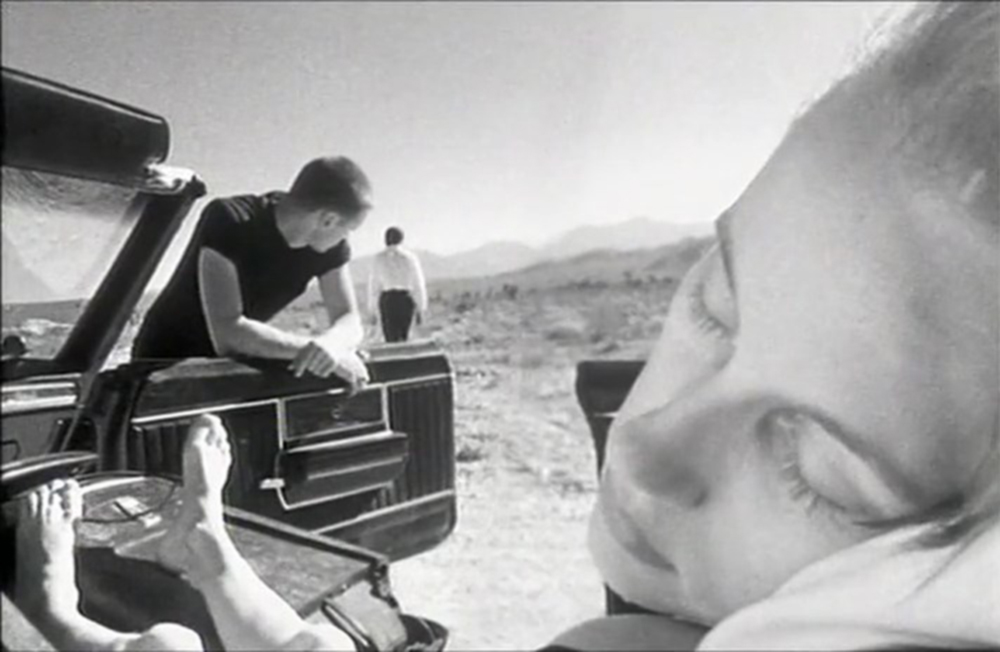
A spiritual successor to Trojans (1990) – Jarman-esque biopic of Greek poet Constantine Cavafy (1863-1933), North of Vortex sees a passive gay poet (Stavros Zalmas) getting entangled in a ‘romantic’ triangle with a sporadically aggressive sailor (Howard Napper), and androgynous waitress, Jackie (Valda Z. Drabla), whose ‘glamorous detachment’ from reality paints the film’s languid, hypnagogic atmosphere. Part nihilist tone poem that gives off beatnik vibes, and part freewheeling road movie anticipating Gregg Araki’s The Living End (1992), this 55-minute featurette eliminates almost all of the dialogue in favor of an all-seeing narrator (the voice of Kevin Graal), smoky B&W cinematography (James Welland), and understated jazz score by British trumpeter John Eacott.

The film can be viewed @ the director’s official Vimeo channel, HERE.

10. Älskande par / Loving Couples (Mai Zetterling, 1964)


“Hate can be enjoyable. It’s so close to love, but much more exciting.”

Adapting a controversial seven-part novel by Agnes von Krusenstjerna (1894-1940), while taking cues (as well as thespians and cinematographer) from Ingmar Bergman, actress Mai Zetterling delivers an impressive, if flawed directorial debut – part nuanced character study / psychological drama, and part biting feminist / anti-marriage tirade paralleled by a provocative, ahead-of-its-time exploration of female sexuality. Burning with desire to find her own voice, she approaches the story with a daring, freewheeling attitude, and builds the narrative largely on flashbacks which don’t always come together seamlessly, engulfed in the vortex of vivid memories and overpowering emotions. However, she elicits strong performances from the leading trio of Gunnel Lindblom, Gio Petré and Harriet Andersson, as well as from the supporting cast including Gunnar Björnstrand and Anita Björk, visualizing the mindscapes of her heroines through the distinctive framing and fluid camera movements of Sven Nykvist.

11. Das Rätsel der grünen Spinne / The Mystery of the Green Spider (Franz Marischka, 1960)


Dubbed ‘musikrimi’ by its authors, The Mystery of the Green Spider is a quirky amalgam of musical and murder mystery set in a night club called ‘Green Spider’, and revolving around the case of a singer shot dead during a loud trumpet solo. Light in tone, it combines – to a rather charming effect – often humorous cabaret performances with a whodunnit investigation by both the police and a nosy journalist hero, so even if you’re not a schlager fan, you might enjoy the film for its beautiful B&W imagery, or its sheer, cheerful weirdness.

12. Barbarian (Zach Cregger, 2022)


A promising, technically competent and artistically pleasing solo debut for Zach Cregger, Barbarian serves edge-of-the-seat suspense in a hefty dose, as it twists and turns into some unexpected directions, unafraid to be silly and suspension-of-disbelief-stretching in its deliberate use of horror tropes. The less you know about it, the better, but I guess that it won’t hurt to mention the awkwardly great chemistry between Pennywise, pardon, Bill Skarsgård and Georgina Campbell (in the role of an unassuming heroine) in the first, Psycho-inspired act, as well as Justin Long’s excellent take on a sleezeball character (potential sexual predator) who is too self-absorbed to realize the saving power of motherly love... 

13. Pearl (Ti West, 2022)


Once again, Ti West proves to be an expert in invoking the spirits of bygone era(s), bringing back the highly saturated sheen, as well as pronounced acting of Technicolor movies this time around. A prequel to his gerontophobic, suspension-of-disbelief-testing slasher X, Pearl mostly serves as a vehicle for Mia Goth’s talents, and in that regard, it is a crowning achievement. Her rendition of a seemingly innocent farm girl’s descent into madness is in equal measures funny, creepy, intense, and heartbreaking, culminating in what has to be one of the longest and most grotesquely disturbing smiles in the history of cinema. Although the table soliloquy that she delivers in the final act feels somewhat gratuitous, it does add a few shades to her pull-no-punches performance, and even sustains some of the viewer’s sympathy, in spite of the horrific, unforgiving acts her anti-heroine does. As she leads Pearl into the pantheon of the most memorable cine-villainesses, West plays pretty safe, checking all the boxes of the genre, but bringing nothing new beside the attractive stylistic flourishes. However, in times when many of his colleagues try to scare the audience with single-meaning metaphors, his darkly humorous, briskly paced and visually striking take on an ‘anyone can snap under the oppressive circumstances’ story comes across as refreshing.

14. Elvis (Baz Luhrmann, 2022)


Caught it on cable and, to my surprise, stayed with it until the end, enjoying most of it. Yes, it’s flashy and gaudy, but unlike that other fictionalized biopic of the huge 20th century star, it provides the viewer with much more than the sheer, exploitative victimization of its subject. Austin Butler has a lot of charm and charisma to easily carry both the role of ‘King of Rock and Roll’, and the film itself, with all of its stylistic flourishes and gimmicks...

15. Hellraiser (David Bruckner, 2022)


David Bruckner’s re-imagination of Clive Barker’s cult horror doesn’t live up to high expectations set by the director’s previous film – densely atmospheric chiller The Night House, which is why its position on the monthly list isn’t any higher. What makes it worth the mention are the memorable cenobite designs, Jamie Clayton’s imposing version of Pinhead, and the cathartic final scene involving the villainous Mr. Voight (Goran Višnjić).

Oct 1, 2022

Best Premiere Viewings of September 2K22

1. Vesper (Kristina Buožytė & Bruno Samper, 2022)


Vesper (a brilliant low-key performance from Raffiella Chapman) is a reserved, yet resourceful wunderkind biologist surviving ‘the new dark ages’ brought about by the collapse of Earth’s ecosystem, all the while carrying about her paralyzed father. She seems to be the only glimmer of hope in the unspecified future, and a chance meeting with a secretive young woman (ethereal Rosy McEwen) from one of ‘citadels’ – domed cities for oligarchs – will prove that true...

Buožytė & Samper’s first feature film in ten years is a phenomenal tour de force of (post-apocalyptic) world building, brimming with details that introduce the viewer to new and largely hostile forms of flora, as well as to peculiar bio-tech gadgets, such as a partially organic drone that wouldn’t feel out of place in some of Cronenberg’s body horror offerings. Told in a hushed manner, and imbued with the quality of a dark fairy tale, the duo’s story – familiar, yet engaging – unfolds in an unhurried pace, with minimum exposition, allowing us to immerse ourselves in the bleakly beautiful imagery accompanied by a hauntingly atmospheric score. The desolate, beast-less vistas and rusting, octopus-like structures that permeate it make for a mighty impressive setting inhabited by humans, carnivorous plants, armor-shattering insects, genetically engineered ‘jugs’, and glowing bacteria that provide electricity. The mystery – essential to every work of art, according to the great Buñuel – is embodied by masked and silent scavengers dubbed ‘pilgrims’, as well as by skull-headed soldiers who enter the scene in the final act. In addition, the aura of otherworldliness is conveyed through the tight symbiosis between superb production design and equally attractive special effects that are never overused, with the focus being on Vesper’s wits, strengths, skills and emotional responses to the bleak surroundings, as she follows her scientific dreams.

Unlike Vanishing Waves – the first film Buožytė and Samper co-directed – which left me mostly cold, Vesper managed to pique my interest right from the get-go, and keep its grip to the poetic conclusion, so I will be looking forward to what the directors have in store next.

2. Stress-es tres-tres / Stress Is Three (Carlos Saura, 1968)


A perfect companion piece for Roman Polanski’s stunningly beautiful feature debut Knife in the Water (1962), Carlos Saura’s out-of-the-ordinary drama is, according to the author himself, ‘the study of the crisis in a seemingly developed society’ reflected through the prism of a strained marriage or rather, a love triangle that may only be the figment of the husband’s imagination. Impressively shot in stark B&W which adds to the increasing surreality of the subtly fractured story, ‘Stress Is Three’ weaves together simmering passions, undisclosed desires and fiery jealousies into a fine tapestry of psychological tension and modern alienation. Considering that it was conceived and brought to life under the Francoist dictatorship, the strength of its anticonformist attitude, as well as its somewhat experimental nature prone to deliberate ‘buffoonery’ make it all the more fascinating.

3. Three Thousand Years of Longing (George Miller, 2022)


Call it a hopelessly romantic modern fairy tale, quaint rumination on human condition, or visually dazzling ode to myths and storytelling, Miller’s latest offering is as weirdly magical as the pairing of Tilda Swinton and Idris Elba in the leading roles, continually igniting one’s sense of wonder, while the two characters open their lonely and, as the title suggests, longing hearts to each other with sincerity so often shunned by our cynical, hateful times. The silver-screen viewing is a must, and a double bill with Tarsem Singh’s The Fall would be nice.

4. Taste of Fear (Seth Holt, 1961)


Predictability feels like a minor quibble in a gothic/psychological thriller which Christopher Lee (in the role of an ostensibly sinister physician) called ‘the best film Hammer ever made’, adding that Seth Holt was ‘one of the best directors Britain ever had’. Gorgeously lensed in black and white by Douglas Slocombe (who would collaborate with Joseph Losey on his masterpiece The Servant only two years later), helmed with an assured hand and sharp sense of pacing, and elevated by credible performances, as well as by a lavish score from Clifton Parker (of Curse of the Demon and The 39 Steps fame), Taste of Fear delivers both chills and thrills and even a surprise twist or two that can’t be foreseen early on. Its deep, pitch-black shadows compel you to stare into the ‘abysses’ of the thoughtfully composed frames, making you sensitive to the slightest of movements, as prolonged silences heighten the tension. 

5. Saloum (Jean Luc Herbulot, 2021)


Judging by three of his shorts available on YouTube, one being a shocking, yet compelling music video for French rapper Médine, revenge is the common denominator to the work of Congolese director Jean Luc Herbulot whose sophomore feature comes across as one of the most refreshing, not to mention effortlessly directed genre mashups in recent memory. Opening as a crime-thriller that follows a super-cool antiheroic trio of mercenaries called ‘Bangui’s Hyenas’, Saloum takes a ghastly supernatural turn halfway through, introducing something more sinister than suggestive nightmares which haunt the charismatic group leader, Chaka (superb Yann Gael). This transition into a survival, folklore-inspired horror happens so smoothly that it gives Robert Rodriguez a good run for his money, and instills a sense of awe in the viewer, deliberately leaving the mystery of unique and vicious creatures – seen in broad daylight unlike many Western offerings – up to one’s own interpretation. On top of that, the film features some breathtaking ‘God’s eye’ views of deserts and inlets that enhance the strong aura of mysticism present from the very first shot, with Reksider’s evocative score of ethereal chants and tribal beats intensifying the local flavors.

6. Station Six Sahara (Seth Holt, 1962)


Toxic masculinity soaks the desert in Seth Holt’s unconventional drama set in an oil station somewhere in the Libyan part of Sahara. Five men who run the facility as they bicker amongst themselves are all played with much gravitas and gusto by Peter van Eyck (bossy Kramer), Ian Bannen (boorish Fletcher), Denholm Elliott (uptight Macey), Hansjörg Felmy (defiant Donitz) and Mario Adorf (taciturn Santos), each actor finely tuning his performance in accordance with the very nature of his character. The unexpected arrival of a femme fatale, Catherine (Caroll Baker whose magnetism seeps off the screen, particularly in that peach-eating scene) and her sleezeball ex-husband companion (Biff McGuire) heats up the sweaty atmosphere and stirs up a sandstorm of hormones, thus increasing the simmering tension. And a poker game sequence which foreshadows this change in the narrative dynamics is a masterclass in direction and micro-acting, heightened by Gerald Gibbs’s slick B&W cinematography.

7. Birdy (Alan Parker, 1984)

“I guess it’s kinda hard to be good at something nobody wants, huh?”

An off-kilter story of big, ‘Icarian’ dreams and an unlikely, yet tightly knit friendship, coming-of-age in the late 50’s Philly, and coping with a serious post-war trauma gets a visually handsome and aurally immersive treatment in Alan Parker’s tautly directed (melo)drama Birdy which stars Matthew Modine and Nicolas Cage, the former giving a poignant performance as the titular character – a quiet, avian-obsessed and highly sympathetic introvert whose real name is never revealed, and the latter being admirably restrained in the role of an impulsive, extrovert athlete, Al. 

8. Adelheid (František Vláčil, 1970)


A cinematic equivalent of a stormy night spent in the company of a melancholic soul by the fireplace of a cozy cabin, František Vláčil’s first color film is a moody, bleakly beautiful post-war drama focused on an unlikely romance between a former Czech soldier, Viktor Chotovický, and Adelheid Heidenmann – the daughter of a Nazi baron. Set in a manor that initially belonged to a Jewish family, and was appropriated by Germans during the WWII, Adelheid comes across as a meditation on forgiveness and trust, in a somewhat mystifying atmosphere emerging from the ambiguity of the titular (anti?)heroine’s true feelings. The tension, both mental and sexual, between the two leading characters simmers at the very core of the narrative – co-written by novelist Vladimír Körner and director  himself – that moves at a steady, unrushed pace, married to Zdeněk Liška’s solemn, choral-heavy score, and dressed in a stark palette of muddy and wintry colors dominating František Uldrich’s eye-pleasing cinematography. 

9. Peppermint Frappé (Carlos Saura, 1967)


If Vertigo had been directed by Luis Buñuel (to whom Peppermint Frappé is unsurprisingly dedicated), the resulting film would’ve certainly felt like Saura’s first in a series of collaborations with actress Geraldine Chaplin – here, glowing in a dual blonde/brunette role. Often seen as an allegory (a bold one, at that!) of political, social and sexual repression of Franco’s regime, this quirky, subtly surreal psychological drama / character study is imbued with a blistering anti-chauvinist sentiment, as it explores an unhealthy obsession, fetishization of women, and the fickleness of power dynamics. Shockingly, it passed under the censors’ radar back in the dark days of Spanish history, marking the director’s first commercial success.

10. Hawk the Slayer (Terry Marcel, 1980)


(read my review HERE)

11. A Casa Assassinada / The Murdered House (Paulo César Saraceni, 1971)


“Only with beauty we can destroy lies and hypocrisy... Beauty is eternal.”

Part fractured, borderline surreal soap-opera, and part theatrical tone poem of dense, melancholy-infused atmosphere, The Murdered House exposes the rot of traditional family values in a wickedly lyrical story of unrequited love, repressed desires, ‘disgraceful’ secrets, suicidal characters and incestuous affairs. Paulo César Saraceni directs it like Buñuel on sedatives (with a hint of Pasolini in his Teorema element?), so it takes some time to attune oneself to his bizarre wavelengths, and the patience is rewarded with a ‘grotesque truth’ coming to light in the tragicomic finale of farcical proportions and amped-up histrionics. The film’s only setting – a country mansion surrounded by a lush garden – appears like a well-concealed micro-paradise dewy with human imperfections, acting like a mentally troubled protagonist in its own right.

12. Witchcraft (Don Sharp, 1964)


Yvette Rees gives off some strong Barbara Steele vibes in the silent role of a witch who’s accidentally resurrected after a graveyard desecration due to the construction work. The eerie aura which surrounds her character, Vanessa Whitlock (buried alive 300 years in the past, so no wonder she bears a grudge), is often conveyed solely through highly expressive lighting that also brings shadows to life, establishing a haunting atmosphere. Sharper than Sharp’s solid direction of Harry Spalding’s pulpy script are the handsome B&W cinematography by Arthur Lavis, Carlo Martelli’s string-heavy, unnervingly lavish score, and a stand-out performance from Lon Chaney Jr. as the disgruntled leader of the modern-day coven of Vanessa’s followers.

13. Divina creatura / The Divine Nymph (Giuseppe Patroni Griffi, 1975)


Terence Stamp epitomizes dandyism in the role of a womanizing duke, Dani di Bagnasco, as DP Giuseppe Rotunno (The Leopard, Fellini Satyricon) masterfully captures the garishly colored decadence of the 1920’s in Italy, against the backdrop of emerging fascism. Further elevating the film’s hyper-elegant beauty is a Charlston-heavy score composed by Cesare A. Bixio, and interpreted by Ennio Morricone, though Griffi’s direction is neither smooth nor strong enough to keep you engaged in an aristocratic love triangle story for almost two hours. Out of three director’s features I’ve seen so far, his 1962 debut The Sea remains the most fascinating.

14. Bullet Train (David Leitch, 2022)


Ritchie meets Tarantino on ‘animephetamines’ in a highly enjoyable, neon-drenched romp which marries cartoonish, physics-defying violence to a twisty, fanciful story, perfectly aware of its silliness, and prone to introducing familiar faces in cameo roles. The titular setting may be limited, but Leitch delivers plenty of impressively choreographed action scenes, from sword fights to train accidents, creating characters who are almost as colorful as the garish visuals.

15. Mortal Kombat Legends: Snow Blind (Rick Morales, 2022)


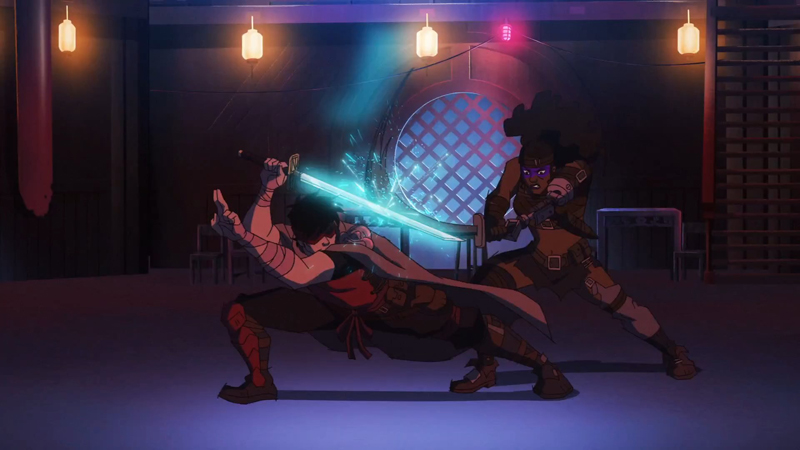
Taking cues from Mad Max franchise, and every martial arts actioner in which an aged, experienced warrior trains a young, hot-headed successor-to-be, the third feature in Mortal Kombat Legends series pulls focus on Kenshi and Sub-Zero, and pits them against the Black Dragon gang led by Kano (self-promoted to tyrant king of a post-apocalyptic wasteland), as it provides the fans with gore galore, pulp shenanigans and solid animation. The story set in one of the alternative timelines in Mortal Kombat universe does a fine job in expanding the game’s twisted mythology, and is helmed with an assured hand by Rick Morales who has previously directed several of Warner Bros’ direct-to-video properties. 

Sep 6, 2022

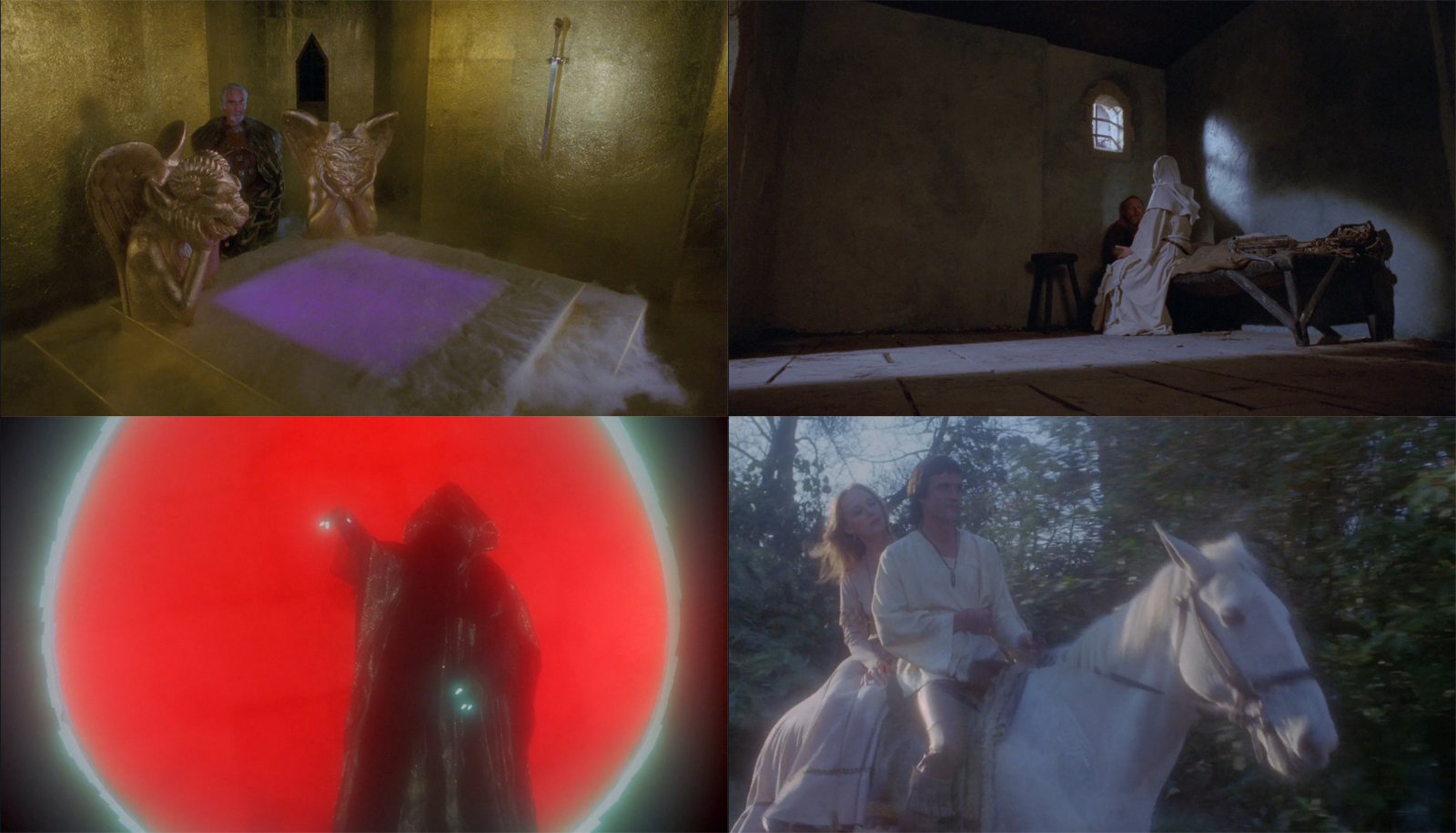
Hawk the Slayer (Terry Marcel, 1980)

If I had seen Hawk the Slayer three decades ago, it would’ve certainly made one of the fondest memories of my childhood, so I guess that this feeling I have now could be called ‘anemoia’. A timeless story of good vs. evil and siblings rivalry, this hammy, yet immensely enjoyable and dynamically paced ‘sword & sorcery’ flick takes cues from Dungeons & Dragons lore, westerns and legends of yore, coming across as a spiritual prequel to plenty of hack and slash / beat ‘em up games of the 90’s, as well as to Record of Lodoss War anime.

A valiant, mindsword-wielding hero, Hawk (played with low-key stoicism by John Terry), seeks to avenge both his father and beloved one who died at the hands of his older brother, Voltan (Jack Palance who chews the scenery like there is no tomorrow, exemplifying evil as he so often did), and accompanying him are a motley crew (an elf, a dwarf, a giant and a warrior) guided by a blind seer / sorceress (Patricia Quinn of The Rocky Horror Picture Show fame, speaking in a mystically hushed voice). Their combined efforts are also required by a flap of nuns whose abbess has been kidnapped by the forces of darkness drawing power from a mysterious black wizard who could’ve easily inspired the Shadow Weaver character from Filmation’s ‘The Secret of the Sword’ cartoon.

And so, the phantasmagorical adventure begins, taking you into a spiderweb-infested heart of the forest, a cave filled with glowing light, an ascetically furnished monastery, a Gothic arched, skull-decorated chamber of High Abbot, and a minimalist castle interior with walls covered in gold, and two gargoyles staring into a pool of smoke. The sets are obviously designed on a tight budget, but there’s something intensely charming about them, and not to mention those enchanting matte paintings and oh-so-80’s neon special effects which – supported by a groovy, delightfully off-kilter disco score (Harry Robertson) – add to the film’s irresistible naivety. Speaking of music, it is certainly a most unexpected choice, and somehow, it works admirably or rather, psychedelically well with the pseudo-medieval visuals captured in hazily dreamy cinematography by Paul Beeson. It goes without saying that an extra dose of suspension of disbelief can significantly enhance the viewing experience.

Sep 1, 2022

Best Premiere Viewings of August 2K22

1. Golem (Piotr Szulkin, 1980)


Based on Gustav Meyrink’s novel of the same name, Golem is a masterclass in feverishly disorienting atmosphere established through a puzzling, decidedly incoherent narrative, oppressive amber-green lighting, the crumbling dystopian setting of dispiriting grays, and insidiously hushed music theme which intensifies the overwhelming feeling of inescapable dread. Relentlessly irrational, to the point of distorting the viewer’s own perception of reality, this tautly directed nightmare engraves itself into one’s memory with some of the sharpest cinematic tools. 

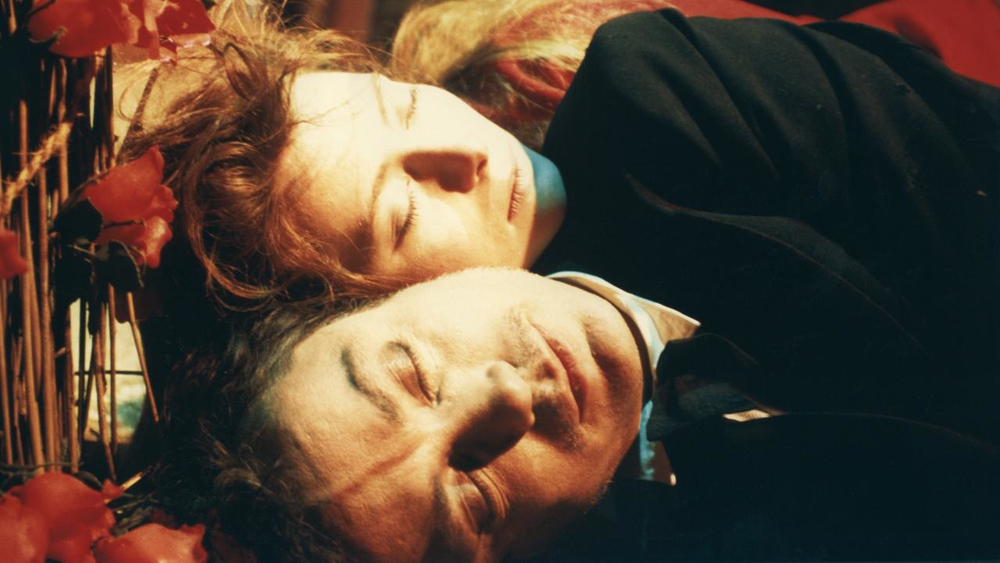
2. Egomania - Insel ohne Hoffnung / Egomania: Island Without Hope (Christoph Schlingensief, 1986)

“I saw the Devil. He was more beautiful than me.”

A ruthlessly anarchic phantasmagoria, Egomania feels like an unholy cross between Zwartjes and Jarman, with bits of Ottinger and Żuławski thrown in for good measure. It frequently subverts your expectations and keeps you in the state of revelatory befuddlement, as it reaches the deepest and darkest levels of both your subconscious and unconscious mind. Christoph Schlingensief goes absolutely nuts with delightfully abrasive visuals, bizarre musical choices, ravingly poetic dialogue, freakishly fragmented narrative, and decidedly hectic editing, as the entire cast follows him on the bumpy path of creative lunacy. Leading his colleagues is legendary Udo Kier as Baron/Devil/Devil’s Aunt (may be one and the same character?) who munches the scenery with great gusto, and spits it all over the others, with the ethereal Tilda Swinton in an understated performance acting like his angelic counterbalance.
A suggestion for a double bill - Luminous Void: Docudrama (Rouzbeh Rashidi, 2019)

3. Czułe miejsca / Tender Spots (Piotr Andrejew, 1981)


Piotr Andrejew comes extremely close to his compatriot and namesake Szulkin in building the oppressively alluring atmosphere of growing despair in a polluted dystopia, but his unorthodox sci-fi romance is imbued with the sense of (slightly twisted) tenderness emanating from a man-child hero – ‘sentimental idealist’ Jan (the superbly whimsical performance from Michał Juszczakiewicz). Stunningly lensed in black and white that emphasizes the bleakness of the retro-futuristic setting, and backed by moody jazz & synth tunes that lend it a noirish edge, Tender Spots has its love triangle story distorted through the prism of toxic ambition embodied by Jan’s vain girlfriend Ewa, the tottering system, and unlikely friendship with a little girl who seems to be the only person – beside the protagonist, that is – rejecting conformity and seeing the UFOs...

4. Wojna światów - następne stulecie / The War of the Worlds: Next Century (Piotr Szulkin, 1981)

Kafka meets Orwell in Piotr Szulkin’s sophomore flick – yet another brilliant piece of dystopian fiction that still feels frighteningly relevant. Yes, it is quite ‘on the nose’ with its allegory of authoritarian regimes and manipulative power of the media, yet it is so well made, that you won’t be able to resist it. Instead, you will just want to keep resisting the toxic emanations from the global cesspool of defamatory information (unless you’re a white sheep). Dipped in steely grays and coolly blues, this confrontational sci-fi drama is directed with red-hot burning passion that leaves its marks in details. Also praiseworthy are superb performances, particularly from Roman Wilhelmi portraying the oppressed hero who delivers a memorable (and here, partially quoted) speech by the end:

“From the TV chaos you choose the truths you find as convenient. You accept only what confirms your conviction that passivity is a virtue and a necessity. Because this is exactly what you want to believe. You cry, you feel sorry for yourselves. And then what? You sit in front of a TV set. You feel absolved. More human than those you look at. And you look at people who are just like yourselves. Just as hypocritical, just as weak. Just as submissive...”

5. Szenvedély / Passion (György Fehér, 1998)


Based on James M. Cain's novel The Postman Always Rings Twice and co-written by Béla Tarr whose influence is obvious right from the opening, 6-minute-long one-taker, György Fehér’s swan song – a rural neo-noir – is a film of immense formal strength, depressingly and stiflingly poetic in its languorous pacing, constant raining, foreboding silences and grainy chiaroscuro visuals. Counteracting the tension concentrated in the shadows as dark as the abyss of human treachery is a sole breather that sees the lovers bathed in light peacefully reclining in bed.

6. Calm with Horses (Nick Rowland, 2019)


What a powerful debut! Nick Rowland delivers an intense and engaging character study, eliciting excellent performances from his entire cast, particularly from Cosmo Jarvis in the impressive leading role. Supported by always reliable Barry Keoghan, and utterly charming Niamh Algar, Jarvis portrays antihero Douglas ‘Arm’ Armstrong – an ex-boxer enforcer for a drug-dealing family – with a rugged sincerity, pronounced physicality and deeply felt emotion. All the subtleties of his and his colleagues’ micro-acting are captured with clockwork precision in Piers McGrail’s eye-catching cinematography that emphasizes the magnificent beauty of Irish countryside, and ostensible peacefulness of a small town where the (brutal and tragic) story is set. On top of that, an unobtrusive, yet evocative score by Blanck Mass serves not only as a complement of the tip-top visuals, but also as a brooding soundscape for Arm’s deteriorating inner state.

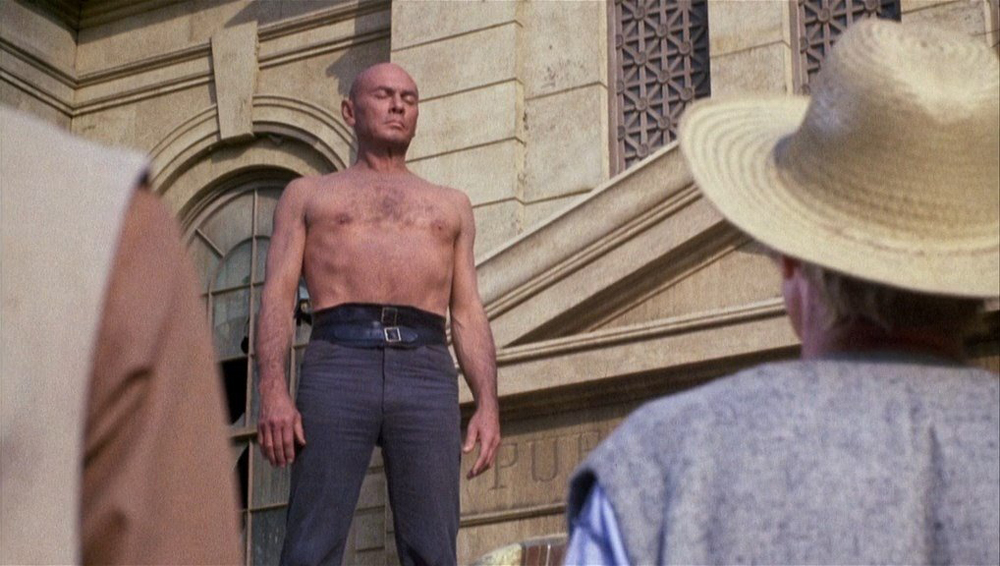
7. The Ultimate Warrior (Robert Clouse, 1975)


Yul Brynner and Max von Sydow lend some serious gravitas to this slightly pulpy, yet mighty fine piece of post-apocalyptic cinema, the former portraying a stoic, knife-wielding fighter, Carson, and the latter in the role of an intelligent leader of a small commune living from hand to mouth in dilapidated New York. A simple story of survival – penned and helmed with cool effortlessness and keen sense of pacing by the father of the cult martial arts flick Enter the Dragon – commands the viewer’s attention even in its most prosaic portions turned into stylish scenes by virtue of Gerald Hirschfeld’s strikingly grungy 35mm cinematography. However, what makes The Ultimate Warrior stand out from similar offerings, as it anticipates Hill’s The Warriors and Miller’s Mad Max, is Gil Mellé’s brilliant experimental jazz score coming into eargasmic prominence whenever the tension rises, particularly during the film’s final and most exciting third set in the underground tunnels.

8. Ornamento e Crime / Ornament and Crime (Rodrigo Areias, 2015)


Boasting a hyper-style to die for, and oozing with dense, smoke-filled atmosphere, Ornament and Crime plays (amazingly well!) like an extended riff on or rather a passionate love letter to film-noir aesthetics, with its trench-coated (anti)hero, shifty femme fatales, and pretty much everyone and everything else deeply planted in the blackest of shadows. Perfectly complemented by moodily experimental music from Paulo Furtado and Rita Redshoes, Jorge Quintela’s stunning cinematography grabs the viewer’s attention right from the get go – a symmetrical medium shot of the protagonist’s back against the distant city lights – and never loosens its grip. His camera rarely moves, yet it plunges you with great force into each of meticulously composed tableaux vivants, as the deliberately stilted narrative blends Godardian irreverence, de Oliveira-esque coldness, and hints of Lynchian absurd. It goes without saying that what Areias created here is an acquired taste – a cinematic treat for the open-minded.

9. Earwig (Lucile Hadzihalilovic, 2021)

Across the waveless sea of ambiguity,
Shady ciphers are floating aimlessly...

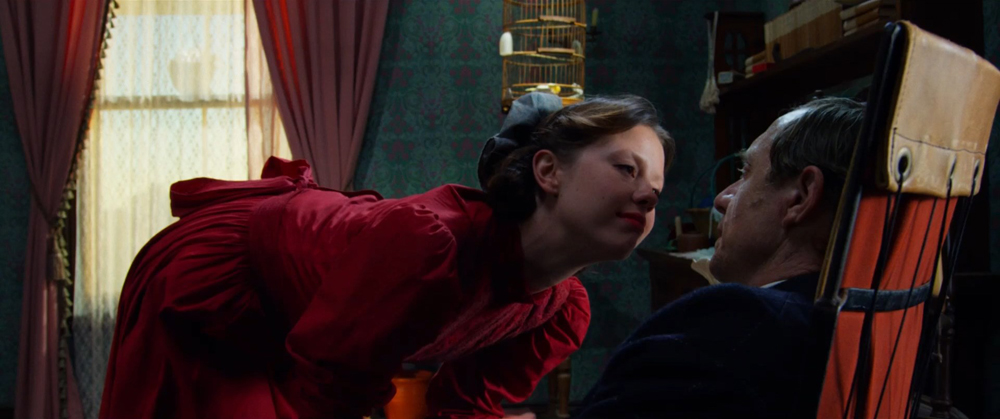
The latest offering from Lucile Hadzihalilovic (Innocence, Evolution) is an aesthetically triumphant mystery (with a capital M), daring, stubborn and uncompromising in its following of the dream / nightmare / fairy tale logic, as well as in its deliberate pace, at the expense of its immersiveness. A weird premise of a meek and reticent girl whose dentures are made of her own frozen saliva (!), and a bizarre subplot which involves her ever-frowning guardian, a waitress with a disfigured face, and a Mephistophelian figure that binds them through distorted time, open portal to a dreary, eerily surreal world where silence shrouds all meanings and answers (to some sinister, undefined conspiracy) in an opaque veil. Its aftertaste is one of utter bewilderment and inexplicably sweet fear that reality may dissolve any minute...

10. Baagh / Tiger (Sourish Dey, 2022)


Something is rotten in the state of India whose national animal – represented by a folk actor who performs as a tiger – is subjected to a Kafkaesque process conducted by sinister Mr. Jaiswal aka the Goat in the formally bold sophomore feature from Sourish Dey. Filtered through the prism of the Beckettian absurd, the fractured, off-kilter narrative is built on the vicious loops of oppression, seeing a bunch of bizarre characters – all turned into symbols and ciphers – desperately trying to define or at least express themselves reflecting upon the figure of Tiger. They are pulled together through a series of visually alluring vignettes, raging from theatrical (feat. the King with his Assistant, and evoking Majewski’s Gospel According to Harry with its outdoor set design) to Godardian to Avikunthak-like, all captured in crisp B&W, and occasionally overlaid by SMPTE color bars, as if indicating those poor souls are being tested by both the (simulacrum of) society, and some higher power(s). Dey elicits solid performances from his cast, particularly from Biswanath Basu (as Tiger) whose sweaty, tortured face easily burns into one’s memory.

11. Day Shift (J.J. Perry, 2022)


Stunt-master J.J. Perry delivers plenty of (summer) fun in his self-consciously goofy directorial debut that follows a Streets of Fire-like rule of cool, replacing leather jackets with aloha shirts, and biker gangs with vampire cartels. A highly energized blend of buddy comedy, martial arts, car chases and gory mayhem that sees a great number of contortionist bloodsuckers ruthlessly shot, dismembered and/or decapitated, Day Shift boasts some gripping set pieces and great chemistry between the cast members fronted by Jamie Foxx and Dave Franco. It made me wish it were longer, with its ‘mythology’ surrounding the baddies deepened.

12. Delta of Venus (Zalman King, 1995)


Audie England and Costas Mandylor engage in a ‘seductive pouting’ competition throughout Zalman King’s sultry pre-WWII melodrama which blends softcore eroticism, saucily saccharine poetry and the atmosphere of portending doom to surprisingly solid effect. As it touches upon the themes of communism, fascism and same-sex relationships at the dawn of chaos, Delta of Venus provides the viewer with handsome visuals whose allure doesn’t depend solely on the actors’ pulchritude. Cinematographer Eagle Egilsson does a commanding job in his first feature film, with George S. Clinton’s subtly sentimental score enveloping the autumnal imagery in a soft aural veil.